Table of Contents
The Textbook Theory: Why a Rate Hike Should Strengthen the NOK
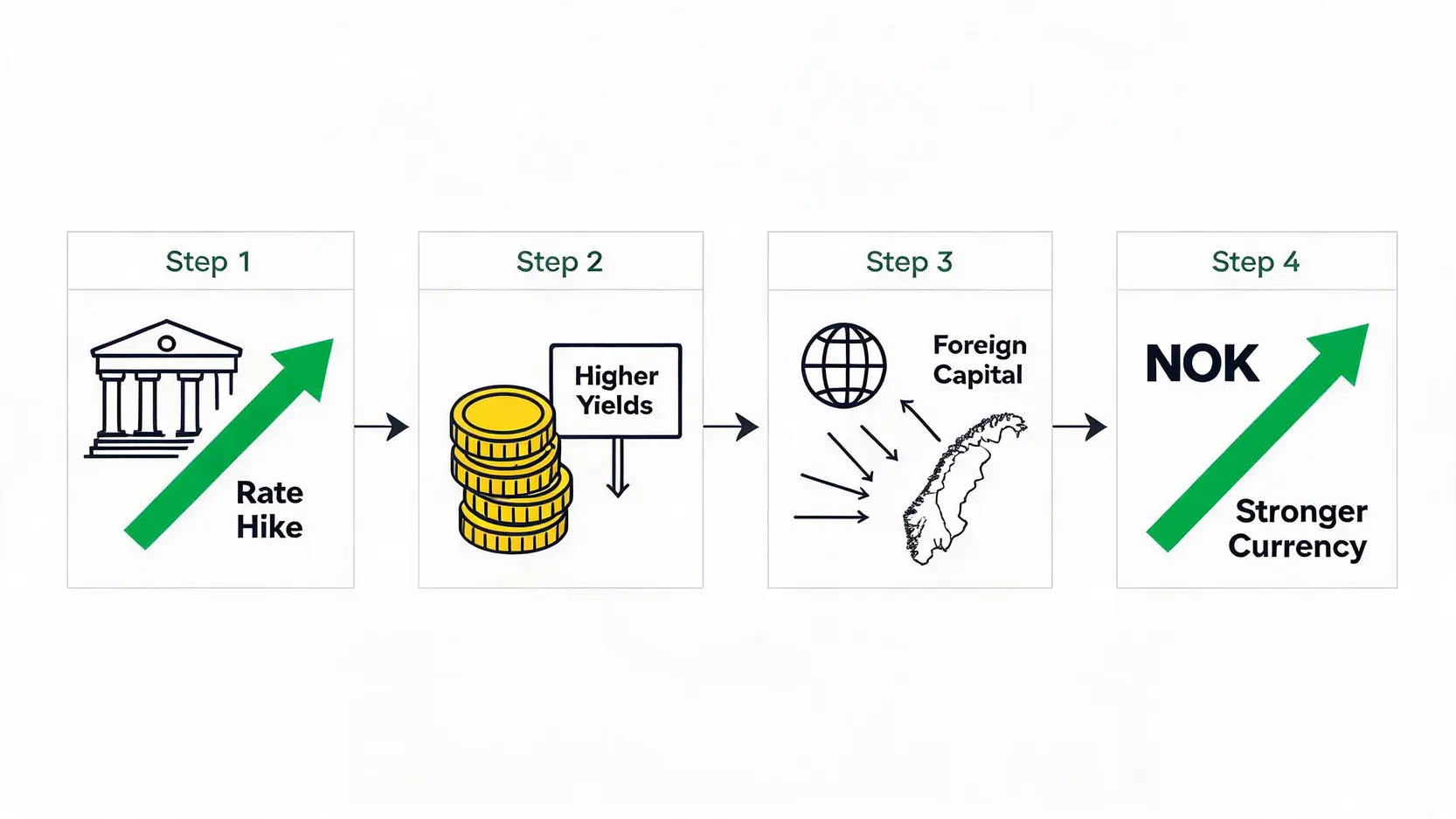
In principle, the relationship between a central bank’s policy rate and its currency value is straightforward. When a central bank like Norges Bank raises its key interest rate, it’s signaling a tightening of monetary policy, often to combat inflation and ensure economic stability. This action is theoretically bullish for the domestic currency, in this case, the Norwegian Krone (NOK). The logic is rooted in two fundamental aspects: attracting capital and boosting investor confidence.
Attracting Foreign Investment: The Appeal of Higher Yields
The primary mechanism is the concept of yield. A higher interest rate means that financial assets denominated in that currency, such as government bonds, offer a better return to investors. For global capital, which constantly seeks the highest possible risk-adjusted returns, a higher-yielding currency becomes more attractive. This increased demand from international investors, who must buy NOK to purchase Norwegian assets, should theoretically drive up the krone’s value. This process is a cornerstone of the carry trade, where investors borrow in a low-interest-rate currency to invest in a higher-rate one, profiting from the differential.
The Role of Investor Confidence and Economic Signals
Beyond the simple mechanics of yield, a rate hike is a powerful signal. It communicates that the central bank perceives the economy as robust enough to withstand higher borrowing costs. It suggests confidence in future growth and a proactive stance against inflation. This message of prudent economic management can bolster confidence among international investors and corporations, making Norway a more attractive destination for direct and portfolio investment. A stable and predictable monetary policy environment is a significant factor in a currency’s long-term strength.
Current Reality: Key Factors Muting the NOK’s Response in 2026
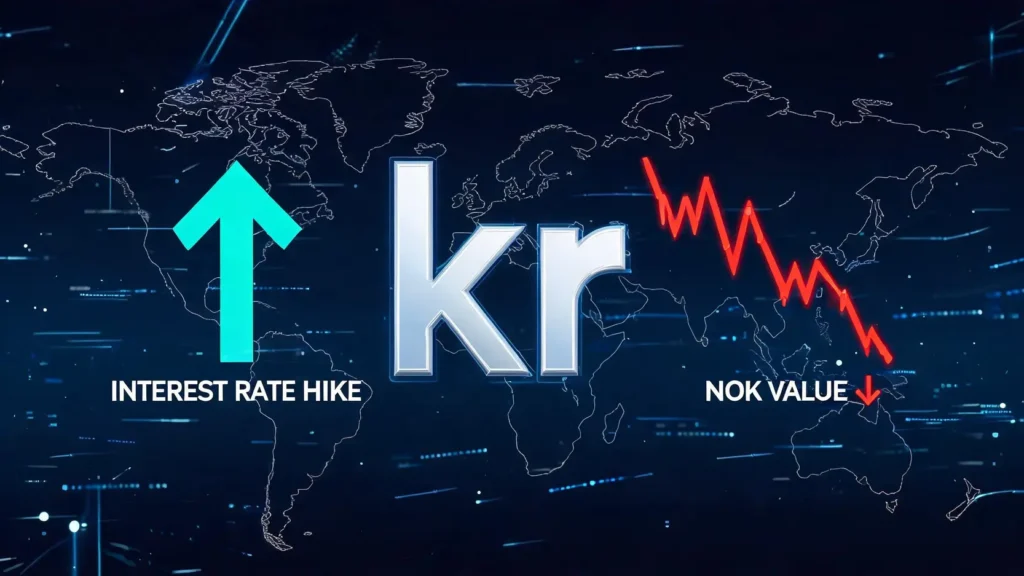
Despite Norges Bank pursuing one of the most aggressive tightening cycles among G10 nations, the NOK’s appreciation has been conspicuously absent. As of early 2026, the currency remains stubbornly weak against peers like the Euro and the US Dollar. This paradox reveals that in today’s interconnected global market, domestic monetary policy is just one piece of a much larger puzzle. Several powerful external and structural forces are currently overriding the traditional effects of the Norges Bank rate hike NOK impact.
The Critical Role of Interest Rate Differentials (vs. ECB & Fed)
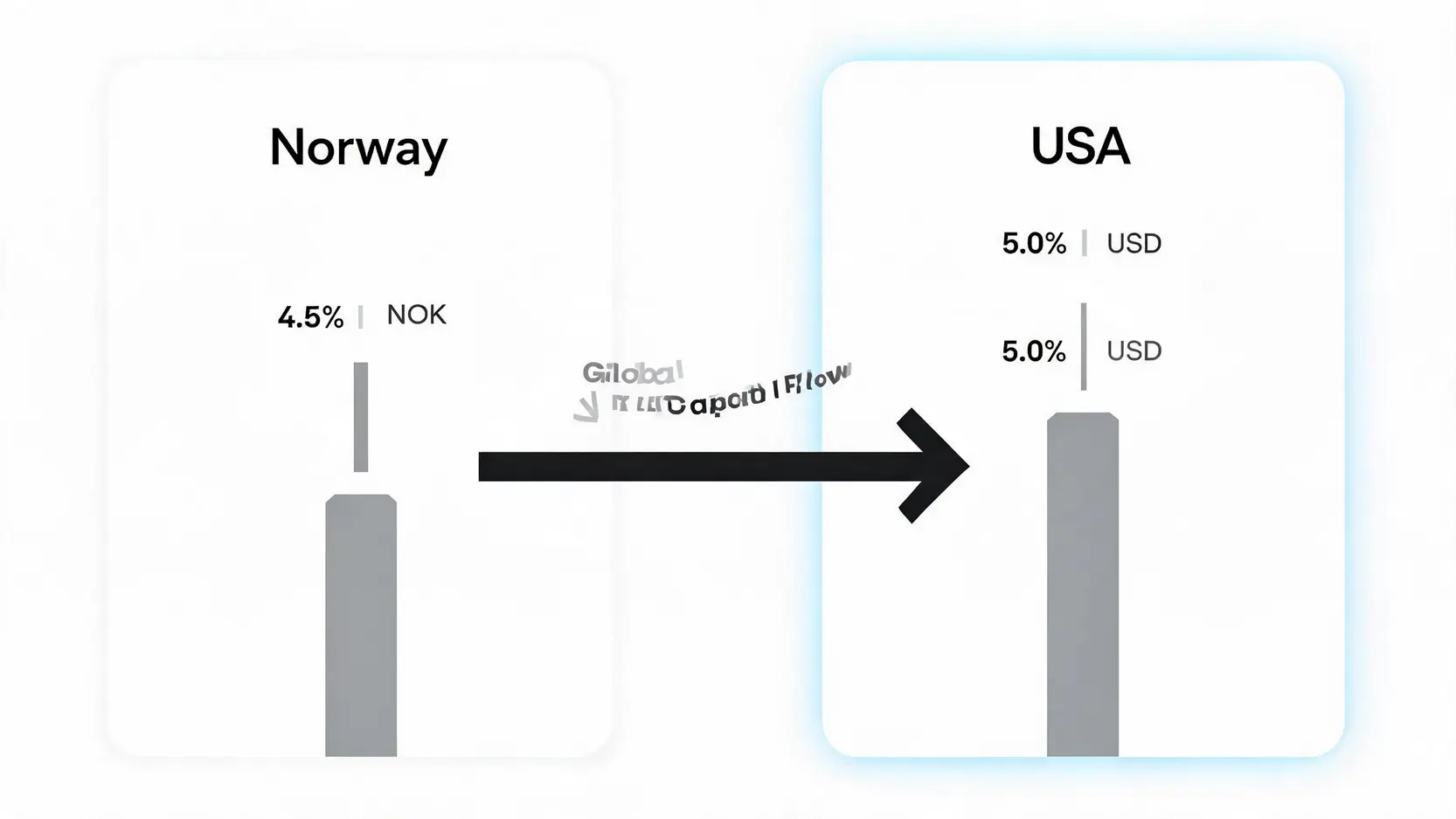
Perhaps the single most dominant factor suppressing the NOK is the concept of interest rate differentials. While Norges Bank has been hiking, so have the US Federal Reserve (Fed) and, to a lesser extent, the European Central Bank (ECB). What truly matters to global capital is not the absolute level of Norway’s interest rate, but its level relative to others. For much of the recent cycle, policy rates in the US have remained higher than in Norway. This means that an investor can still achieve a superior yield by holding US dollars, diminishing the appeal of the NOK. The narrowing gap with the ECB also plays a role, making the Euro a competitive alternative. For a deeper understanding of this crucial concept, exploring how interest rates affect currency risk provides essential context.
Global Risk Sentiment and Its Effect on the Krone
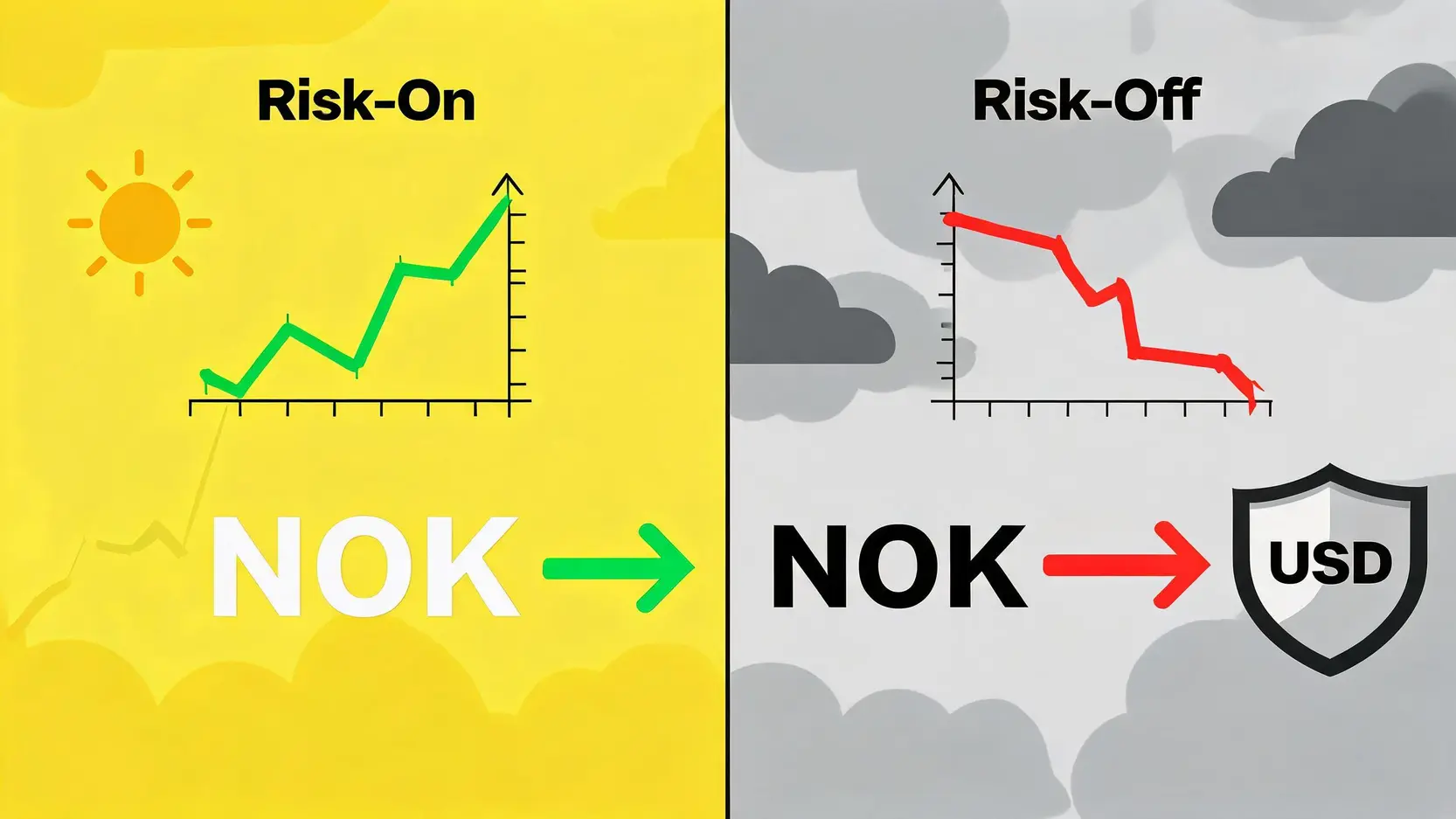
The NOK is often classified as a ‘commodity currency’ due to Norway’s status as a major energy exporter. It also belongs to the category of smaller, less liquid G10 currencies. This dual identity makes it highly sensitive to shifts in global risk sentiment.
- Risk-On Environment: In times of global optimism and economic growth, investors are more willing to buy into higher-risk, higher-return assets, which can benefit the NOK.
- Risk-Off Environment: Conversely, during periods of geopolitical tension, financial market volatility, or fears of a global recession, capital flees to traditional safe-haven currencies like the US Dollar, Swiss Franc, and Japanese Yen. The NOK is often sold off in these scenarios, regardless of domestic interest rates. Throughout late 2025 and into 2026, lingering geopolitical uncertainties and concerns over global growth have created a challenging backdrop for currencies like the krone.
Impact of Norges Bank’s Own Foreign Exchange Transactions
A unique structural factor that exerts consistent pressure on the NOK is Norges Bank’s daily foreign exchange transactions. The bank is tasked with converting the government’s petroleum revenues (which are received in foreign currency) into NOK to cover fiscal budget deficits. However, when the government’s foreign currency needs for the massive Government Pension Fund Global (Norway’s sovereign wealth fund) exceed these revenues, the bank must sell NOK and buy foreign currency. For significant periods, Norges Bank has been a net seller of the krone, creating a steady, structural headwind that counteracts any strength derived from its own rate hikes. This is a crucial, often overlooked, factor in the NOK’s performance.
Historical Context: How the NOK Reacted to Past Rate Hikes
To better understand the current market dynamics, analyzing past tightening cycles offers invaluable lessons. The NOK’s reaction to Norges Bank’s policy has never occurred in a vacuum, and historical precedent highlights the shifting importance of global versus domestic factors.
Case Study: The Pre-2008 Financial Crisis Tightening Cycle
During the mid-2000s, Norges Bank engaged in a significant tightening cycle fueled by a booming domestic economy and rising energy prices. In this period, the NOK generally performed well. The global economic environment was one of synchronized growth and robust risk appetite. The interest rate differential was clearly in the NOK’s favor against major peers. This era is often cited as the ‘textbook’ example, where positive domestic fundamentals and supportive global conditions aligned to drive currency strength alongside rate hikes. It demonstrates that when external factors are favorable, the intended effects of monetary policy can be fully realized.
Case Study: The Post-Pandemic Rate Hike Era (2021-2026)
The current cycle stands in stark contrast. Norges Bank was one of the first major central banks to begin hiking rates in late 2021. Yet, the NOK’s performance has been overwhelmingly disappointing. This period has been defined by:
- Aggressive Fed Hikes: The US Federal Reserve’s rapid and substantial rate increases created a powerful ‘gravity pull’ towards the US dollar, overriding the NOK’s yield advantage.
- Geopolitical Shocks: The war in Ukraine, while initially boosting Norwegian energy revenues, ultimately contributed to a global risk-off sentiment that punished smaller currencies.
- Persistent Inflation Globally: With inflation being a worldwide problem, the uniqueness of Norges Bank’s hawkish stance was diluted as other central banks were forced to follow suit.
This era clearly illustrates the dominance of global macro themes, showing that even a fundamentally sound domestic policy can fail to translate into currency strength if the international headwinds are strong enough.
Key Patterns and Lessons Learned for Today’s Market
The key takeaway from history is that the global context is paramount. The effectiveness of a Norges Bank rate hike on the NOK is conditional. The pre-2008 period teaches us that rate hikes work best during global ‘risk-on’ phases with favorable rate differentials. The post-pandemic era serves as a stark reminder that in a ‘risk-off’ world dominated by the policy of larger central banks like the Fed, domestic tightening can be rendered almost ineffective in the foreign exchange market.
Expert Outlook: What’s Next for the NOK?
Looking ahead, the trajectory of the Norwegian Krone will continue to be a battle between Norway’s solid domestic fundamentals and the powerful currents of the global financial system. Analysts are closely watching a few key variables that will likely dictate the NOK’s path through the remainder of 2026 and beyond.
Short-Term Forecasts from Major Financial Institutions
The consensus among most major banks is one of cautious optimism, but with significant caveats. The prevailing view is that the NOK is fundamentally undervalued. However, a sustained recovery is contingent on a shift in the global narrative. Most short-term forecasts (3-6 months) see limited upside for the NOK as long as the Federal Reserve maintains a ‘higher-for-longer’ stance on interest rates. A potential catalyst for NOK strength would be clear signals from the Fed or ECB that rate cuts are imminent, which would improve the krone’s relative yield appeal. As noted in the latest Monetary Policy Report from Norges Bank, the central bank’s own projections are based on these external assumptions.
Long-Term Scenarios and Potential Game-Changers
For the long term, several scenarios could significantly alter the NOK’s fortune:
- The ‘Soft Landing’ Scenario: If the global economy successfully navigates a soft landing, avoiding a deep recession, this would foster a risk-on environment highly beneficial for the NOK. Combined with falling rates elsewhere, this is the most bullish case for the krone.
- Energy Market Transition: As the world continues its transition to greener energy, the long-term outlook for oil and gas prices is a major variable. While Norway is investing heavily in renewables, its economy and currency remain linked to the fossil fuel sector. A structural decline in energy prices could pose a long-term headwind.
- Shift in Global Liquidity: A definitive end to the Fed’s tightening cycle and a return to a more stable global liquidity environment would reduce the overwhelming demand for the US Dollar as a safe haven, allowing currencies like the NOK to trade more closely on their own strong fundamentals.
Conclusion
The complex case of the Norwegian Krone in 2026 serves as a powerful lesson in modern currency dynamics. The classic theory that a central bank rate hike will invariably lead to a stronger currency has been tested and found wanting. While Norges Bank has executed a hawkish monetary policy based on strong domestic economic data, the Norges Bank rate hike NOK impact has been neutralized by overriding global forces. The dominance of interest rate differentials, particularly against the US Federal Reserve, and a fragile global risk sentiment have created significant headwinds, preventing the NOK from appreciating.
For investors and businesses, the key takeaway is the need for a holistic view. Monitoring Norges Bank’s policy remains crucial, but equal, if not greater, weight must be given to the policy decisions of the Fed and ECB. The path forward for the NOK is less about what happens in Oslo and more about when the global macroeconomic tide will turn, allowing the krone’s strong underlying fundamentals to finally shine through.
Frequently Asked Questions (FAQ)
Q: How does inflation in Norway influence the Norges Bank’s decisions?
A: Inflation is the primary mandate for Norges Bank. Its main goal is to maintain price stability by keeping inflation low and stable, with an operational target of close to 2% over time. When inflation rises significantly above this target, as it has in the post-pandemic era, the bank’s primary tool is to raise the policy interest rate. Higher rates make borrowing more expensive, which cools demand in the economy and helps to bring inflation back down. Therefore, high inflation data is the strongest catalyst for a Norges Bank rate hike.
Q: What is an ‘interest rate differential’ and why does it matter for the NOK?
A: An interest rate differential is the difference in interest rates between two countries. For example, if Norway’s policy rate is 4.5% and the U.S. rate is 5.0%, the differential is -0.5% in favor of the US. This metric is critically important for currency markets because global capital seeks the highest return. Even if Norges Bank is hiking rates, if other major central banks are hiking more aggressively, the differential may not favor the NOK. This can lead to the seemingly paradoxical situation where the NOK weakens despite domestic rate increases because investors can still get a better yield elsewhere, such as in the United States.
Q: Can Norges Bank intervene directly to boost the NOK’s value?
A: Yes, in theory, Norges Bank can intervene directly in the foreign exchange market by using its foreign reserves to buy Norwegian Krone. This would increase demand for the NOK and push its value higher. However, such interventions are rare and typically reserved for extreme market dysfunction. The bank generally prefers to use its policy rate as its main tool. Furthermore, the effectiveness of intervention can be limited if it goes against powerful market fundamentals, such as wide interest rate differentials. It’s often seen as a temporary measure rather than a long-term solution.