Table of Contents
The Global Energy Landscape in 2026: Key Projections
As we navigate 2026, the global energy markets remain in a state of flux, presenting both challenges and opportunities for the Norway stock market. Understanding the projected supply and demand dynamics is critical for any investor looking at the Oslo Børs. The primary oil risk stems from a complex interplay of post-pandemic recovery, geopolitical tensions, and an accelerating energy transition. For investors, the 2026 outlook for Norway is inseparable from these global energy currents.
Analyzing IEA Forecasts for Oil Demand and Supply
The International Energy Agency (IEA) provides one of the most authoritative outlooks for the energy sector. Their latest projections for 2026 suggest a nuanced picture. While demand from emerging economies, particularly in Asia, continues to show resilience, the growth rate is expected to moderate. Key factors influencing this include:
- Peak Demand Trajectory: While predictions vary, the consensus is that global oil demand is nearing its peak, with growth slowing considerably by the end of the decade. The proliferation of electric vehicles (EVs) and increased efficiency standards in developed nations are primary drivers of this trend.
- Supply Side Dynamics: Non-OPEC+ production, particularly from the Americas, is forecast to continue its growth trajectory, potentially creating a supply surplus. This puts pressure on OPEC+ to manage its production quotas carefully to maintain price stability. Any breakdown in the cartel’s discipline could introduce significant downside volatility.
- Refining Capacity: Shifts in refining capacity, including closures in Europe and new, highly efficient plants coming online in the Middle East and Asia, will also reshape crude oil trade flows and pricing differentials.
This evolving supply-demand balance suggests that while a complete price collapse is unlikely, the era of triple-digit oil prices may be fleeting, with a more constrained price environment expected. For a detailed analysis, investors can often refer to official publications, such as the IEA’s annual oil market report, for granular data.
Geopolitical Hotspots and Their Potential Impact on Crude Prices
Geopolitical risk remains a potent, unpredictable catalyst for oil price volatility. In 2026, several key hotspots warrant close monitoring:
- Middle East Tensions: The perennial risk of conflict in the Strait of Hormuz, through which a significant portion of global oil supply transits, remains a primary concern. Any escalation could trigger a rapid price spike.
- Russia-Ukraine Conflict Aftermath: The long-term sanctions on Russian energy and the reconfiguration of European energy supply chains continue to influence the market. Any significant change in the conflict’s status could have wide-ranging implications for global supply.
- South China Sea Disputes: Territorial disputes in this critical shipping lane could disrupt trade flows and increase transportation costs, indirectly impacting energy prices.
How Oil Price Fluctuations Directly Influence the Oslo Børs
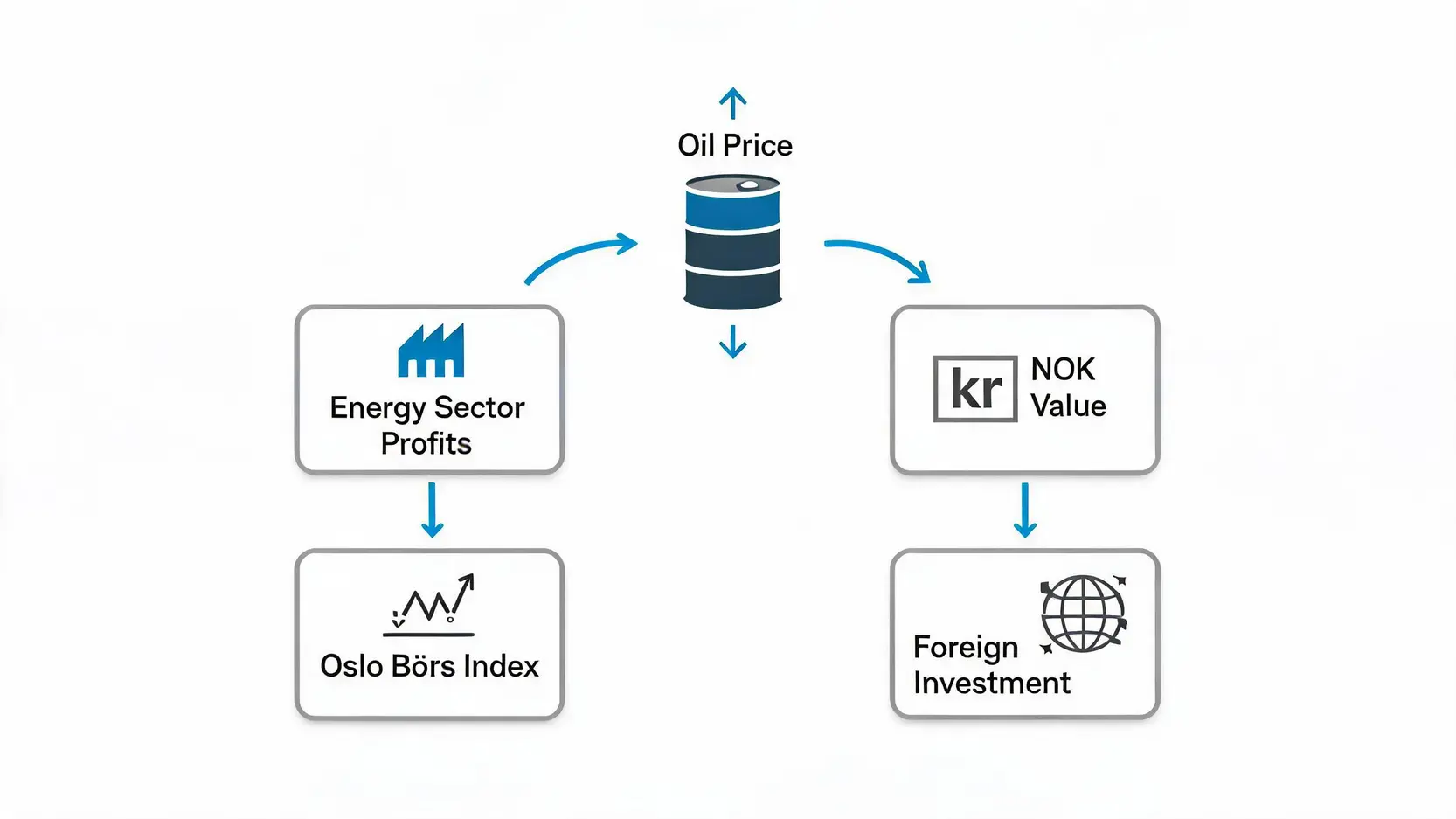
The connection between oil prices and the Norwegian stock market is direct and profound. As Europe’s largest oil and gas producer, the nation’s economic health and the performance of its benchmark OSEBX index are heavily correlated with the fortunes of the energy sector. This linkage manifests in several critical ways that define the oil price risk on the Norwegian stock market.
The Weight of Equinor and the Energy Sector on the OSEBX Index
The Oslo Børs is significantly influenced by a handful of large-cap companies, with the energy sector leading the charge. State-owned Equinor (formerly Statoil) is the behemoth of the index. Its market capitalization is so substantial that its stock performance can single-handedly move the entire OSEBX. When oil prices rise, Equinor’s revenues and profitability surge, lifting its stock and, by extension, the broader market. Conversely, a slump in crude prices has an immediate and often disproportionate negative effect. Investors must recognize that an investment in a broad Norwegian index fund is, to a large degree, a directional bet on energy prices.
Impact on the Norwegian Krone (NOK) and Foreign Investment
The Norwegian Krone (NOK) is a classic example of a ‘petrocurrency.’ Its value on foreign exchange markets often moves in lockstep with oil prices. Here’s how this impacts the stock market:
- Stronger NOK: When oil prices are high, rising export revenues strengthen the NOK. For foreign investors, this can be a double-edged sword. While their Norwegian stock holdings may be increasing in value, a stronger NOK means it costs more to buy those assets, potentially dampening new investment inflows.
- Weaker NOK: Conversely, when oil prices fall, the NOK tends to weaken. This can make Norwegian stocks cheaper for foreign investors, potentially attracting capital looking for a bargain. However, it also erodes the returns for existing foreign holders when they convert their investments back to their home currency.
This currency effect adds another layer of volatility and is a key component of the oil risk that international investors must manage when allocating capital to the Norway stock market in 2026.
Top 3 Oil-Related Risks for the Norway Stock Market in 2026
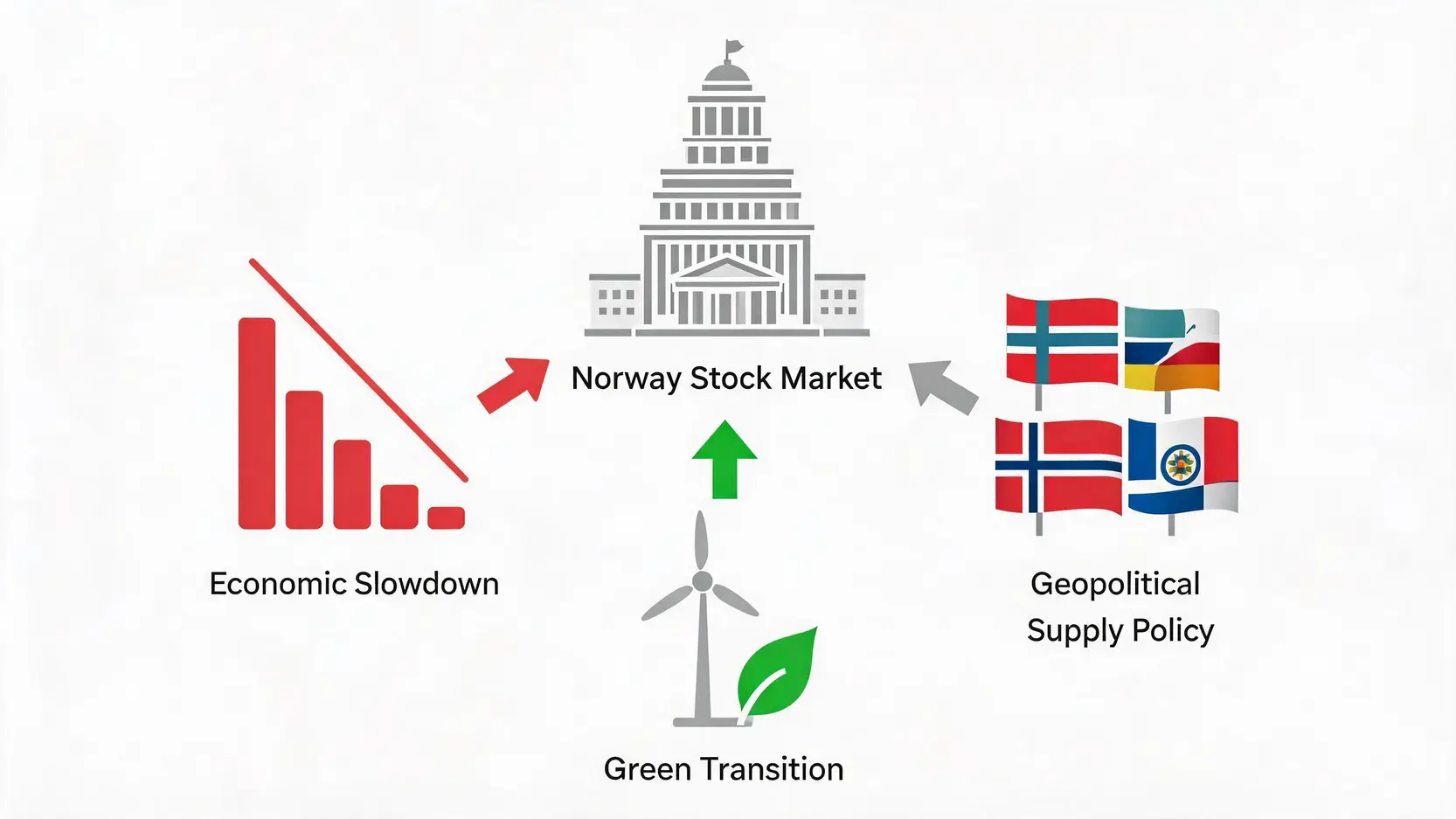
While the Norwegian economy has made strides in diversification, its stock market remains acutely sensitive to specific risks emanating from the global oil trade. As we look through 2026, three macroeconomic and policy-driven threats stand out for investors considering the Oslo Børs and its inherent oil dependency.
Risk 1: Global Economic Slowdown and Reduced Demand
The health of the global economy is the single most important driver of oil demand. In 2026, the risk of a synchronized economic slowdown in major consumer markets like China, the United States, and the Eurozone is a primary concern. Central bank policies aimed at controlling inflation have led to higher interest rates, which can stifle economic activity. A global recession, or even a significant slowdown, would lead to a sharp drop in demand for energy for manufacturing, transportation, and consumer activity. For the Norway stock market, this would translate directly into lower oil prices, reduced profits for energy companies, and a likely downturn in the OSEBX index.
Risk 2: The Accelerating Green Transition and ESG Pressures
The global shift towards renewable energy is no longer a distant threat; it is a present and accelerating reality. This ‘Green Transition’ poses a structural, long-term risk to oil-centric economies. Key facets of this risk include:
- ESG Mandates: A growing number of institutional investors, from pension funds to asset managers, are operating under strict Environmental, Social, and Governance (ESG) mandates. These policies often require them to limit or completely divest from fossil fuel assets, reducing the pool of potential buyers for energy stocks.
- Policy and Regulation: Governments worldwide are implementing stricter emissions standards, carbon taxes, and subsidies for renewable energy. These policies are designed to reduce fossil fuel consumption, directly impacting the long-term demand forecast for oil and gas.
- Technological Advancement: Rapid improvements in battery technology, solar efficiency, and green hydrogen production are making renewables increasingly cost-competitive with fossil fuels, eroding oil’s market share in power generation and transportation.
Risk 3: OPEC+ Production Policies and Market Uncertainty
The Organization of the Petroleum Exporting Countries and its allies (OPEC+) wield significant influence over global oil supply. Their decisions on production quotas can create immense uncertainty and volatility. A key oil risk in 2026 is the potential for discord within the group. If member countries, driven by their own domestic economic needs, fail to adhere to agreed-upon production cuts, it could lead to a market glut and a rapid price decline. Conversely, aggressive cuts aimed at pushing prices higher could backfire by accelerating demand destruction and incentivizing further investment in alternative energy sources.
Beyond Oil: Identifying Norway’s Resilient Sectors
For savvy investors, the key to navigating the Norway stock market in 2026 is to look beyond the dominant energy sector. The country is fostering a diverse and innovative economy with world-class industries that offer compelling growth prospects independent of oil price volatility. A strategy focused on these areas can provide crucial portfolio diversification.
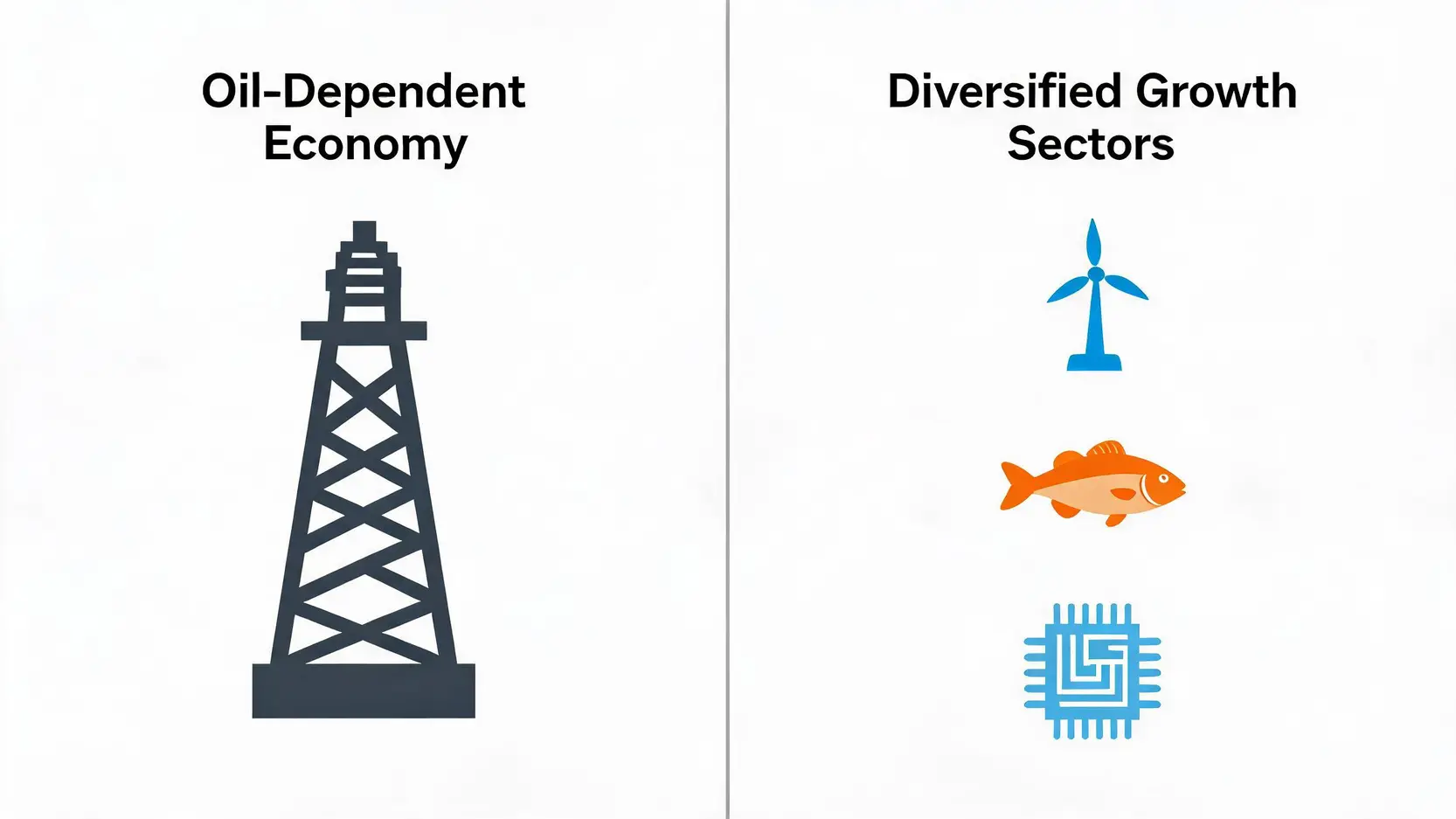
Growth Potential in Norway’s Renewable Energy and Aquaculture Industries
Norway is leveraging its engineering expertise and natural resources to become a leader in two key sustainable industries:
- Renewable Energy: Building on its foundation of hydropower, Norway is a pioneer in offshore wind technology. The country’s extensive coastline and deep waters make it an ideal location for developing next-generation floating wind farms. Furthermore, there is significant investment pouring into green hydrogen and carbon capture, utilization, and storage (CCUS) technologies, positioning Norwegian companies at the forefront of the energy transition. Learning how to invest in renewable energy stocks could unlock significant potential.
- Aquaculture: Norway is the world’s largest producer of Atlantic salmon. The global demand for healthy, sustainable protein is rising, and Norwegian aquaculture companies are leaders in technology, sustainable farming practices, and global distribution. This sector offers growth driven by demographics and dietary trends, providing a powerful counterbalance to the cyclical energy market.
The Rise of the Norwegian Tech and Software Sector
Often overlooked, Norway has a burgeoning technology scene characterized by high levels of digitalization and innovation. Niche software companies in sectors like enterprise SaaS, maritime technology, and educational tech have established strong global footprints. The government’s significant investment in digital infrastructure and a highly educated workforce create a fertile ground for tech growth, offering investors exposure to a high-margin, scalable industry.
Strategies for Building a Diversified Norwegian Portfolio in 2026
A prudent approach for 2026 involves mitigating oil exposure while capturing growth in these other resilient sectors. Investors should consider a multi-pronged strategy. This could involve allocating a portion of their portfolio to non-oil Norwegian companies directly or through sector-specific ETFs. Understanding the principles of portfolio diversification is fundamental to building a robust investment plan that can withstand the shocks of a volatile oil market.
Conclusion
In conclusion, the fate of the Norway stock market in 2026 remains inextricably linked to the volatile world of global energy. The inherent oil risk, driven by geopolitical uncertainty, shifting demand forecasts, and the relentless pressure of the green transition, cannot be ignored. However, viewing Norway solely through an oil-tinted lens is a strategic error. The nation’s impressive and accelerating growth in renewable energy, aquaculture, and technology presents compelling opportunities for diversification. A balanced and informed approach, acknowledging the challenges in the energy sector while strategically allocating to these resilient growth industries, will be paramount for any investor aiming for success on the Oslo Børs in the coming year.
Frequently Asked Questions
Q: What is the consensus forecast for Brent crude oil prices in 2026?
A: While precise forecasts are subject to change, the general consensus among major financial institutions and energy agencies for 2026 points to a range-bound environment for Brent crude. Most outlooks place the average price between $70 and $90 per barrel. This forecast balances resilient demand from emerging markets against rising non-OPEC supply and the dampening effect of the global green energy transition.
Q: How does Norway’s sovereign wealth fund strategy affect the stock market?
A: The Government Pension Fund Global (GPFG), Norway’s sovereign wealth fund, is the largest in the world. Its strategy has an indirect but significant impact. The fund invests oil revenues abroad to prevent the domestic economy from overheating and to diversify risk. While it has minimal holdings in the domestic Oslo Børs, its responsible investment and ESG policies set a powerful precedent for corporate governance and sustainability that influences the behavior of Norwegian companies.
Q: Are there specific non-oil Norwegian ETFs for risk-averse investors?
A: While a dedicated “ex-energy” Norwegian ETF can be difficult to find in all markets, investors can construct a similar exposure. This can be done by investing in global or European ETFs focused on sectors where Norway is strong, such as seafood/aquaculture, renewable energy, or technology, and then checking the fund’s country allocation. Alternatively, one can invest directly in a basket of leading non-oil Norwegian stocks.
Q: What is the biggest non-oil related risk for the Norwegian market?
A: Outside of oil, a significant risk is the health of the global consumer and trade, particularly in Europe and Asia. Norway’s major non-oil exports, like seafood and manufactured goods, are sensitive to consumer spending and economic growth in its key trading partners. A major slowdown in the Eurozone, for example, would negatively impact demand across many of Norway’s resilient sectors.