As the global markets navigate 2026, a significant and sustained oil price drop is forcing investors and economists to confront a pivotal question: will this be the catalyst for the long-anticipated Fed rate cuts? This development introduces a powerful disinflationary force into an economy still grappling with the lingering effects of previous price pressures. Understanding the intricate relationship between oil prices and inflation is now more critical than ever. This analysis dissects the complex interplay between energy costs, core inflation metrics, and the Federal Reserve’s monetary policy, offering a clear and authoritative outlook on the probabilities and potential timing of a policy pivot in 2026.
Table of Contents
Understanding the Economic Chain Reaction: Oil Prices to Fed Policy
The journey from the price at the pump to a decision from the Federal Open Market Committee (FOMC) is a complex chain reaction. A sharp decline in oil prices doesn’t automatically trigger a rate cut; instead, it sets off a series of economic signals that the Fed must carefully interpret within the broader context of its mandate. This process involves direct cost reductions, psychological impacts on consumer expectations, and a historical understanding of how energy shocks have previously shaped monetary policy.
How a Drop in Oil Prices Directly Impacts Core Inflation
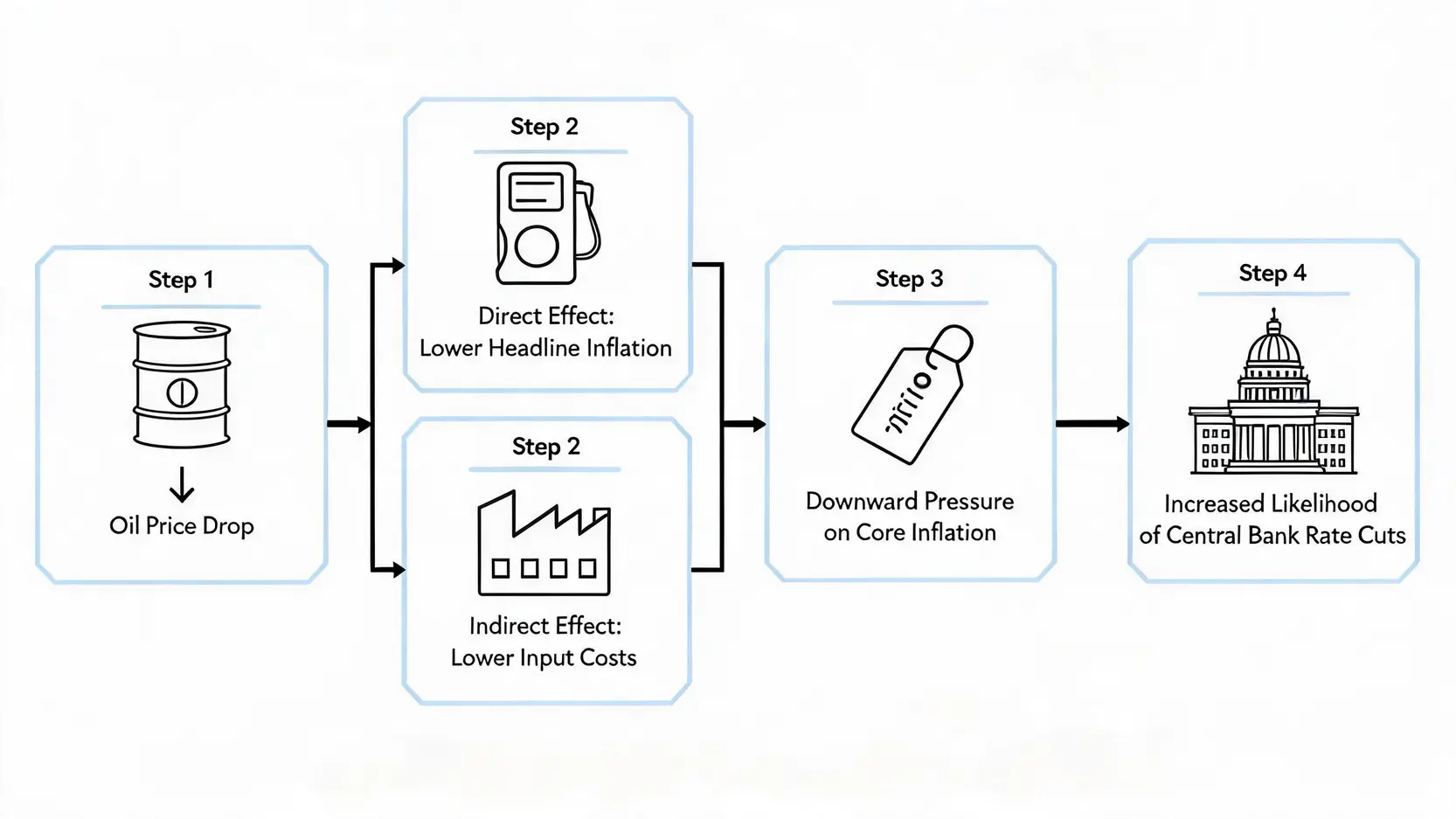
Lower oil prices transmit through the economy in two primary ways: direct and indirect effects. The most immediate, or first-order, effect is a reduction in headline inflation. Consumers see this directly in lower gasoline prices and reduced home heating costs. This provides immediate relief to household budgets, effectively acting as a tax cut and potentially boosting discretionary spending.
The second-order, or indirect, effects are more pervasive and what the Fed watches closely for its impact on core inflation. These include:
- Lower Input Costs: Energy is a fundamental input for nearly every industry. Cheaper fuel reduces transportation costs for goods, lowers operational expenses for airlines, and cuts manufacturing costs, leading to lower prices for a wide range of products.
- Tamed Inflationary Expectations: When consumers and businesses see lower headline inflation, it can temper their expectations for future price increases. This is a crucial psychological victory for a central bank, as it reduces the pressure for aggressive wage hikes, preventing a wage-price spiral.
- Impact on Core PCE: The Fed’s preferred inflation gauge, the Personal Consumption Expenditures (PCE) price index, captures these shifts. While volatile food and energy prices are excluded from core PCE, the indirect effects of cheaper energy eventually bleed into the costs of other goods and services, putting downward pressure on this key metric.
The Federal Reserve’s Dual Mandate: Balancing Inflation and Employment
The Federal Reserve operates under a dual mandate legislated by Congress: to promote maximum employment and stable prices. A significant oil price drop influences both sides of this mandate. By reducing inflation, it helps the Fed achieve its price stability goal. Concurrently, by increasing households’ real disposable income and lowering business costs, it can stimulate economic activity and support the employment side of the mandate.
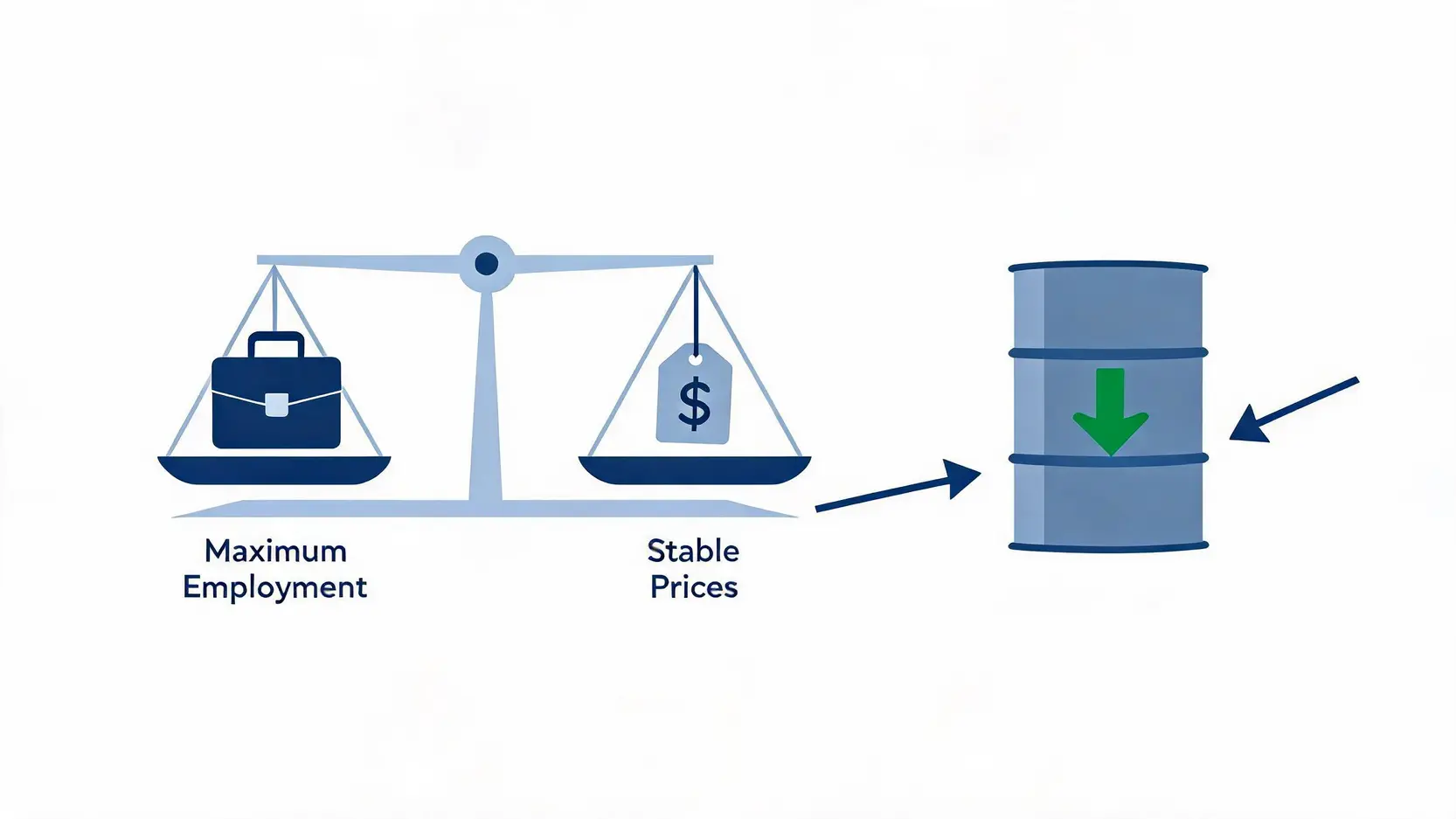
However, the Fed must also consider the origin of the oil price shock. Is it a demand-driven drop (signaling a slowing global economy) or a supply-driven drop (e.g., from a surge in production)? A demand-driven slump is a far more bearish signal for the economy and would build a stronger case for rate cuts to support growth. A supply-driven drop, as we appear to be seeing in 2026, is a more benign, positive development that gives the Fed more flexibility.
Historical Precedents: When Oil Price Shifts Led to Policy Changes
History provides a valuable lens through which to view the current situation. The relationship between oil shocks and Fed policy is not always linear, but clear patterns have emerged. For instance, the oil price collapses of 2014-2016 and the mid-1980s were followed by periods of accommodative monetary policy as disinflationary pressures took hold. An analysis by the Federal Reserve Bank of St. Louis highlights how policymakers have learned to differentiate between supply shocks and broader inflation trends, unlike the responses to the shocks of the 1970s. The key takeaway is that the Fed is less likely to react with a knee-jerk policy change and more inclined to wait for data confirming that lower energy costs are translating into a sustained decline in core inflation before committing to rate cuts.
Analyzing the Key Economic Indicators for 2026
To move from speculation to a data-driven forecast, we must dissect the key indicators the Federal Reserve is scrutinizing. The decision on 2026 Fed rate cuts hinges on a holistic assessment of the energy market, inflation reports, and the strength of the labor market. No single data point will be the deciding factor; rather, it is the confluence of these trends that will shape monetary policy.
Current State of the Energy Market and Future Price Forecasts
The energy landscape of 2026 is characterized by robust global production, particularly from non-OPEC+ countries, and a moderation in demand growth as major economies achieve greater energy efficiency. According to the latest Annual Energy Outlook from the U.S. Energy Information Administration (EIA), global oil demand is projected to see a significant slowdown. Their Short-Term Energy Outlook even forecasts a potential decrease in global oil demand over the course of the year. This supply-demand dynamic suggests that oil prices are likely to remain subdued, providing a sustained period of relief from energy-driven inflation. Barring a major, unforeseen geopolitical event, the baseline forecast is for energy to be a disinflationary force throughout the remainder of 2026.
Dissecting Recent Inflation Reports (CPI & PCE)
While the Consumer Price Index (CPI) often grabs headlines, the Fed’s focus remains squarely on the Personal Consumption Expenditures (PCE) Price Index, especially its core component. The reason is twofold: the PCE index has a broader scope of expenditures and its component weights can change as people substitute goods and services. Recent data for 2026 shows a clear divergence: headline CPI and PCE have fallen sharply, driven by the oil price drop. However, core PCE inflation has remained stubbornly above the Fed’s 2% target, propped up by persistent inflation in services sectors like housing and healthcare. This stickiness in core services inflation is the primary reason for the Fed’s cautious stance. A rate cut will only be on the table once there is definitive evidence of a broad-based cooling trend in core PCE, not just a headline drop from cheaper gas. You can learn more about how to analyze these metrics with our guide to the latest US CPI and PCE data.
Assessing Labor Market Strength and Its Influence on the Fed
The labor market is the other pillar of the Fed’s dual mandate. A strong labor market, characterized by low unemployment and robust wage growth, can fuel demand and contribute to inflationary pressures. Throughout early 2026, the labor market has shown signs of a gradual, orderly cooling rather than a sharp contraction. While job growth has moderated from its torrid pace, wage growth remains slightly above a level consistent with a 2% inflation target. The Fed is in a delicate position: it wants to see the labor market cool enough to dampen wage pressures without tipping the economy into a recession. As long as the labor market remains resilient, it provides a strong argument for the Fed to hold rates steady, ensuring inflation is fully contained before considering a pivot. The dynamic between jobs data and central bank policy is a critical area for traders to watch, as labor market data has a profound effect on Fed decisions.
Expert Forecasts vs. Market Sentiment
The path to potential Fed rate cuts in 2026 is a subject of intense debate, pitting the analytical rigor of major financial institutions against the real-time bets of market participants. This divergence between expert forecasts and market sentiment creates both risk and opportunity for investors. Understanding both perspectives is essential for a complete market view.
What Major Financial Institutions (Goldman Sachs, J.P. Morgan) Predict
Major investment banks employ teams of economists to model these complex scenarios. As of mid-2026, the consensus view is one of cautious optimism for rate cuts, albeit with differing timelines.
- J.P. Morgan: Their research suggests that while the oil price drop is a significant tailwind, the persistence of services inflation will likely delay the first rate cut until the fourth quarter of 2026. Their latest oil price forecast sees Brent crude averaging in the lower range for the year, supporting the disinflationary narrative but emphasizing the Fed’s data-dependent approach.
- Goldman Sachs: Analysts at Goldman Sachs have a slightly more dovish outlook, projecting a potential rate cut as early as the end of the third quarter. They place greater emphasis on the cooling labor market and believe the lagged effects of prior monetary tightening will be sufficient to bring core inflation down more rapidly.
The common thread is that a cut in 2026 is probable, but the exact timing depends on the next few months of core inflation and employment data.
Reading the Futures Market: What Traders are Betting On
The futures market provides a real-time gauge of investor expectations. By analyzing instruments like Fed Funds futures, we can see the probabilities that traders are pricing in for future FOMC meetings. Currently, the market is pricing in a more aggressive path for rate cuts than most economists. Futures indicate a high probability of at least two rate cuts by the end of 2026, with the first potentially occurring late in the third quarter. This suggests that traders are betting the combination of lower oil prices and a slowing economy will force the Fed’s hand sooner than institutional forecasts predict. This gap between market sentiment and analyst prediction is a key source of potential volatility.
Contrarian Viewpoints: Arguments Against a 2026 Rate Cut
To maintain a balanced perspective, it is crucial to consider the arguments against a rate cut this year. The primary contrarian case rests on a few key pillars:
- Sticky Services Inflation: The cost of services, which is less sensitive to energy prices and more sensitive to wage growth, may not decline as quickly as hoped.
- Economic Resilience: The U.S. economy could prove more resilient than expected, with strong consumer spending and a stable labor market keeping growth above trend and giving the Fed no reason to cut.
- Financial Stability Risks: The Fed may be hesitant to cut rates too early, which could risk reigniting asset bubbles or signaling that its inflation fight is over prematurely, potentially damaging its credibility. There are compelling reasons for the Fed to not cut interest rates if underlying economic strength persists.
Geopolitical Wildcards: Factors That Could Disrupt the Outlook
The economic forecasts underpinning the debate on Fed rate cuts are built on assumptions of relative stability. However, the global stage is fraught with geopolitical wildcards that could instantly upend the outlook. An unexpected conflict or policy shift could send shockwaves through energy markets, erasing the disinflationary progress made in 2026 and forcing a complete re-evaluation by the Federal Reserve.
The Role of OPEC+ Production Decisions
The Organization of the Petroleum Exporting Countries and its allies (OPEC+) remains the most significant player in managing global oil supply. While their market power has been challenged by the rise of U.S. shale and other producers, their production decisions can still dictate price direction. If OPEC+ perceives the current low prices as a threat to their fiscal stability, they could announce a surprise, coordinated production cut. Such a move would immediately reverse the downward trend in oil prices, reignite headline inflation, and likely take any near-term Fed rate cuts off the table. Traders must monitor every OPEC+ meeting as a key risk event.
Global Conflicts and Their Effect on Supply Chains
The world is not short of geopolitical flashpoints. A conflict in a key energy-producing region, such as the Middle East, or the disruption of a major shipping lane, like the Strait of Hormuz or the Suez Canal, would have severe consequences. Such an event would not only cause oil prices to spike due to actual or perceived supply shortages but would also snarl global supply chains, increasing shipping costs and delivery times for all goods. This type of supply shock is the Fed’s worst nightmare, as it presents a stagflationary scenario: rising inflation and slowing growth. In such a case, the focus would shift from rate cuts to managing a new inflationary crisis, highlighting the ever-present connection between geopolitical risk and market volatility.
Conclusion
In conclusion, while a sustained oil price drop significantly increases the probability of Fed rate cuts in 2026 by providing a powerful antidote to inflationary pressures, the decision is not automatic. The green light for a policy pivot is conditional. The Federal Reserve’s final verdict will depend on a holistic and data-driven assessment of core inflation trends, labor market health, and the ever-present risk of geopolitical instability. A premature cut could undermine the Fed’s credibility, while waiting too long could stifle economic growth. For investors and traders, the path forward requires diligent monitoring of these key indicators—core PCE, wage growth, and energy market stability—to accurately anticipate the future of monetary policy.
Frequently Asked Questions (FAQ)
Q: Will the Fed guarantee rate cuts if oil prices stay low?
A: No, there is no guarantee. While a sustained drop in oil prices is a significant disinflationary factor and increases the probability of rate cuts, it is not a sole trigger. The Fed’s decision is data-dependent and holistic. They will need to see convincing evidence that lower energy costs are translating into a broad and sustained decline in core inflation (particularly core PCE), alongside a labor market that is cooling enough to prevent wage-driven price pressures. A resilient economy with sticky services inflation could still lead the Fed to hold rates steady, even with low oil prices.
Q: How quickly does a change in oil prices affect the US economy?
A: The impact has varying speeds. The effect on consumers at the gas pump is almost immediate, impacting headline inflation and household budgets within weeks. The indirect effects, such as lower manufacturing and transportation costs, take longer to filter through supply chains and be reflected in the prices of other goods and services. This can take anywhere from three to six months to meaningfully show up in core inflation data, which is why the Fed often adopts a “wait-and-see” approach after an energy price shock.
Q: What other factors besides oil prices influence the Fed’s decision?
A: The Fed analyzes a wide array of data points. Key factors include: 1) Labor Market Data: Non-Farm Payrolls (NFP), the unemployment rate, labor force participation, and especially wage growth (Average Hourly Earnings). 2) Core Inflation Metrics: The Fed’s preferred gauge is the core Personal Consumption Expenditures (PCE) price index, but they also closely watch the core Consumer Price Index (CPI). 3) Economic Growth: GDP reports, retail sales, and manufacturing/services PMI data indicate the economy’s underlying momentum. 4) Financial Conditions: The Fed monitors credit spreads, stock market volatility, and the availability of credit to ensure financial stability.
Q: What is the difference between headline and core inflation?
A: Headline inflation represents the change in price for a total basket of goods and services, including volatile categories like food and energy. Core inflation, by contrast, excludes food and energy prices from its calculation. Central banks, including the Federal Reserve, pay closer attention to core inflation because it is believed to provide a better signal of the underlying, long-term inflation trend. By stripping out the most volatile components, policymakers can get a clearer picture of persistent price pressures that may require a monetary policy response.