With geopolitical tensions escalating, the Iran war impact on UK stocks has become a primary concern for investors. This conflict has triggered significant shockwaves through the global economy, directly influencing the UK’s financial landscape. For those managing a portfolio, understanding the immediate market reactions and the long-term implications is no longer optional—it’s critical. This guide provides a definitive analysis of the financial impact of the Iran war on the UK stock market, breaking down the effects on oil prices, inflation, and sector-specific performance to navigate the current UK stocks volatility due to Iran conflict.
Table of Contents
The Immediate Shockwave: Oil, Gas, and the FTSE 100 Reaction
The initial market response to major geopolitical events is often characterized by a flight to safety and heightened volatility. The conflict in Iran is no exception, with immediate and powerful repercussions felt across UK energy markets and its leading stock index. This knee-jerk reaction is a critical barometer for understanding potential long-term trends.
Analyzing the Surge in Brent Crude and UK Gas Prices
The most direct financial transmission mechanism of the conflict is through energy prices. The Middle East, being a critical hub for global oil production, means any instability poses a direct threat to supply chains. Consequently, Brent Crude, the international benchmark for oil, experienced a sharp, sustained rally. This surge is not merely speculative; it reflects a tangible risk premium demanded by the market. As one Reuters analysis from early 2026 noted, geopolitical risks have consistently forced analysts to revise their forecasts upwards. For the UK, this translates to higher wholesale natural gas prices and, ultimately, increased costs for businesses and consumers, creating a challenging environment for economic growth.
Tracking the FTSE 100’s Initial Response to Market Uncertainty
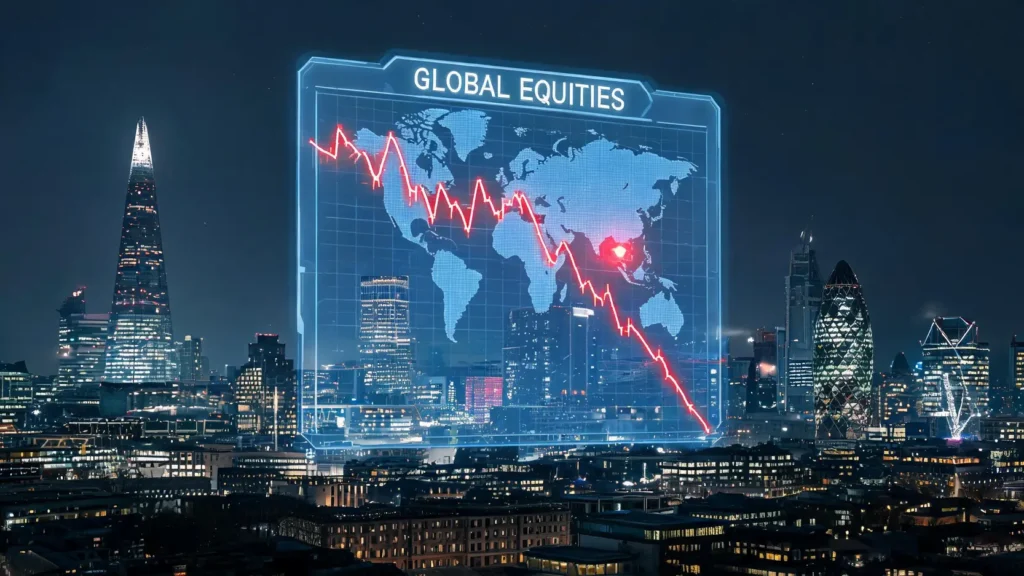
The FTSE 100, home to many of the UK’s largest multinational corporations, reacted with predictable negativity to the outbreak of hostilities. The index saw a significant downturn as investors priced in the dual threats of higher energy costs and a potential global economic slowdown. Sectors with direct exposure to fuel costs and consumer sentiment were hit hardest. Conversely, energy giants like Shell and BP saw their stock prices climb, buoyed by the prospect of higher revenue from elevated oil prices. This bifurcated performance underscores the complex nature of the FTSE 100 reaction to the Middle East war, where systemic risk is offset by sector-specific opportunities.
Broader Economic Ripple Effects on the UK
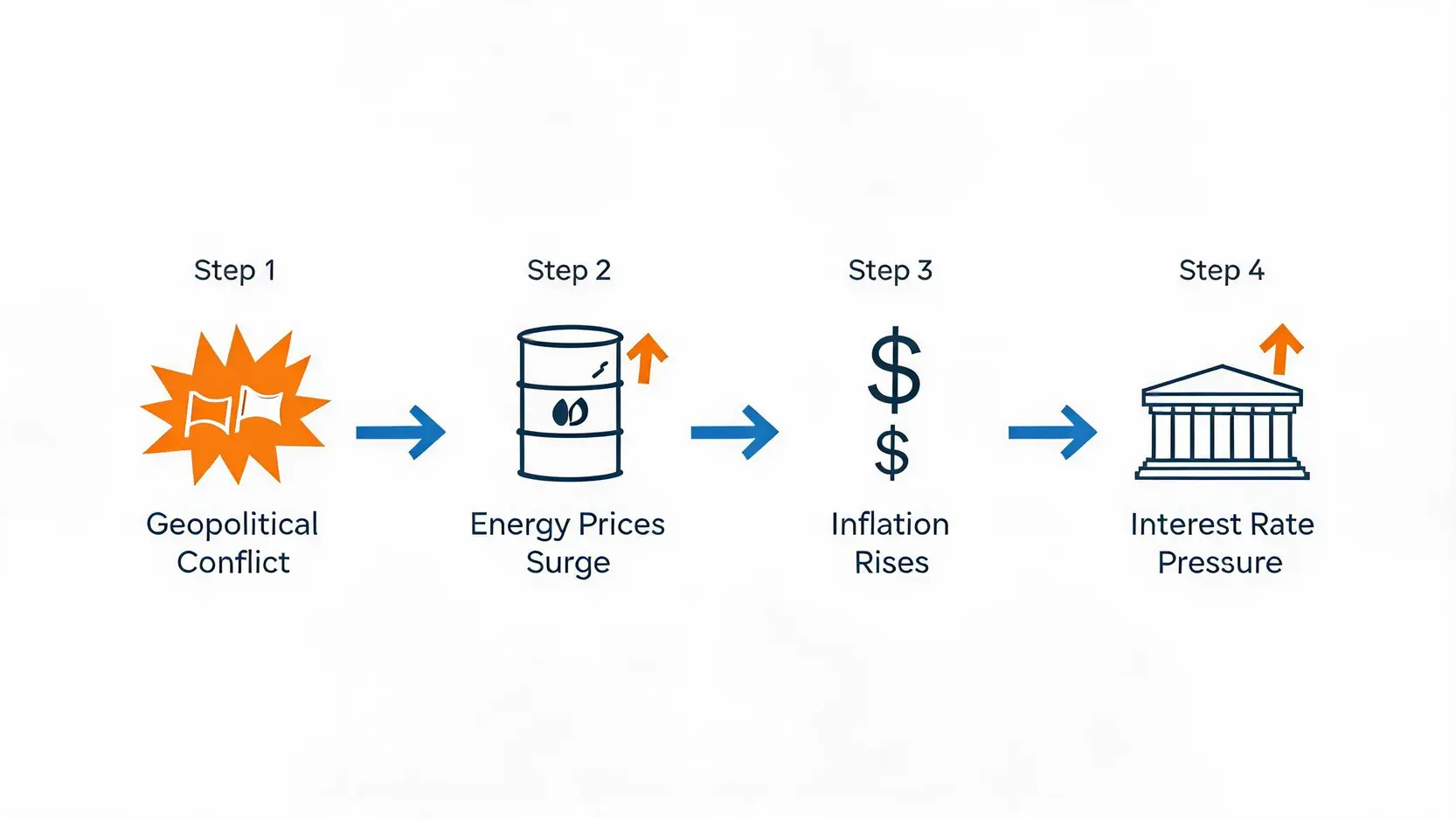
Beyond the immediate market tremors, the Iran conflict is generating powerful secondary effects that are reshaping the UK’s macroeconomic environment. These ripple effects, particularly the effects on UK inflation and interest rates, are critical for investors to monitor as they will dictate market direction long after the initial shock has subsided.
The Link Between Energy Costs, UK Inflation, and Interest Rate Forecasts
The surge in oil and gas prices feeds directly into headline inflation. For the UK, which is a net importer of energy, this is a significant economic headwind. The Consumer Price Index (CPI) is seeing upward pressure from higher transport and utility costs. This presents a difficult dilemma for the Bank of England (BoE). The BoE’s mandate is to control inflation, typically by raising interest rates. However, raising rates in an already fragile economic environment—one hampered by geopolitical uncertainty and squeezed consumer spending—risks triggering a recession. As of mid-2026, market analysts are closely watching the BoE’s every move, with forecasts for interest rate paths becoming increasingly divergent and uncertain.
How Consumer Spending and Business Investment Are Affected
Economic uncertainty is a powerful deterrent to spending and investment. For UK households, higher energy bills and rising prices for everyday goods erode disposable income, leading to a pullback in non-essential spending. This directly impacts retail, hospitality, and leisure sectors. For businesses, the combination of higher input costs (energy, raw materials) and a clouded demand outlook makes new investment projects less attractive. Capital expenditure is often delayed or cancelled, which in turn slows down broader economic growth and dampens corporate earnings expectations across the board.
Sector-by-Sector Breakdown: Winners and Losers on the LSE
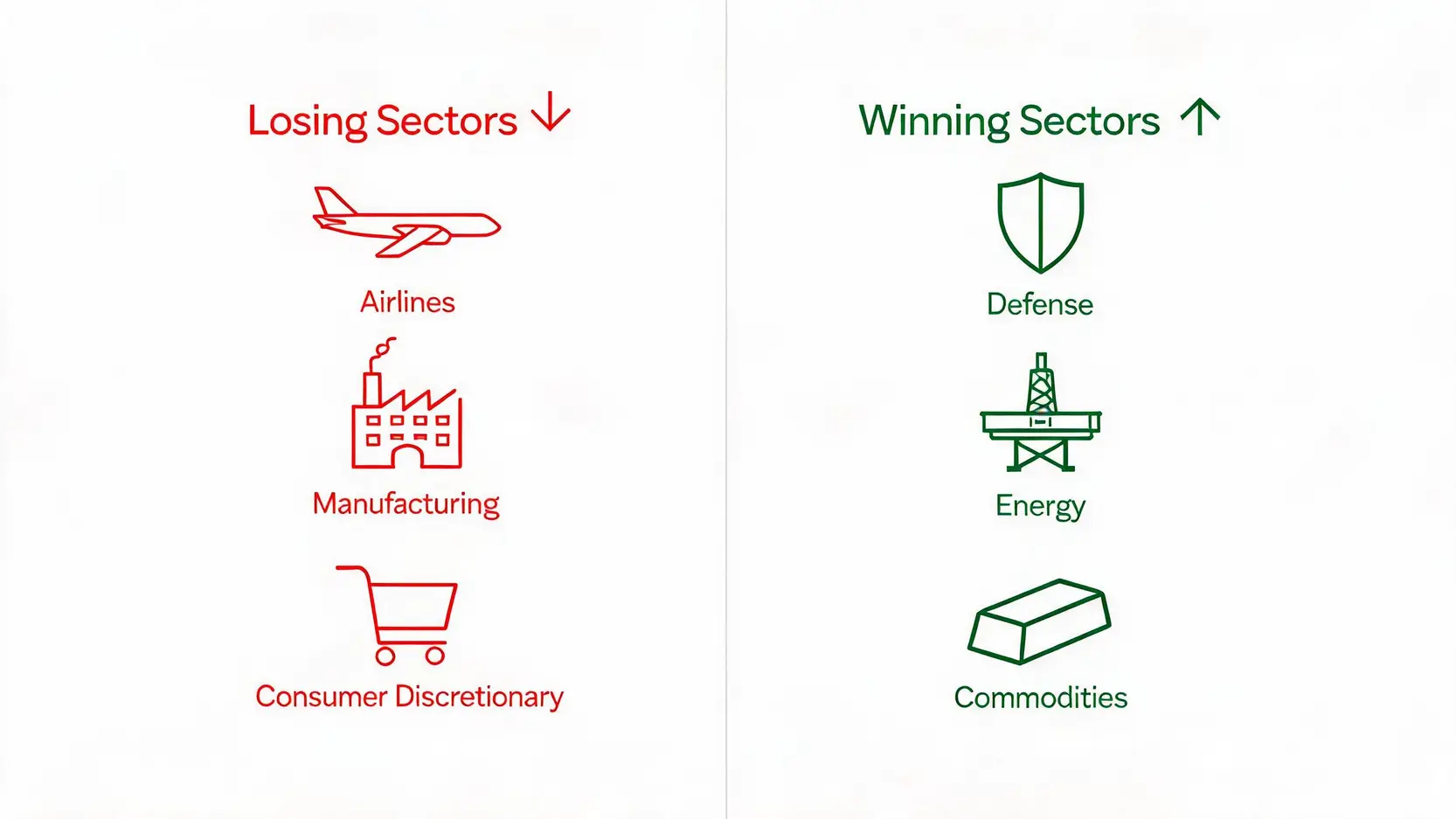
The Iran war’s impact is not uniform across the London Stock Exchange (LSE). The crisis has created a clear divergence in performance, sorting sectors into distinct categories of high-risk and potential resilience. A granular, sector-level analysis is essential for active portfolio management in this environment.
High-Risk Industries: Airlines, Manufacturing, and Consumer Discretionary
Certain sectors are fundamentally vulnerable to the conflict’s economic fallout:
- ✈️ Airlines: This is the most directly impacted industry. Jet fuel is one of their largest operating expenses, and a surge in crude oil prices decimates profit margins. Companies like IAG (owner of British Airways) and easyJet face immense pressure.
- 🏭 Manufacturing: UK manufacturers are grappling with a dual assault of higher energy costs for production and disrupted global supply chains, which increases logistical expenses and lead times.
- 🛍️ Consumer Discretionary: As inflation erodes real wages and consumer confidence wanes, spending on non-essential items like luxury goods, new cars, and holidays is one of the first areas to be cut. This poses a significant threat to retailers and hospitality firms.
Potentially Resilient Sectors: Defense, Energy, and Commodities
Conversely, some sectors may prove defensive or even benefit from the crisis:
- 🛡️ Defense: Increased geopolitical instability invariably leads to higher national defense budgets. UK defense contractors such as BAE Systems and Rolls-Royce are seeing increased order books and positive investor sentiment.
- 🛢️ Energy: As mentioned, integrated oil and gas supermajors like BP and Shell are primary beneficiaries of higher commodity prices. Their upstream exploration and production segments generate substantial cash flow in this environment.
- ⛏️ Commodities: In times of uncertainty and inflation, investors often flock to hard assets. Gold, in particular, tends to perform well as a safe-haven asset. Mining companies listed on the FTSE, such as Glencore and Rio Tinto, may also see support.
Assessing the Impact on Financial Services and Banking Stocks
The financial sector presents a more nuanced picture. On one hand, if the Bank of England raises interest rates to combat inflation, it could widen net interest margins for banks like Lloyds and Barclays, boosting profitability. On the other hand, a sharp economic downturn would lead to an increase in loan defaults and a reduction in demand for credit, posing a significant risk to their balance sheets. Investment banks and asset managers also face headwinds from lower market volumes and volatile asset prices.
Strategic Considerations for UK Investors
Navigating a market defined by geopolitical conflict requires a shift from opportunistic trading to disciplined, strategic positioning. For UK investors, this means focusing on capital preservation and identifying pockets of resilience. The core of any approach must be based on proven investment strategies during geopolitical conflict, which prioritize durability over short-term gains.
Why Diversification is Key During Geopolitical Crises
Diversification is the single most important tool for managing risk. However, in the current context, it means more than simply owning different stocks. True diversification involves spreading capital across asset classes (equities, bonds, commodities), geographic regions (reducing specific UK/Europe exposure), and sectors. By holding a mix of assets, a downturn in one area—such as UK consumer discretionary stocks—may be offset by gains in another, like gold or US defense equities. This approach smooths portfolio returns and reduces the impact of any single shock event. For those looking to refine their approach, understanding various investment strategies during geopolitical conflict is a crucial first step.
Identifying Potential Defensive Stocks and Safe Havens
In a risk-off environment, capital naturally flows towards ‘defensive’ stocks. These are companies that provide essential goods and services, and whose earnings are less correlated with the broader economic cycle. Key defensive sectors in the UK include:
- Utilities: Companies like National Grid and Severn Trent provide essential services, ensuring stable demand regardless of the economic climate.
- Consumer Staples: Firms such as Unilever and Diageo sell products that people buy in both good times and bad.
- Healthcare: Pharmaceutical giants like AstraZeneca and GSK benefit from inelastic demand for their medicines and treatments.
These businesses often feature strong balance sheets and reliable dividend streams, making them attractive safe havens during periods of market turmoil. A detailed guide to defensive stock investing can provide a robust framework for identifying these opportunities.
Conclusion
In summary, the Iran war’s impact on UK stocks is a complex, multifaceted issue driven by the primary channels of volatile energy prices and resurgent inflation fears. The shock has created clear winners and losers across the London Stock Exchange, with energy and defense sectors showing resilience while consumer-facing industries face significant headwinds. For investors, this period of heightened uncertainty demands a renewed focus on strategic principles. Maintaining a long-term perspective, ensuring genuine portfolio diversification across assets and geographies, and identifying quality defensive stocks are the crucial pillars for navigating this challenging market landscape effectively.
Frequently Asked Questions (FAQ)
Q: How does the Iran war directly affect my UK pension fund?
A: Most UK pension funds are heavily diversified, holding a mix of UK and global equities, bonds, and other assets. The impact will depend on your fund’s specific allocation. It will likely see a negative impact on its UK equity holdings (especially non-energy stocks) but may see offsetting gains from its energy and commodity holdings. The key is that diversification is designed to cushion the blow from single events like this, but overall returns may be muted or negative during the period of high volatility.
Q: Which specific UK companies are most exposed to the Middle East conflict?
A: Companies with high fuel costs, such as IAG (British Airways) and Carnival (cruise lines), are directly exposed. Major importers and manufacturers who rely on stable global supply chains will also face pressure. Furthermore, any company with significant business operations or sales in the immediate region faces both logistical and political risk. Conversely, companies like BP, Shell, and BAE Systems have exposure that is currently viewed as financially positive by the market.
Q: Is now a good time to invest in oil and gas stocks like Shell or BP?
A: While these companies are benefiting from higher oil prices, investing now means buying in after a significant price run-up. The primary risk is a sudden de-escalation of the conflict, which could cause oil prices to fall sharply, taking these stock prices down with them. They are currently a ‘geopolitical trade’, and investors must be aware of the high volatility and risk associated with that. A long-term investment should be based on company fundamentals beyond the current crisis.
Q: What are ‘safe haven’ assets to consider beyond defensive stocks?
A: Classic safe havens include physical gold and government bonds from stable countries (like US Treasuries or UK Gilts). Gold often performs well during periods of inflation and geopolitical risk. While bonds can be complicated by interest rate policy, short-duration government debt is often used as a place to ‘park’ cash during market turmoil. Cash itself, in a high-interest savings account, also acts as a safe haven by preserving capital.
Q: How long can investors expect the market volatility from the Iran war to last?
A: The duration of market volatility is directly tied to the duration and perceived severity of the geopolitical conflict. As long as the situation remains unresolved and the risk of escalation or wider disruption to oil supplies persists, markets will continue to price in a significant risk premium. Investors should prepare for a potentially extended period of uncertainty, lasting months or even longer, and structure their portfolios accordingly rather than attempting to time a resolution.