
Table of Contents
Global Headwinds: Macroeconomic & Geopolitical Pressures
The recent downturn in European semiconductor stocks isn’t happening in a vacuum. A confluence of powerful global forces is exerting significant pressure on the sector. For investors, understanding these macroeconomic and geopolitical headwinds is the first step to navigating the current volatility. These factors create a challenging environment, impacting everything from supply chains to consumer demand.
The Impact of International Trade Policies and Tariffs
The intricate web of global trade is a primary source of concern. Ongoing trade disputes, particularly the tech-focused tensions between the United States and China, have created a climate of uncertainty. European semiconductor firms, deeply integrated into global supply chains, are caught in the crossfire. Tariffs and trade restrictions can increase the cost of raw materials, disrupt production, and limit access to key markets. As major economic blocs use trade policy as a strategic tool, the semiconductor industry often bears the brunt of the impact. The situation remains fluid, and as one analyst puts it in a recent report on the US-China Chip War, the ripple effects are felt globally, creating a challenging environment for companies that rely on a stable, interconnected market.
Concerns Over a Global Economic Slowdown and Weaker Demand
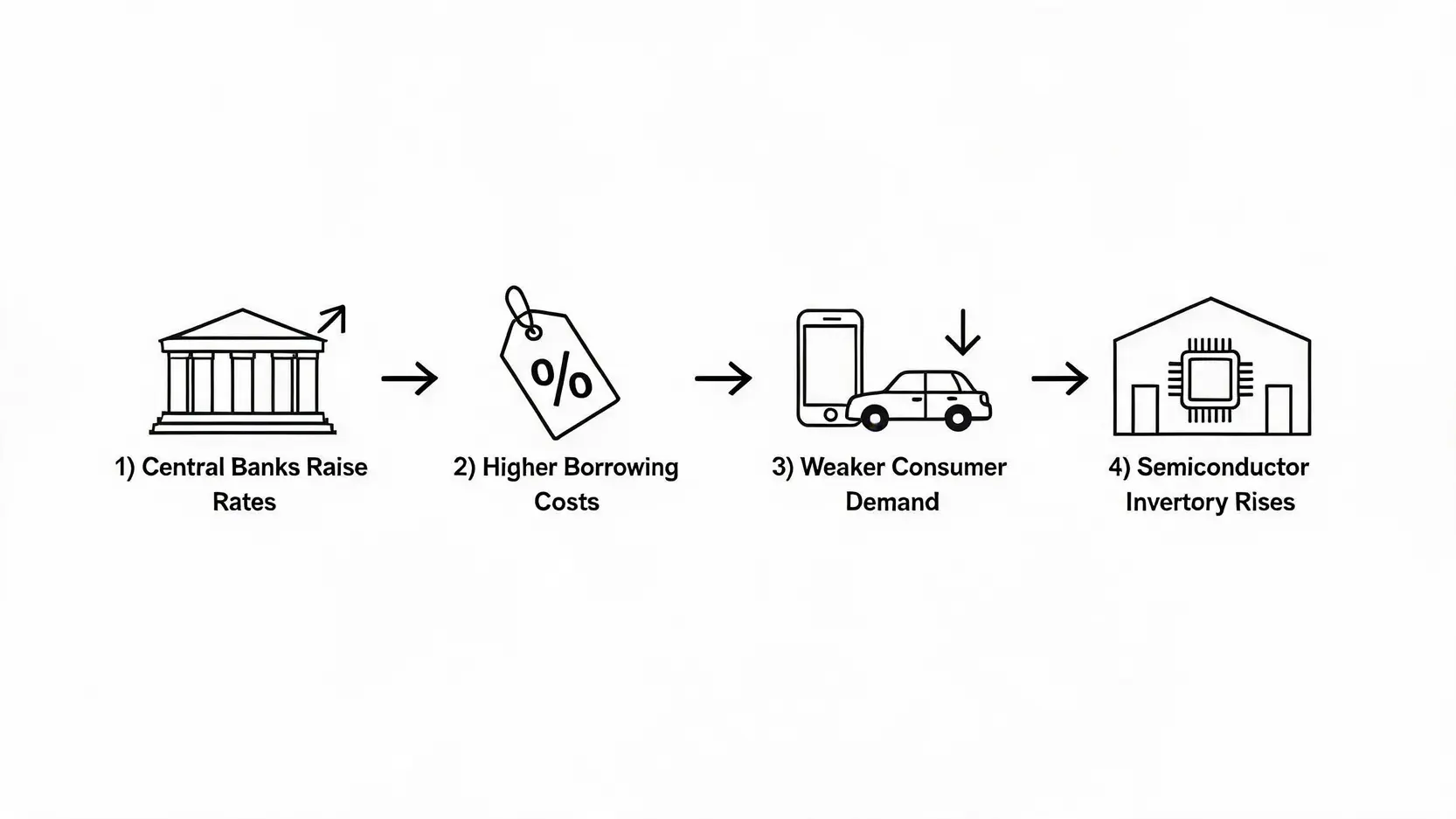
Beyond trade politics, the broader economic outlook has soured. Central banks around the world have been tightening monetary policy to combat the inflation of previous years, and in 2026, the effects are becoming clear. Higher interest rates are dampening consumer and corporate spending. For the semiconductor industry, this translates directly into weaker demand for end products like smartphones, PCs, and other consumer electronics. When households and businesses tighten their belts, big-ticket purchases are often the first to be delayed, leading to a build-up of inventory and a downward revision of sales forecasts for chipmakers.
Ripple Effects from Wall Street and Asian Market Sell-Offs
Global markets are more interconnected than ever. A significant sell-off on Wall Street, particularly in the tech-heavy Nasdaq index, inevitably sends waves across the Atlantic to European bourses. Similarly, downturns in Asian markets, which are home to many of the world’s largest electronics manufacturers and consumers, have a direct impact on the sentiment and financial performance of European semiconductor suppliers. This contagion effect means that even fundamentally strong European companies can see their valuations fall due to negative momentum originating thousands of miles away.
Sector-Specific Challenges: Cooling AI Optimism and Cyclical Trends
While macroeconomic factors set the stage, a series of sector-specific issues have further spooked investors in European chip stocks. The initial euphoria around Artificial Intelligence has given way to a more nuanced and cautious assessment, while the industry’s inherent cyclicality is reasserting itself.
How Major Company Guidance Has Tempered AI Enthusiasm
After a period of stratospheric growth fueled by the AI revolution, a dose of reality is setting in. Recent guidance from major industry players has signaled a moderation in the once-explosive demand for AI-related chips. For example, when a bellwether company like Broadcom hints at a cooling market, it’s perceived as a sign that the initial, unrestrained spending on AI infrastructure is transitioning to a more sustainable, but slower, growth phase. This has led investors to reassess the lofty valuations previously assigned to any company associated with AI, causing a broad-based recalibration across the sector.
Understanding the Cyclical Nature of the Semiconductor Industry
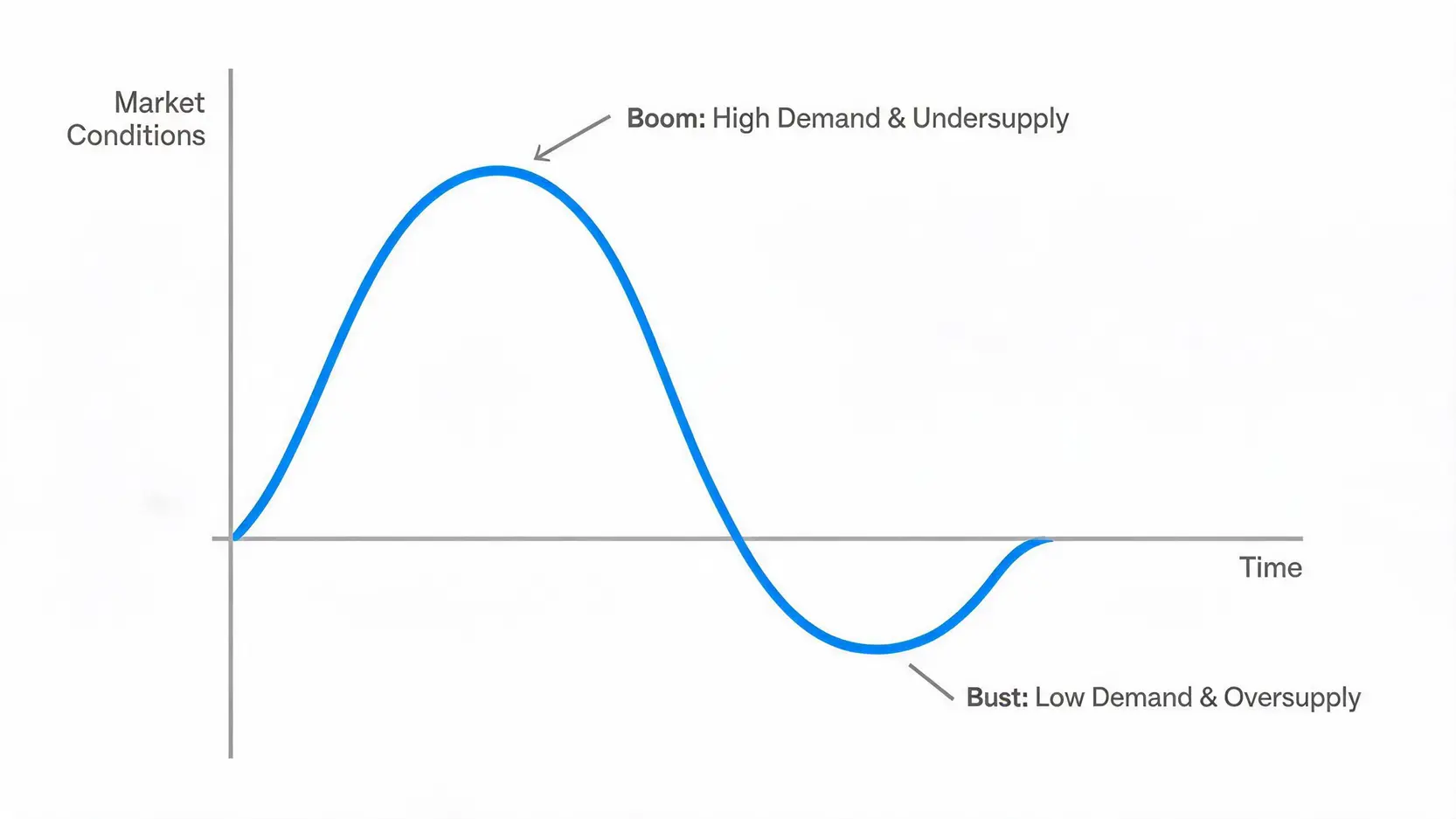
The semiconductor industry has always been characterized by boom-and-bust cycles. These cycles are driven by the complex interplay between high upfront investment in manufacturing capacity (fabs) and fluctuating end-market demand. A period of high demand and undersupply leads to massive capital expenditure, which eventually results in oversupply when demand normalizes or weakens. It appears we are currently entering the downward leg of such a cycle. Understanding this pattern is crucial for investors, as it helps differentiate between temporary cyclical downturns and long-term structural problems. For those looking to invest, it is critical to understand how to approach these market phases, as detailed in our guide on Navigating the Chip Cycle: A Guide for Investors.
Analyzing Weaker-Than-Expected Economic Data in the Tech Sector
Recent economic data from the tech sector has been less than encouraging. Reports on factory orders, purchasing managers’ indexes (PMIs), and sales of electronic goods have all pointed towards a slowdown. This weak data provides concrete evidence for the anecdotal fears of an economic slowdown, giving investors a quantifiable reason to sell. When the numbers confirm the narrative, it can trigger a more pronounced and prolonged sell-off as fund managers and analysts adjust their models to reflect the new, harsher reality.
Future Outlook: Navigating the European Semiconductor Landscape
With a backdrop of falling valuations and market pessimism, the key question for investors is: what’s next? A careful analysis of the future landscape reveals both significant risks and compelling long-term opportunities. The key is to look beyond the immediate noise and focus on fundamental drivers and valuation.
Are European Chip Stocks Undervalued After the Sell-Off? A Valuation Perspective
After a significant correction, valuations across the European semiconductor sector have become much more reasonable. Price-to-earnings (P/E) ratios and price-to-sales (P/S) multiples have compressed significantly. For a long-term, value-oriented investor, this presents a potential entry point. The challenge, however, is to distinguish between a stock that is truly cheap and one that is a ‘value trap’—a company whose price is falling for good reason. A thorough valuation analysis, looking at free cash flow, balance sheet strength, and competitive positioning, is more crucial than ever. The goal is to identify resilient companies that are being unfairly punished by the broad market downturn.
Long-Term Growth Drivers: AI, Automotive, and IoT
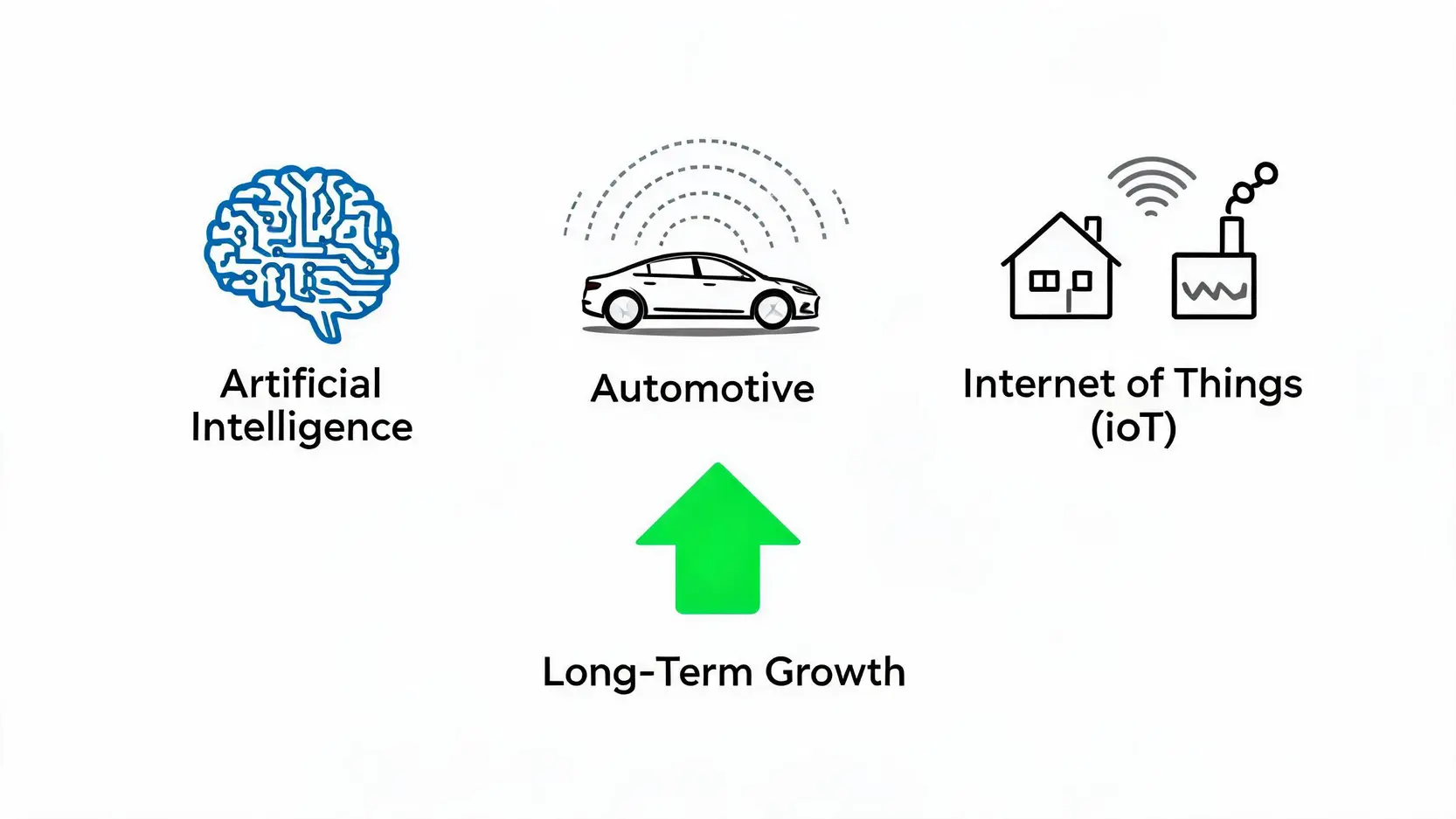
Despite the current cooling, the long-term demand for semiconductors remains incredibly strong. Three mega-trends will continue to drive growth for years to come:
- Artificial Intelligence (AI): While the initial hype may have faded, the real integration of AI across all industries is just beginning. This requires ever more powerful and specialized chips.
- Automotive: The transition to electric vehicles (EVs) and autonomous driving is transforming cars into data centers on wheels. The semiconductor content per vehicle is skyrocketing, a trend that will only accelerate.
- Internet of Things (IoT): The proliferation of connected devices in our homes, cities, and factories creates a massive, distributed demand for a wide variety of chips.
These structural growth drivers are not going away and will provide a powerful tailwind for well-positioned European chipmakers.
Key European Players to Watch: ASML, Infineon, STMicroelectronics
Within Europe, several companies hold strategic positions in the global semiconductor ecosystem. Investors should pay close attention to these key players:
- ASML (Netherlands): Holding a near-monopoly on the advanced EUV lithography machines required to make cutting-edge chips, ASML is a critical linchpin of the entire industry.
- Infineon (Germany): A leader in power semiconductors and automotive chips, Infineon is perfectly positioned to benefit from the electrification and digitalization of the auto industry.
- STMicroelectronics (Switzerland): A diversified chipmaker with strong positions in microcontrollers, sensors, and analog chips, STMicro is a key enabler of the IoT and industrial automation.
These firms possess the technology, market position, and scale to weather the current downturn and capitalize on the long-term growth trends.
Conclusion
The decline in European semiconductor stocks is a complex issue stemming from a potent mix of global economic pressures, geopolitical tensions, and industry-specific cyclical challenges. The AI-fueled optimism has met the harsh reality of a slowing global economy, and the market is now recalibrating its expectations. While the short-term outlook remains clouded with uncertainty, it’s crucial for investors to look beyond the immediate turbulence. The fundamental, long-term demand for advanced semiconductors, driven by transformative trends in AI, automotive technology, and the IoT, remains intact. For savvy investors who can tolerate risk and conduct thorough due diligence, the current downturn may offer a compelling entry point into some of the world’s most strategically important technology companies.
Frequently Asked Questions (FAQ)
Q: What is the biggest single factor causing European semiconductor stocks to fall?
A: While several factors are at play, the most significant is the combination of a cyclical industry downturn and fears of a global economic slowdown. Weaker demand for electronics, driven by higher interest rates and consumer caution, is leading to revised growth forecasts, which in turn spooks investors and drives down stock prices.
Q: How does the performance of European chip stocks compare to US and Asian markets?
A: The sell-off has been a global phenomenon. However, the performance can differ based on company-specific exposure. US tech giants with a heavy focus on AI software and services might be affected differently than a European company specializing in automotive or industrial chips. Generally, all three regions are facing the same macroeconomic headwinds, but regional market sentiment and specific sub-sector strengths can lead to short-term divergences.
Q: Is this a temporary correction or the start of a longer-term downturn?
A: This is the key question for investors. From a historical perspective, the semiconductor industry is cyclical. The current situation feels like a typical cyclical correction, exacerbated by macroeconomic fears. It is likely not the start of a permanent decline, given the powerful long-term growth drivers like AI and vehicle electrification. However, the downturn could last for several more quarters until inventory levels normalize and demand picks back up.
Q: Are there any buying opportunities in the European semiconductor sector right now?
A: For investors with a long-term horizon (3-5 years or more), the current sell-off could present a significant buying opportunity. Valuations have become much more attractive for industry leaders like ASML, Infineon, and STMicroelectronics. However, timing the exact bottom is impossible. A strategy of dollar-cost averaging (investing a fixed amount regularly) into a basket of high-quality European chip stocks could be a prudent way to build a position without trying to be a market timer.