Table of Contents
Why the European Semiconductor Sector is a Goldmine for 2026
The global race for technological supremacy is intensifying, with semiconductors at its very heart. For savvy investors looking for the best European semiconductor stocks to watch in 2026, the European market presents a unique and compelling opportunity. This landscape is being actively shaped by strategic initiatives, most notably the impact of the EU Chips Act on semiconductor stocks, and fueled by the relentless demand from the artificial intelligence (AI) and automotive sectors. Identifying companies with high growth potential for 2026 is paramount. This guide will cut through the noise, unveiling the most promising European semiconductor stocks and providing the deep-dive analysis you need to make strategically sound investment decisions.
The Strategic Impact of the EU Chips Act
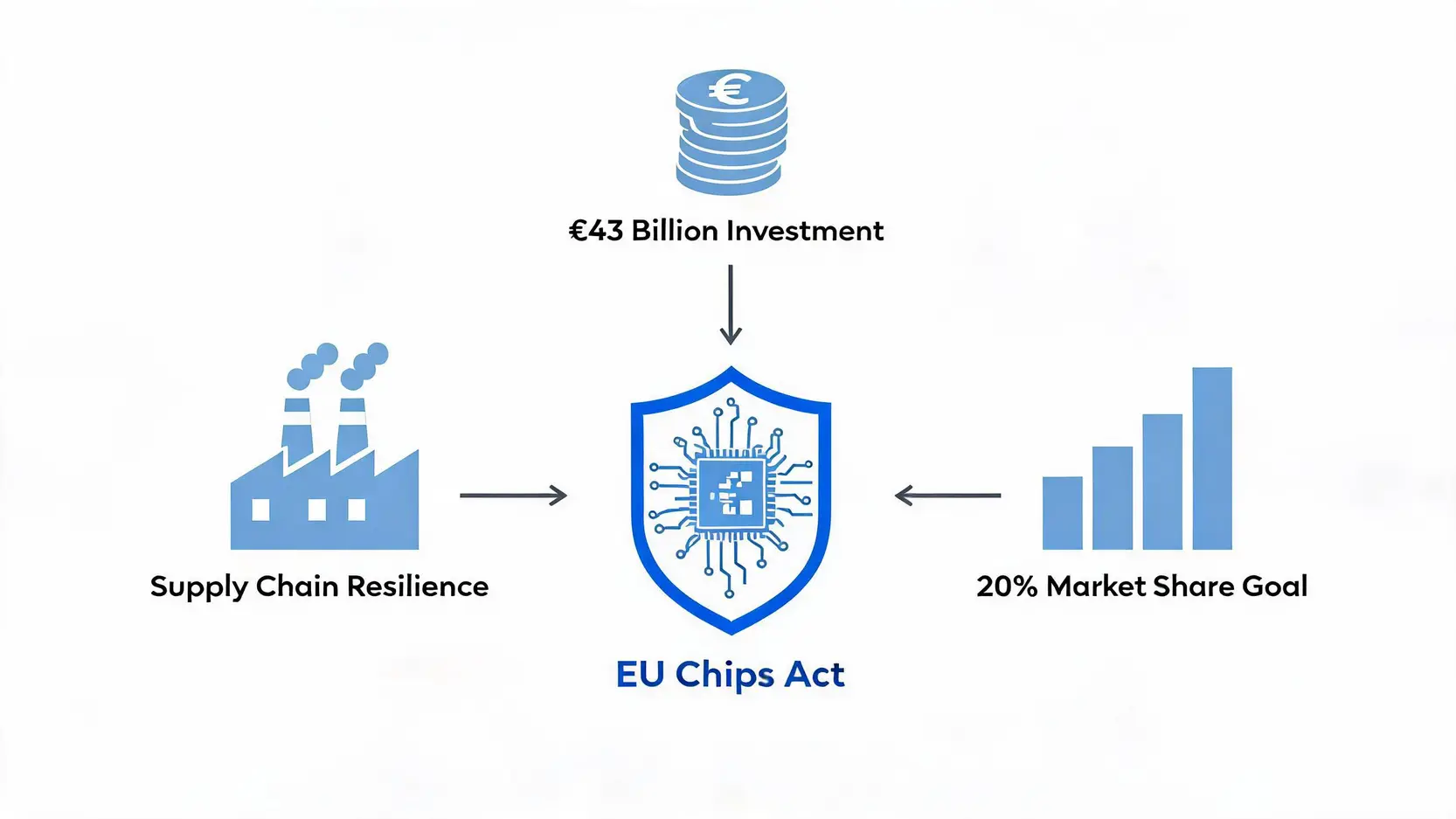
The European semiconductor ecosystem is in the midst of a foundational transformation, largely driven by the European Chips Act. Finalized in 2023, this landmark legislation is now, in 2026, bearing significant fruit. The Act mobilizes over €43 billion in public and private investments with the ambitious goal of doubling the EU’s global market share in semiconductors to 20% by 2030. For investors, this isn’t just political rhetoric; it’s a powerful tailwind. The initiative strengthens domestic manufacturing, reduces reliance on volatile international supply chains, and fosters a collaborative environment for research and development. According to the European Commission, the act is designed to bolster security of supply, resilience, and technological leadership. This government-backed momentum creates a fertile ground for growth, de-risking investments in the sector and providing a clear, long-term growth trajectory for established players and emerging innovators alike.
Surging Demand from AI, Automotive, and IoT
Beyond policy, raw market demand provides an even more potent catalyst. The growth narrative of the semiconductor industry is intrinsically linked to the biggest technological shifts of our time:
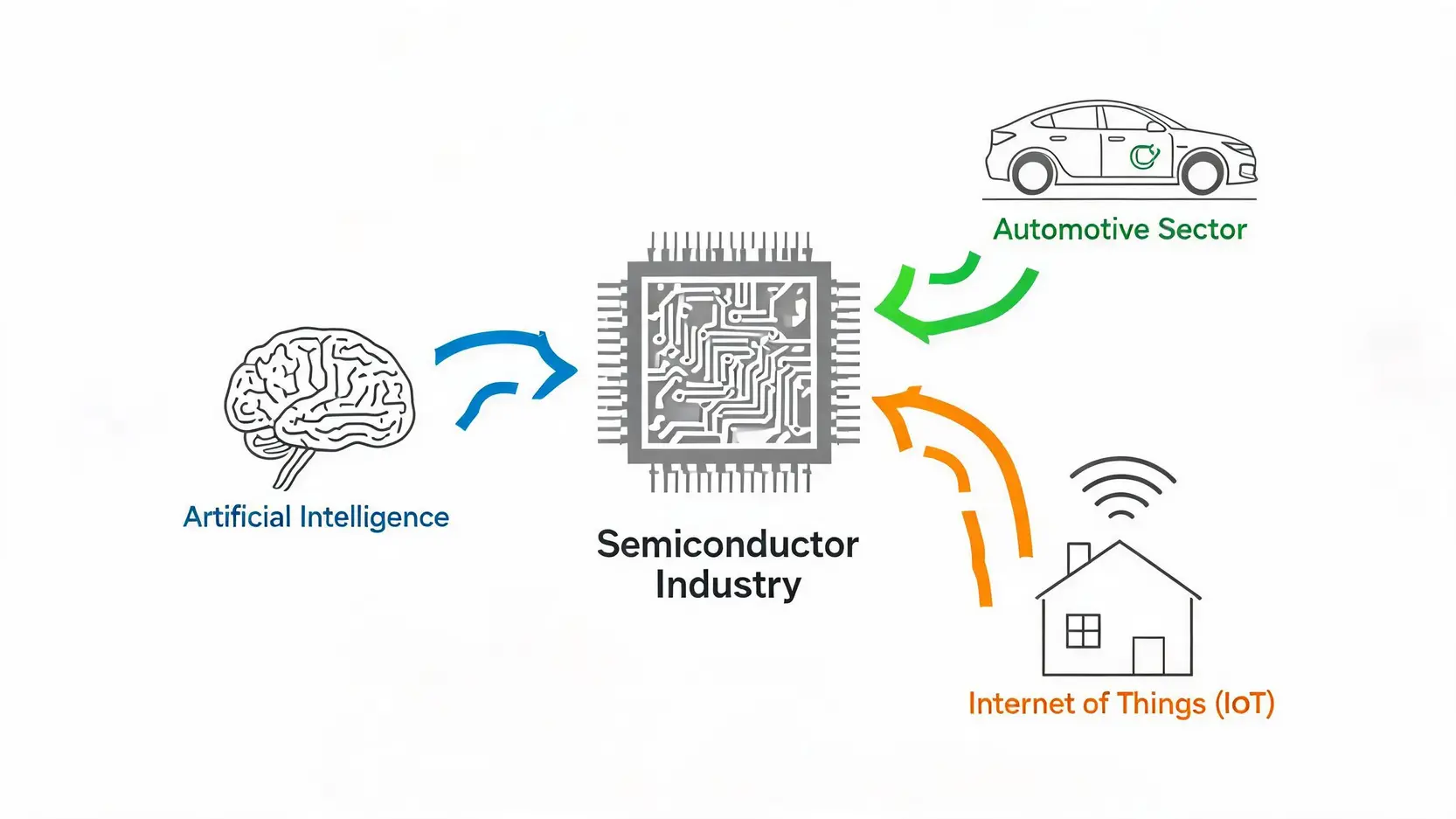
- Artificial Intelligence (AI): The AI revolution is computationally intensive. From data centers training large language models to AI-inference on edge devices, the need for specialized, high-performance chips is exploding. European companies are crucial suppliers of the components that make this revolution possible. If you’re looking to capitalize on this trend, exploring Top AI Stocks to Add to Your Portfolio Now is a logical next step.
- Automotive Industry: Modern vehicles are rapidly evolving into data centers on wheels. Advanced Driver-Assistance Systems (ADAS), in-car infotainment, and the seismic shift towards electric vehicles (EVs) have exponentially increased the semiconductor content per car. European firms like Infineon are at the forefront of this lucrative market, supplying essential power semiconductors, microcontrollers, and sensors.
- Internet of Things (IoT): The proliferation of connected devices in our homes, cities, and industries continues unabated. Each smart device, from a simple sensor to a complex industrial robot, requires a suite of chips to function. This creates a steady, long-term demand for the diversified product portfolios of companies like STMicroelectronics.
Geopolitical Stability and Supply Chain Diversification
The geopolitical frictions of the early 2020s exposed the fragility of the global semiconductor supply chain. In response, corporations and governments worldwide are now prioritizing supply chain resilience. Europe, with its political stability, skilled workforce, and strong legal frameworks, has emerged as a key beneficiary of this global “de-risking” trend. Companies are increasingly looking to diversify their sourcing away from geopolitical hotspots, and Europe’s established semiconductor ecosystem provides a reliable alternative. This shift not only enhances Europe’s strategic importance but also translates into more stable and predictable revenue streams for its leading semiconductor firms.
Top 5 European Semiconductor Stocks for Your 2026 Watchlist
With the macro environment set, let’s drill down into the specific companies poised to outperform. This is not merely a list but a curated selection of firms with dominant market positions, clear growth catalysts, and robust financial health. For investors seeking alpha in the European tech landscape, these five names demand attention.
ASML Holding: The Undisputed Leader in Lithography
It’s impossible to discuss semiconductors without mentioning ASML (ASML). Based in the Netherlands, this company holds a virtual monopoly on the extreme ultraviolet (EUV) lithography machines required to manufacture the world’s most advanced chips. Every leading-edge semiconductor from Apple, NVIDIA, or Intel is made using ASML’s technology. This creates an unparalleled competitive moat. In 2026, ASML’s growth is propelled by the continued build-out of 3nm and 2nm fabrication plants globally. Its next-generation High-NA EUV systems, costing over $350 million each, are just beginning to ship, locking in a multi-year revenue pipeline and cementing its role as the primary enabler of Moore’s Law.
Infineon Technologies: Powering the Automotive Revolution
Germany’s Infineon Technologies (IFX) is a juggernaut in the automotive and power semiconductor markets. As the world transitions to electric vehicles, Infineon’s leadership in power management chips (IGBTs, MOSFETs) and microcontrollers places it in an enviable position. These components are critical for managing battery systems, controlling electric motors, and enabling ADAS features. Beyond automotive, Infineon is a key player in renewable energy infrastructure and industrial automation—two other secular growth trends. For investors looking for a direct play on vehicle electrification and the green energy transition, tracking The Driving Force: Investing in Automotive Chipmakers like Infineon is essential.
STMicroelectronics: A Diversified Bet on Microcontrollers and Sensors
STMicroelectronics (STM), a Swiss-headquartered Franco-Italian company, offers a compelling mix of stability and growth through diversification. While it has a strong presence in the automotive sector, its true strength lies in its vast portfolio of microcontrollers (MCUs), sensors, and analog chips that serve thousands of customers across the industrial, personal electronics, and communications markets. This broad exposure reduces dependence on any single end-market. In 2026, STM is capitalizing on the expansion of the industrial IoT and the increasing sensorization of everyday objects. Its leadership in MEMS sensors and its popular STM32 family of microcontrollers make it a cornerstone of the connected world.
NXP Semiconductors: The King of Secure Connectivity
NXP Semiconductors (NXPI), another Dutch powerhouse, has carved out a dominant position in secure connectivity solutions. It is a leading supplier to the automotive industry, particularly in areas like in-car networking, secure car access (key fobs, NFC), and infotainment systems. Furthermore, NXP is a pioneer in identification and security, with its chips being used in everything from bank cards and passports to mobile payment systems. As cars become more connected and the IoT demands robust security, NXP’s expertise becomes increasingly critical. Its focus on secure edge processing makes it a vital player in the future of both mobility and the internet of things.
BE Semiconductor Industries (Besi): A Key Player in Advanced Packaging
While ASML dominates the ‘front-end’ of chipmaking, Netherlands-based Besi (BESI) is a leader in the ‘back-end’. As traditional chip scaling becomes more complex and expensive, advanced packaging—the process of assembling and connecting different chips together—has become a key driver of performance. Besi specializes in hybrid bonding and other cutting-edge packaging systems that are essential for creating the complex, multi-die processors used in high-performance computing (HPC) and AI applications. As chip designs become more modular, Besi’s role becomes more critical, making it a high-growth ‘picks and shovels’ play on the future of advanced silicon.
Here’s a comparative overview of these top European semiconductor stocks:
| Company | Ticker (Example) | Primary Market Focus | Key Strength (Moat) | 2026 Growth Catalyst |
|---|---|---|---|---|
| ASML Holding | ASML | Lithography Equipment | EUV Monopoly | 2nm Fab Expansion, High-NA EUV Adoption |
| Infineon Technologies | IFX | Automotive & Power | EV Power Systems Leadership | Vehicle Electrification, Renewable Energy |
| STMicroelectronics | STM | Diversified Industrial & MCU | Broad MCU/Sensor Portfolio | Industrial IoT, Smart Devices |
| NXP Semiconductors | NXPI | Secure Automotive & IoT | Secure Connectivity Expertise | Connected Car, Edge AI Security |
| BE Semiconductor (Besi) | BESI | Advanced Packaging | Hybrid Bonding Technology | AI Chiplets, High-Performance Computing |
How to Evaluate European Semiconductor Stocks: A Checklist for Investors
Picking winning stocks requires more than just knowing the top names; it demands diligent analysis. The semiconductor industry is cyclical and highly competitive. Use this checklist to refine your evaluation process and look beyond the surface-level narratives when analyzing the best European semiconductor stocks.
Key Financial Metrics: Beyond the Price Tag
Don’t be swayed by stock price alone. Dig deeper into the financial health of the company:
- Revenue Growth: Is revenue growing consistently? More importantly, is the rate of growth accelerating or decelerating? Look for companies capturing market share in high-growth segments.
- Profit Margins (Gross and Operating): High and stable margins indicate strong pricing power and a sustainable competitive advantage. A company that can defend its margins during an industry downturn is often a market leader.
- Price-to-Earnings (P/E) Ratio: Use the P/E ratio cautiously. A high P/E can be justified for a company with superior growth prospects (like ASML), while a low P/E might signal underlying problems. Compare a company’s P/E to its historical average and its direct competitors.
- Free Cash Flow (FCF): FCF is the lifeblood of any company. It’s the cash left over after all operating expenses and capital expenditures. Consistently positive and growing FCF allows a company to invest in R&D, make acquisitions, and return capital to shareholders.
Analyzing the Moat: Assessing Competitive Advantage
A ‘moat’ refers to a company’s ability to maintain its competitive advantages over its rivals to protect its long-term profits and market share. In the semiconductor industry, moats are often built on:
- Technological Leadership: Does the company own critical intellectual property or possess a technological lead that is difficult to replicate? ASML’s EUV technology is the quintessential example.
- Customer Relationships: Deeply integrated, long-term relationships, especially in the automotive and industrial sectors, create high switching costs for customers. Infineon’s ties with major automakers are a prime example.
- Scale and Manufacturing Excellence: The ability to produce chips at a massive scale and with high yields is a significant advantage that deters new entrants.
Reading the Roadmap: Innovation, R&D Investment, and Future Growth Catalysts
The semiconductor industry never stands still. A company’s value today is intrinsically tied to its innovation tomorrow. Scrutinize its commitment to the future:
- R&D as a Percentage of Revenue: Leading semiconductor firms consistently reinvest a significant portion of their revenue (often 15% or more) back into R&D. A drop in R&D spending can be a red flag.
- Product Pipeline: What’s next? Is the company developing next-generation products that address emerging trends like Silicon Carbide (SiC) for EVs, or new packaging technologies for AI accelerators?
- Management’s Vision: Read shareholder letters and listen to investor day presentations. Does management have a clear and credible vision for where the industry is heading and how the company will win in that future?
Conclusion
As we navigate 2026, the European semiconductor landscape offers a compelling blend of innovation, strategic importance, and government-backed growth. The convergence of the AI boom, the automotive industry’s electric transformation, and the strategic necessity of supply chain diversification has created a powerful updraft for the continent’s leading chip companies. Firms like ASML, Infineon, STMicroelectronics, NXP, and Besi are not merely participants; they are critical enablers of the world’s most vital technological trends. By focusing on these best-in-class companies and applying a rigorous evaluation framework that looks at financials, competitive moats, and innovation roadmaps, investors can strategically position their portfolios to capitalize on the immense opportunities within this dynamic sector. Diligent research today can unlock significant growth in the years to come.
Frequently Asked Questions (FAQ)
Q: Is it a good time to invest in semiconductor stocks in 2026?
A: While the semiconductor industry is known for its cyclicality, 2026 appears to be a favorable entry point. The long-term secular growth trends of AI, vehicle electrification, and IoT remain incredibly strong. Following a period of inventory correction in previous years, the industry is on a solid footing. Moreover, strategic initiatives like the EU Chips Act provide a structural tailwind. However, investors should always consider their own risk tolerance and conduct thorough due diligence, as market volatility is always a possibility.
Q: Which European country is the leader in the semiconductor industry?
A: The Netherlands and Germany are arguably the two most significant leaders in the European semiconductor industry. The Netherlands is home to the indispensable lithography giant ASML and key equipment/packaging players like Besi and ASMI. Germany boasts a powerful manufacturing and research base, led by automotive and industrial chip leader Infineon, along with significant foundries from Bosch and others. France, Italy, and Switzerland also have critical players like STMicroelectronics, creating a robust, interconnected European ecosystem.
Q: What are the main risks of investing in European semiconductor stocks?
A: The primary risks include: 1) **Cyclicality:** The industry is subject to boom-and-bust cycles based on global supply and demand. 2) **Geopolitical Tensions:** While Europe is relatively stable, global trade disputes or technology export controls can disrupt supply chains and impact revenue. 3) **Intense Competition:** The semiconductor market is fiercely competitive, with major players in the US and Asia. A company that loses its technological edge can quickly lose market share. 4) **High Capital Intensity:** Building and equipping semiconductor fabs requires immense capital expenditure, which can strain finances if not managed properly.
Q: What is the difference between ASML, Infineon, and STMicroelectronics?
A: These three companies operate in very different parts of the semiconductor value chain. ASML is an equipment manufacturer; it doesn’t make chips itself but sells the highly complex lithography machines that other companies use to print circuits onto silicon wafers. Infineon is a chip designer and manufacturer (IDM) that specializes in power semiconductors and automotive chips, focusing on controlling and managing electricity. STMicroelectronics is also an IDM but has a much more diversified portfolio, producing a vast range of products including microcontrollers, sensors, and analog chips for industrial, automotive, and consumer markets.