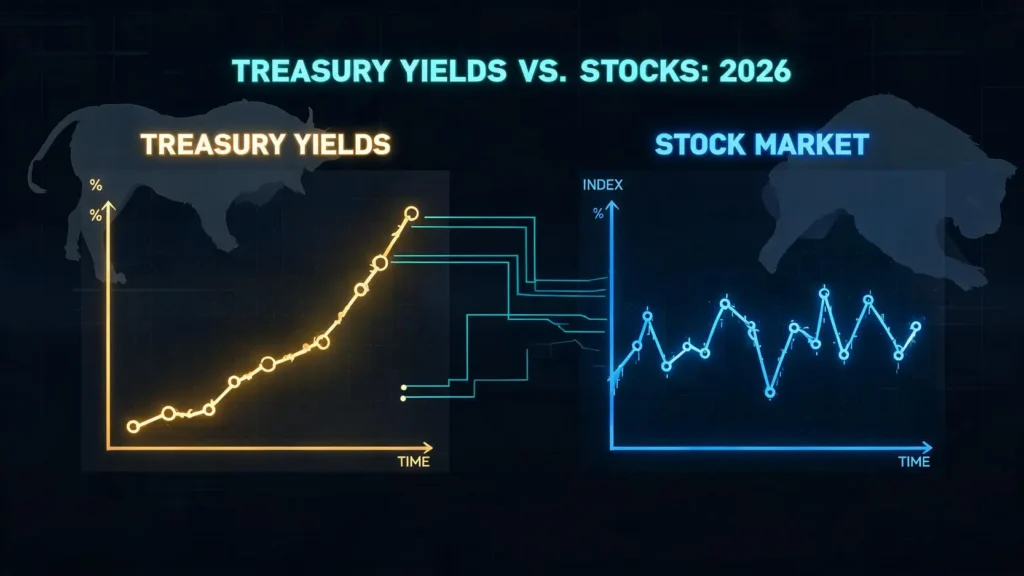
As we navigate mid-2026, the intricate dance between government debt and equity markets commands the attention of astute investors. The movement of Treasury yields is far more than a line on a chart; it’s a critical economic barometer with profound implications for corporate profitability and stock valuations. Understanding how Treasury yields impact stocks in 2026 is fundamental for anyone looking to preserve and grow capital. This guide dissects the complex effects of rising yields on stock market valuations and clarifies the crucial relationship between bond prices and yields, equipping you with the strategic foresight needed for the financial landscape ahead.
Table of Contents
What Are Treasury Yields and Why Do They Dictate Market Direction?
Treasury yields are arguably one of the most important data points in finance. They represent the return an investor receives on a government-issued bond and serve as a benchmark for countless other interest rates across the global economy. Their fluctuations signal shifts in economic sentiment and directly influence the cost of capital for corporations and consumers alike.
A Simple Definition: The Return on Government Bonds
In essence, a Treasury yield is the effective interest rate the U.S. government pays to borrow money. When you buy a Treasury bond, you are lending money to the government. The yield is your annualized return on that loan. These bonds are issued with different maturities, from short-term bills (a few months) to long-term bonds (10, 20, or 30 years). The 10-year Treasury note yield is the most widely watched benchmark, acting as a proxy for long-term borrowing costs and investor confidence.
The Key Drivers: Federal Reserve Policy, Inflation, and Economic Growth
Several macroeconomic forces orchestrate the movement of Treasury yields. As of June 2026, the market is digesting a complex environment. The main drivers include:
- Federal Reserve Policy: The Fed’s target for the federal funds rate sets the floor for short-term borrowing. While the FOMC has held rates steady in the 3.50%-3.75% range for the first half of the year to assess economic data, futures markets are pricing in the possibility of a modest hike later in the year if inflation proves persistent. Analyst consensus from institutions like J.P. Morgan suggests a cautious stance from the Fed for the remainder of 2026.
- Inflation Expectations: Inflation is a bond’s worst enemy. If investors anticipate higher inflation, they will demand a higher yield to compensate for the decline in the purchasing power of their future returns. Persistently sticky core inflation remains a key focus for the market.
- Economic Growth: A strong, growing economy typically leads to higher yields. When businesses are expanding and hiring, the demand for capital increases, pushing borrowing costs up. Conversely, fears of a slowdown or recession often drive investors to the safety of government bonds, pushing prices up and yields down.
The Inverse Rule: Understanding Bond Prices vs. Yields
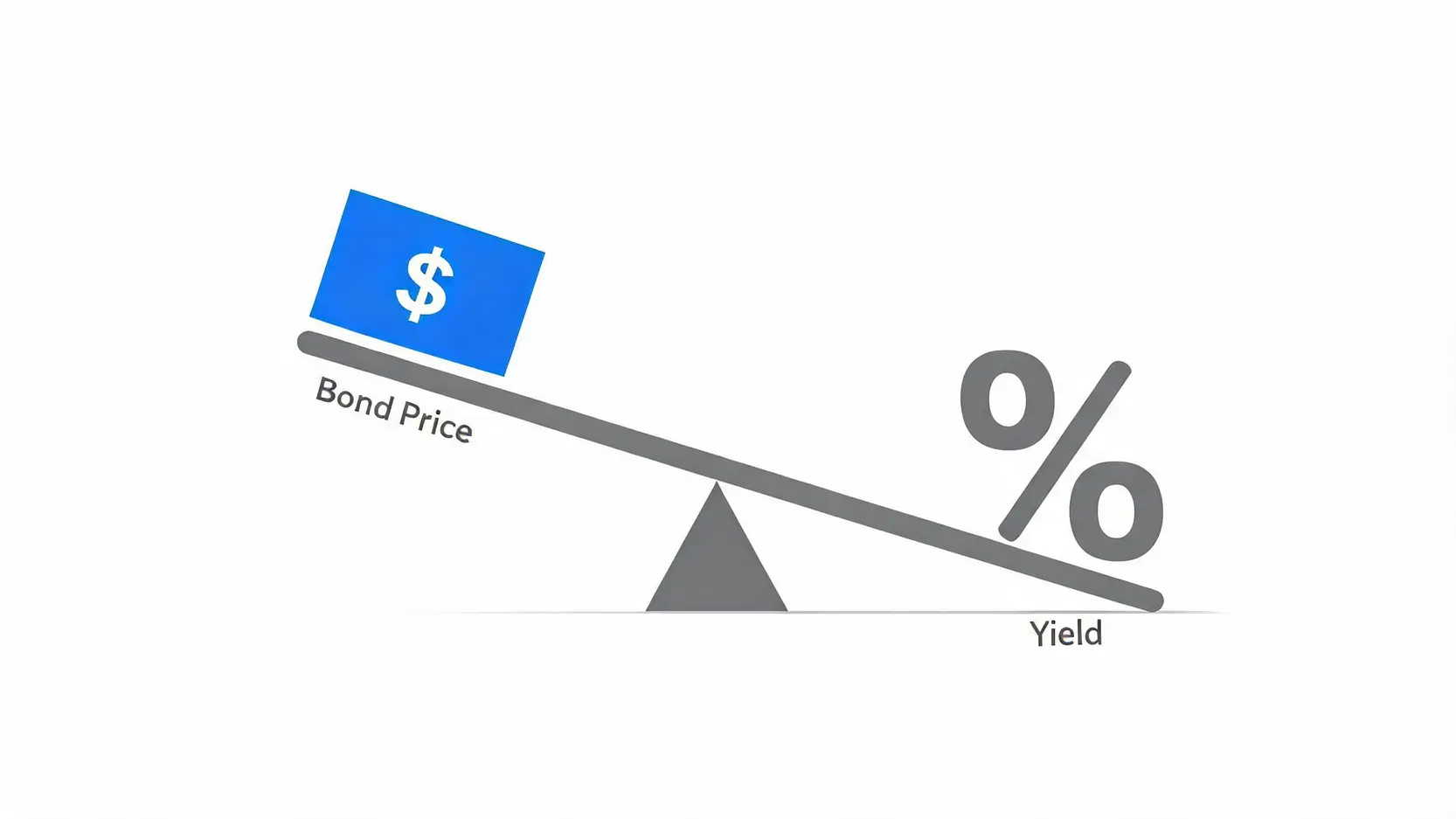
A fundamental concept for every investor to grasp is the inverse relationship between bond prices and yields. It works like this:
- When the price of a bond on the secondary market goes up, its yield goes down.
- When the price of a bond goes down, its yield goes up.
Imagine you own a 10-year bond with a 3% coupon. If new bonds are issued with a 4% yield due to changing market conditions, your 3% bond becomes less attractive. To sell it, you’d have to lower its price, which in turn increases its effective yield for the new buyer. This dynamic is a constant force in the market, dictating the relative attractiveness of fixed-income securities.
The Core Mechanics: How Rising Yields Pressure Stock Prices
The link between Treasury yields and stocks is not always linear, but there are powerful mechanics at play that explain why a sustained rise in yields often spells trouble for equities. The core of this relationship revolves around valuation, competition, and economic signaling.
The Valuation Impact: Discounting Future Corporate Earnings
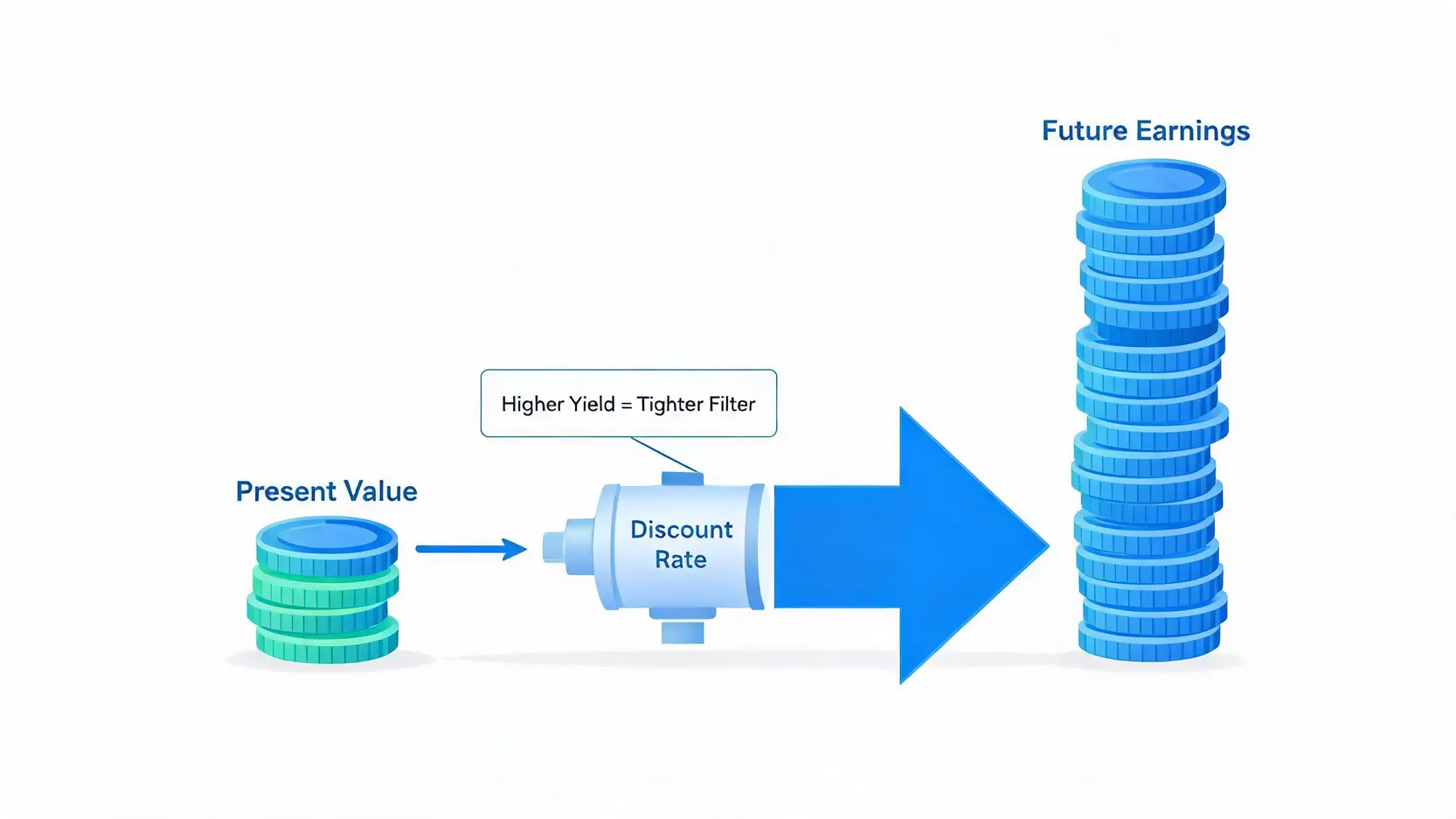
The theoretical value of a stock is the present value of all its expected future earnings. To calculate this present value, analysts use a ‘discount rate’ to account for the time value of money and risk. The yield on U.S. Treasury bonds is the foundation of this discount rate, often referred to as the ‘risk-free rate.’ When Treasury yields rise, the discount rate used in valuation models like the Discounted Cash Flow (DCF) model also increases. This mathematical reality means that a company’s future earnings are worth less in today’s dollars, directly pressuring its stock price downwards—even if the company’s business outlook hasn’t changed.
The Competition Factor: Bonds as a ‘Safer’ Investment Alternative
Investing is about allocating capital to achieve the best risk-adjusted return. When Treasury yields were near zero, the mantra was TINA—’There Is No Alternative’ to stocks. However, as the 10-year yield hovers in the 4.0% to 4.5% range in 2026, the landscape has shifted dramatically. Investors can now earn a respectable, virtually risk-free return from government bonds. This makes stocks, particularly high-dividend stocks and the broader market, less attractive on a relative basis. Why take on the volatility of the S&P 500 to get a 2% dividend yield when you can lock in over 4% from the U.S. government? This capital rotation from stocks to bonds can create significant headwinds for the equity market.
The Economic Signal: What Yields Tell Us About Future Growth
The shape of the yield curve—a graph plotting the yields of bonds with different maturities—is a potent economic forecasting tool. A normal, upward-sloping yield curve (where long-term yields are higher than short-term ones) typically signals a healthy, expanding economy. However, a flattening or inverted yield curve, where short-term rates are higher, has historically been a reliable predictor of recessions. This inversion suggests that investors expect economic weakness and lower inflation in the future, prompting them to lock in current long-term yields. Stock markets are forward-looking and despise economic uncertainty, often selling off when the yield curve flashes this warning sign.
Sector by Sector: Which Stocks Are Most Vulnerable in 2026?
The impact of rising Treasury yields is not uniform across the stock market. Different sectors and business models have varying sensitivities to interest rate changes. Identifying which areas are most vulnerable is a key strategic consideration for 2026.
High-Growth Tech Stocks: The Sensitivity of Long-Duration Assets
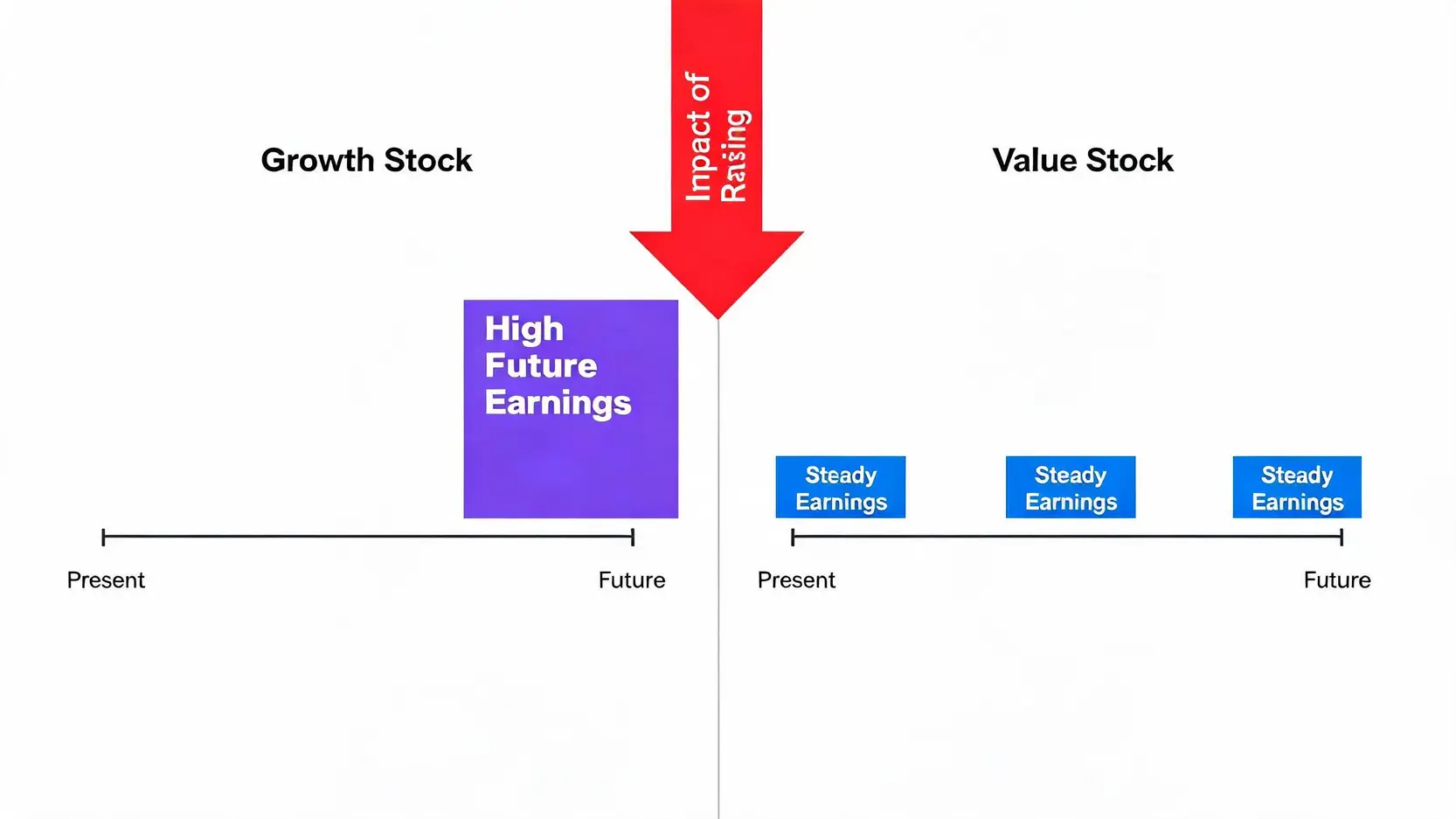
Technology and other high-growth stocks are often called ‘long-duration’ assets. This is because a large portion of their valuation is based on earnings expected far out in the future. As explained by the DCF model, these distant earnings are punished most severely when the discount rate (tied to Treasury yields) rises. Companies in sectors like software-as-a-service (SaaS), biotech, and renewable energy, especially those that are not yet profitable, are extremely sensitive to rising yields and often experience the sharpest sell-offs.
Value Stocks and Financials: Potential Winners in a Rising Rate Environment
Conversely, some sectors can benefit from a rising yield environment. 📈
- Financials: Banks, in particular, tend to see their net interest margins (NIMs) expand when rates rise. They can charge more for loans while the increase in what they pay on deposits often lags, boosting profitability.
- Value Stocks: Companies in more mature, cyclical industries like industrials and energy are often classified as value stocks. Their valuations are based more on current cash flows than distant future profits, making them less sensitive to changes in the discount rate. They may also benefit from the underlying economic strength that is pushing yields higher.
Defensive vs. Cyclical Stocks: Where to Find Shelter
When yields rise due to strong economic growth, cyclical stocks (consumer discretionary, industrials) can perform well. However, if yields are rising due to persistent inflation and fears of aggressive Fed tightening, investors often rotate into defensive sectors. These include:
- Consumer Staples: Companies that sell essential goods like food and household products.
- Healthcare: Demand for healthcare is relatively constant regardless of the economic cycle.
- Utilities: These companies offer stable dividends and operate as regulated monopolies.
These sectors are often seen as ‘bond proxies’ due to their stable dividends, but in a rapidly rising rate environment, even their appeal can dim as investors may prefer the genuine safety of actual bonds.
Investor Playbook: Strategic Adjustments for the 2026 Market
Navigating a market defined by shifting yield dynamics requires a proactive and disciplined approach. Passively holding a 60/40 portfolio is no longer a guaranteed recipe for success. Investors must adapt their strategies to the current macroeconomic regime. 🧭
Reassessing Your Portfolio’s Risk and Diversification
The first step is a thorough review of your portfolio’s duration and interest rate sensitivity. If you are heavily weighted in high-growth technology stocks, the risk profile of your portfolio has significantly increased. True diversification is key; this means looking beyond just a mix of stocks and bonds to include assets with different correlations, such as commodities, real estate, and alternative investments. The goal is to build a portfolio that is resilient across various economic scenarios.
Identifying Opportunities in a Shifting Yield Landscape
A shifting market creates new opportunities. As valuations in growth sectors compress, there may be chances to acquire shares in high-quality, innovative companies at more reasonable prices. Furthermore, sectors that benefit from higher rates, like financials and certain industrial sub-sectors, become more attractive. An active management approach, focusing on companies with strong balance sheets, pricing power, and robust free cash flow, will be paramount in distinguishing the long-term winners from the losers.
The Role of Cash and Short-Term Bonds
In an uncertain environment, cash is not trash; it is a strategic asset. Holding a portion of your portfolio in cash or cash equivalents (like short-term Treasury bills) provides two key advantages:
- Dry Powder: It gives you the liquidity to capitalize on market dislocations and buy assets when they become undervalued.
- Reduced Volatility: It dampens overall portfolio volatility, helping you weather downturns without being forced to sell at inopportune times.
With short-term yields now offering attractive returns, parking capital on the sidelines is no longer a costly proposition. It is a prudent tactical move while waiting for clearer market signals.
Frequently Asked Questions (FAQ)
Q: What is the difference between Treasury yields and the Fed funds rate?
A: The Fed funds rate is the short-term interest rate that the Federal Reserve directly targets for overnight interbank lending. It influences all other short-term rates. Treasury yields, on the other hand, are determined by the open market for government bonds of all maturities (from 1 month to 30 years). While the Fed’s policy strongly influences short-term yields, longer-term yields (like the 10-year) are more affected by market expectations for future growth and inflation.
Q: Can the stock market still go up if Treasury yields are rising?
A: Yes, context is crucial. If yields are rising moderately from low levels because the economy is strengthening and corporate earnings are growing robustly, stocks can perform very well. This scenario is often seen in the early-to-mid stages of an economic expansion. However, if yields are rising sharply because of runaway inflation and the fear of aggressive Fed rate hikes, this typically creates a hostile environment for stocks.
Q: How does global economic instability affect U.S. Treasury yields?
A: U.S. Treasury bonds are considered one of the world’s ultimate safe-haven assets. During times of global economic or geopolitical turmoil, international investors often flock to the safety and liquidity of the U.S. bond market. This increased demand, known as a ‘flight to safety,’ pushes bond prices higher and, consequently, their yields lower.
Q: What is an inverted yield curve and why is it a concern for stock investors?
A: An inverted yield curve occurs when short-term Treasury yields are higher than long-term yields (e.g., the 2-year yield is higher than the 10-year yield). This is an abnormal situation that signals a pessimistic economic outlook from bond investors. It has historically been a very reliable predictor of an upcoming recession. For stock investors, it is a major red flag because corporate profits and stock prices tend to fall significantly during economic downturns.