As Summer 2026 approaches, investors are keenly searching for the next wave of growth in the ever-evolving tech sector. With innovations in artificial intelligence and semiconductor technology leading the charge, identifying the best tech stocks to watch summer 2026 is crucial for maximizing returns. The key trends driving the tech sector, from generative AI to custom silicon, are creating new market leaders and challenging established giants. This guide provides an expert-curated list of top prospects, including several high-potential tech stocks for 2026, and a framework for making informed decisions.
Table of Contents
The 2026 Tech Market Landscape: Key Trends to Watch This Summer
Understanding the macro environment is the first step to identifying promising technology companies. Three secular trends continue to define the investment landscape in 2026, creating tailwinds for specific industries and the companies that lead them. Investors should closely monitor these areas when searching for the best tech stocks poised to outperform.
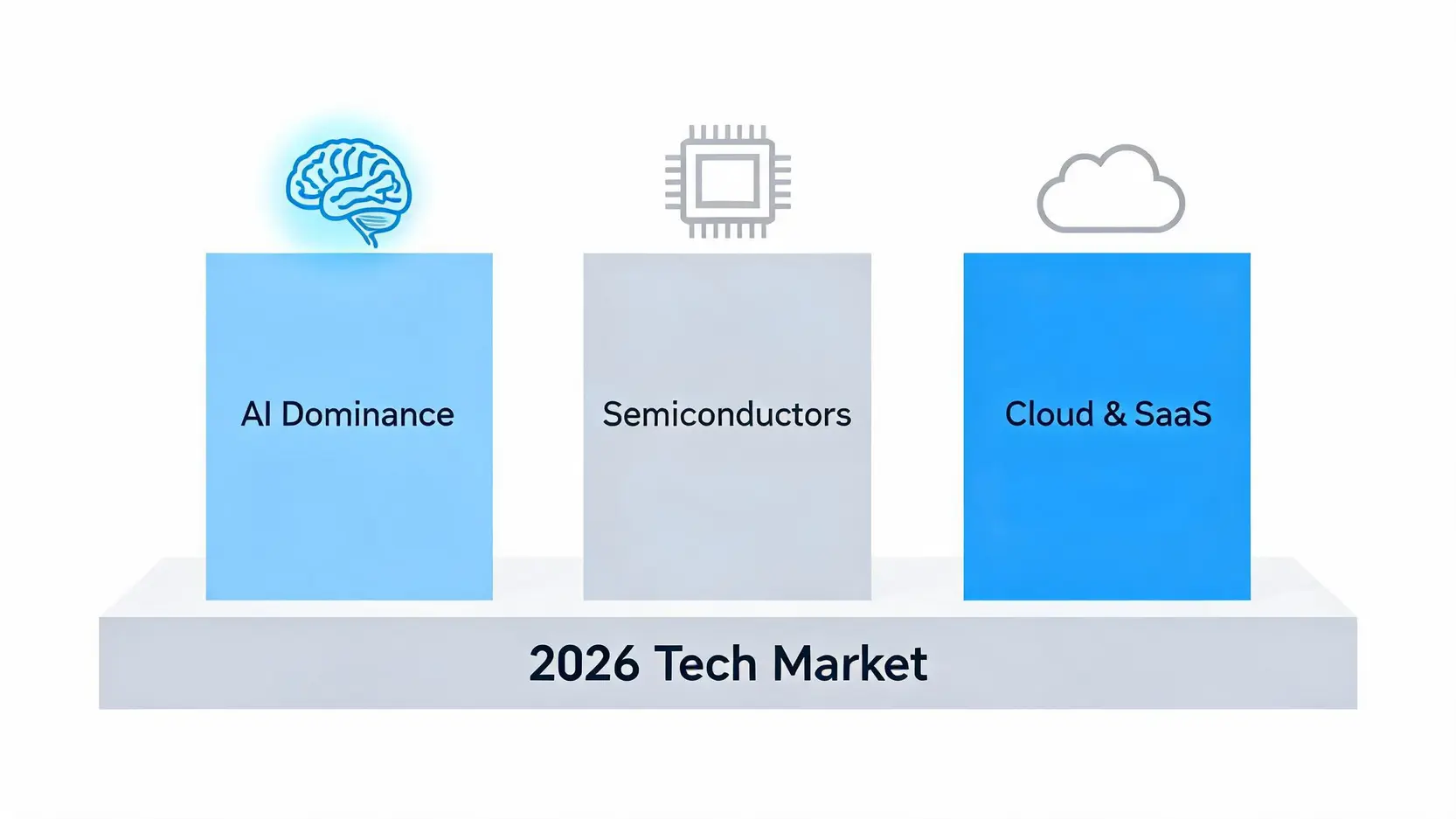
The Continued Dominance of Artificial Intelligence (AI)
The AI revolution has moved beyond initial hype into a full-fledged enterprise adoption cycle. In 2026, the focus is on tangible ROI, with companies across all sectors integrating AI to boost productivity, personalize customer experiences, and streamline operations. Generative AI is now a staple in software development, content creation, and data analysis. This sustained demand fuels a massive capital expenditure (capex) cycle in data centers, benefiting not only the creators of foundational models but the entire ecosystem that supports them. For those looking to delve deeper into this specific vertical, understanding how to approach AI-centric companies is paramount. You can explore a detailed perspective in our OpenAI Pre-IPO Investment Guide: How to Invest in AI’s Future.
Semiconductor Demand and Supply Chain Dynamics
Semiconductors remain the bedrock of the digital economy, and their importance has only magnified with the proliferation of AI. The demand for specialized chips, particularly high-performance GPUs and custom-designed ASICs (Application-Specific Integrated Circuits), continues to outstrip supply. While the supply chain disruptions of the early 2020s have largely normalized, the leading edge of semiconductor manufacturing is a fiercely competitive arena. Companies that master the design, manufacturing, and packaging of these complex components hold significant pricing power and a deep competitive moat. Watching the semiconductor space is essential for any tech-focused investor in 2026.
The Evolution of Cloud Computing and SaaS
Cloud computing has matured into a foundational utility for the modern enterprise. The market, now dominated by a few hyperscalers, is evolving towards hybrid and multi-cloud environments as organizations seek to optimize costs and avoid vendor lock-in. A key trend is the integration of powerful AI functionalities directly into cloud platforms and Software-as-a-Service (SaaS) applications. According to industry analysis from Gartner, worldwide public cloud spending continues its relentless climb, projected to grow significantly through 2026. This growth is driven by the need for scalable infrastructure to train and deploy complex AI models, making cloud providers a critical component of the tech sector’s future.
Top Tech Stocks for Your Summer 2026 Watchlist
Based on the dominant trends, here is a curated list of seven tech stocks, categorized by their primary growth driver, that are positioned for potential outperformance in the second half of 2026 and beyond. This list includes both established leaders and emerging disruptors.
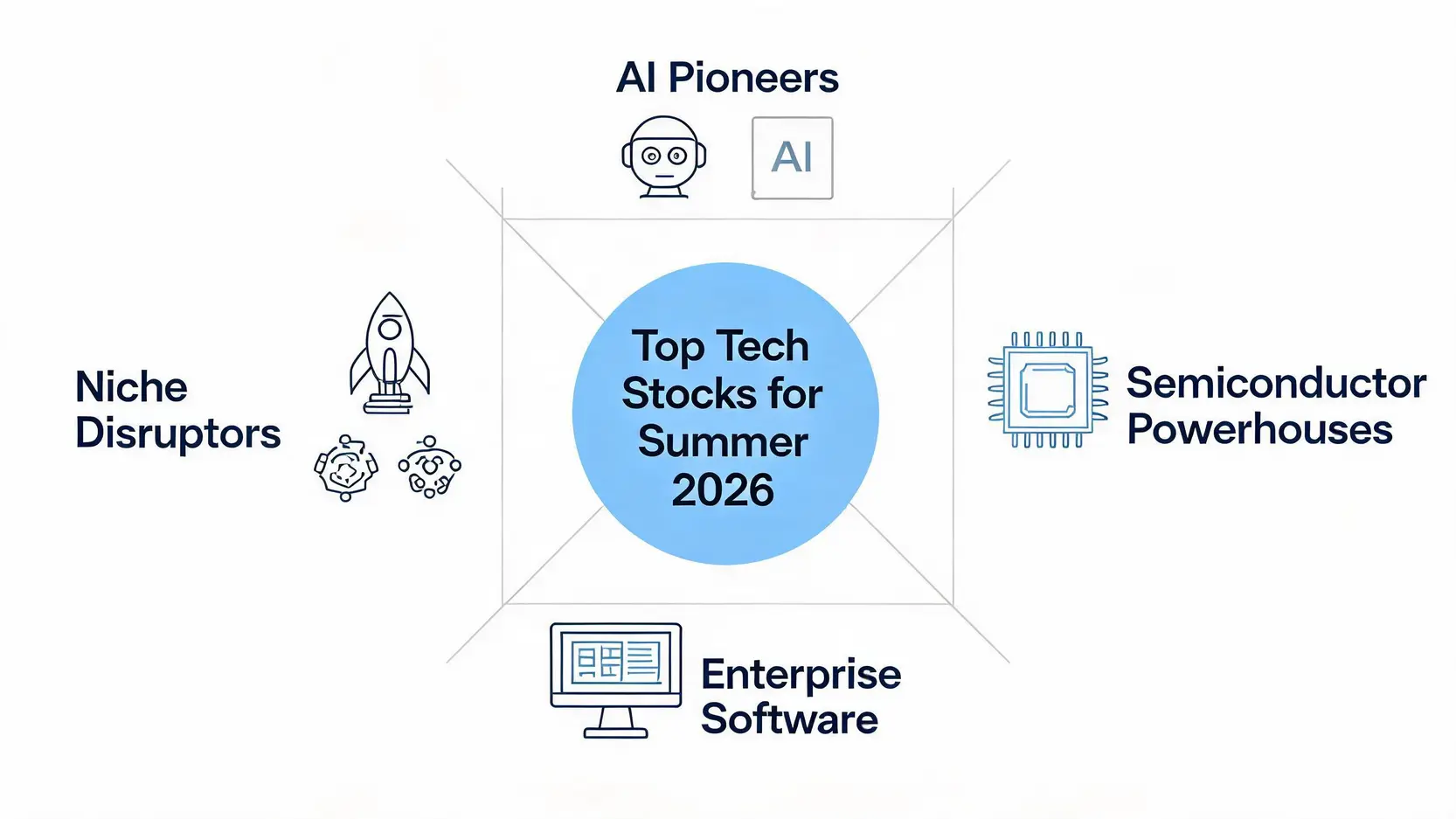
Category 1: The AI Pioneers
- Microsoft (MSFT): Microsoft’s strategic partnership with OpenAI and its deep integration of AI into its Azure cloud platform and suite of enterprise software (Office 365, Dynamics) give it an unparalleled distribution advantage. As of mid-2026, Azure’s AI services have captured significant market share, and the adoption of Copilot across its ecosystem is a powerful driver of high-margin, recurring revenue.
- Alphabet (GOOGL): Alphabet remains a formidable force in AI through its Google DeepMind division and its comprehensive suite of AI tools on the Google Cloud Platform (GCP). With its Gemini family of models setting new performance benchmarks and its dominance in search providing a massive data advantage for training, GOOGL is a core holding for any AI-focused portfolio.
Category 2: The Semiconductor Powerhouses
- NVIDIA (NVDA): Still the undisputed leader in AI accelerators, NVIDIA’s next-generation GPU architecture is the engine powering the world’s most advanced data centers. The company’s full-stack approach, combining hardware with its CUDA software platform, creates a sticky ecosystem that is difficult for competitors to replicate. Its expansion into networking and custom silicon further solidifies its market position.
- Broadcom (AVGO): While NVIDIA dominates AI training, Broadcom has carved out a crucial niche in AI networking and custom silicon solutions. Its high-bandwidth Ethernet switches and custom ASIC designs are essential for connecting thousands of GPUs efficiently. This makes AVGO a critical, and perhaps less appreciated, beneficiary of the AI infrastructure buildout.
Category 3: The Enterprise Software Leaders
- Workday (WDAY): A leader in cloud-based human capital management (HCM) and financial software, Workday is successfully leveraging AI to offer predictive analytics and automation to its enterprise clients. Its strong customer retention and ability to cross-sell new AI-powered modules position it for sustained, profitable growth as businesses seek to optimize their operations.
Category 4: The Niche Tech Disruptors
- Dexcom (DXCM): In the health-tech space, Dexcom is a leader in continuous glucose monitoring (CGM) for diabetes management. Its devices, which leverage data analytics and connectivity, are becoming the standard of care. With a large and growing addressable market and a strong pipeline of innovative products, DXCM represents a compelling growth story at the intersection of healthcare and technology. 📈
- MercadoLibre (MELI): Often called the “Amazon of Latin America,” MELI is a dominant force in e-commerce, digital payments (Mercado Pago), and logistics. The region’s accelerating digital transformation provides a long runway for growth. Its fintech arm, in particular, is expanding rapidly, offering credit, asset management, and insurance services to a vast and underserved population.
How to Analyze Tech Stocks: A 5-Point Checklist for 2026
Selecting the right stocks goes beyond identifying trends. A disciplined analytical approach is necessary to separate the winners from the hype. Here is a five-point checklist to help you evaluate potential tech investments this summer.
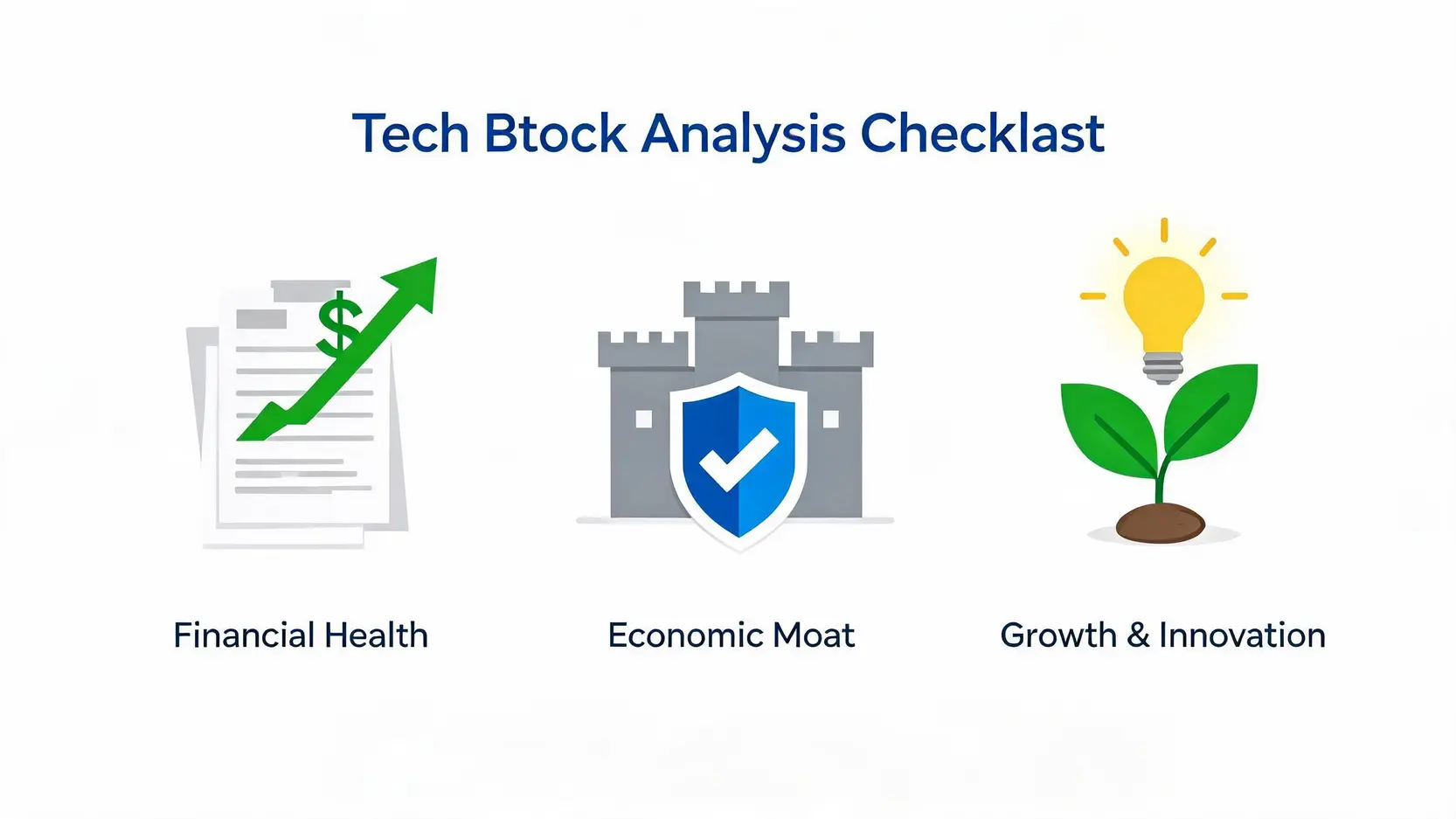
Assessing Financial Health: Beyond Revenue Growth
While top-line growth is important, it’s crucial to look deeper. In 2026, the market is paying closer attention to profitability and cash flow. Analyze metrics like:
- Free Cash Flow (FCF) Margin: Is the company converting its revenue into actual cash?
- Rule of 40: For SaaS companies, is the sum of revenue growth rate and FCF margin above 40%?
- Debt-to-Equity Ratio: Does the company have a manageable debt load, especially in a fluctuating interest rate environment?
Evaluating the Economic Moat and Competitive Edge
An economic moat is a sustainable competitive advantage that protects a company’s long-term profits. For tech stocks, moats can come from:
- Network Effects: The value of the service increases as more users join (e.g., MercadoLibre).
- High Switching Costs: Customers are locked into an ecosystem due to complexity or cost (e.g., Workday, NVIDIA’s CUDA).
- Intangible Assets: Patents, brand recognition, and proprietary technology.
Identifying Future Growth Catalysts and Innovation Pipelines
A great tech company is never static. Scrutinize its commitment to research and development (R&D). What are the next major product cycles? Is management articulating a clear vision for entering new markets or expanding its total addressable market (TAM)? A strong innovation pipeline is a key indicator of future growth potential.
By applying this checklist, you can build a more resilient and informed portfolio, focusing on the high-quality tech companies best positioned for long-term success. Remember, a disciplined approach is your best defense against market volatility.
Conclusion
To thrive in the dynamic market of Summer 2026, an investor’s focus must be on companies with strong, defensible fundamentals and clear leadership in high-growth secular trends. The best tech stocks to watch will undoubtedly be those at the forefront of the AI, advanced semiconductor, and cloud computing revolutions. These businesses are not just participating in trends; they are actively shaping the future of the digital economy. Use this guide and the analytical checklist provided to build a robust watchlist, stress-test your investment theses, and strategically position your portfolio for the significant opportunities that lie ahead.
Frequently Asked Questions (FAQ)
Q: What are the biggest risks facing tech stocks in 2026?
A: The primary risks include persistent macroeconomic headwinds such as inflation and interest rate uncertainty, which can compress valuations. Geopolitical tensions, particularly concerning semiconductor supply chains, remain a significant threat. Additionally, increased regulatory scrutiny in areas like AI safety and data privacy could impact the operational freedom and profitability of major tech firms.
Q: Is it better to invest in individual tech stocks or a tech ETF?
A: The choice depends on your risk tolerance and research capacity. Investing in individual stocks offers higher potential returns but also carries greater risk and requires diligent analysis. A technology-focused ETF (Exchange-Traded Fund), like the Invesco QQQ Trust (QQQ), provides instant diversification across the sector, reducing company-specific risk, making it a more suitable option for many investors.
Q: How does the macroeconomic environment affect tech stock valuations?
A: Tech stocks, especially high-growth companies whose profits are projected far into the future, are highly sensitive to interest rates. When rates rise, the present value of those future earnings decreases, putting downward pressure on their stock prices. Conversely, a stable or falling rate environment is generally favorable for tech valuations. Economic growth also plays a crucial role, as corporate IT budgets and consumer spending directly impact tech company revenues.
Q: How important is profitability versus growth for tech stocks now?
A: In 2026, the market has shown a clear preference for profitable growth. The era of “growth at any cost” has subsided. While strong revenue growth is still prized, investors are now demanding a clear path to profitability and positive free cash flow. Companies that can demonstrate both are being rewarded with premium valuations.