With the European Union’s landmark AI Act now in its critical enforcement phase, the EU AI Act 2026 compliance deadline is a pivotal milestone for companies worldwide. This legislation, the first of its kind, establishes a comprehensive regulatory framework for artificial intelligence. For any organization developing, deploying, or utilizing AI systems within the EU market, understanding the phased implementation timeline and the specific obligations for high-risk AI systems is no longer optional—it is a prerequisite for legal operation. This guide breaks down exactly what you need to know and do to ensure your business is prepared, avoiding potentially massive fines and significant operational disruption.
Table of Contents
Decoding the 2026 EU AI Act Deadline: What’s Required?
The EU AI Act has been implemented through a series of staggered deadlines. As of July 2026, several key provisions are now fully in effect, requiring immediate attention from businesses. The initial grace periods have passed, and regulators are actively monitoring for compliance. Understanding this timeline is the first step toward a robust compliance strategy.
Understanding the Phased Timeline: Key Dates in 2026
The AI Act’s rollout was designed to give organizations time to adapt, but the most significant deadlines have now converged. Here’s a summary of the critical dates that have shaped the current landscape:
- Early 2025: The ban on AI systems posing an unacceptable risk (e.g., social scoring by public authorities) became fully enforceable.
- Mid-2025: Rules governing General-Purpose AI (GPAI) models came into effect, mandating transparency and technical documentation.
- January 2026: The core of the Act, covering high-risk AI systems, became applicable. This includes systems used in critical infrastructure, education, employment, and law enforcement.
As we are now past these dates, any company operating in the EU market without a clear compliance framework is exposed to significant legal and financial risk.
Who is Subject to the Act? A Breakdown of ‘Providers’ vs. ‘Deployers’
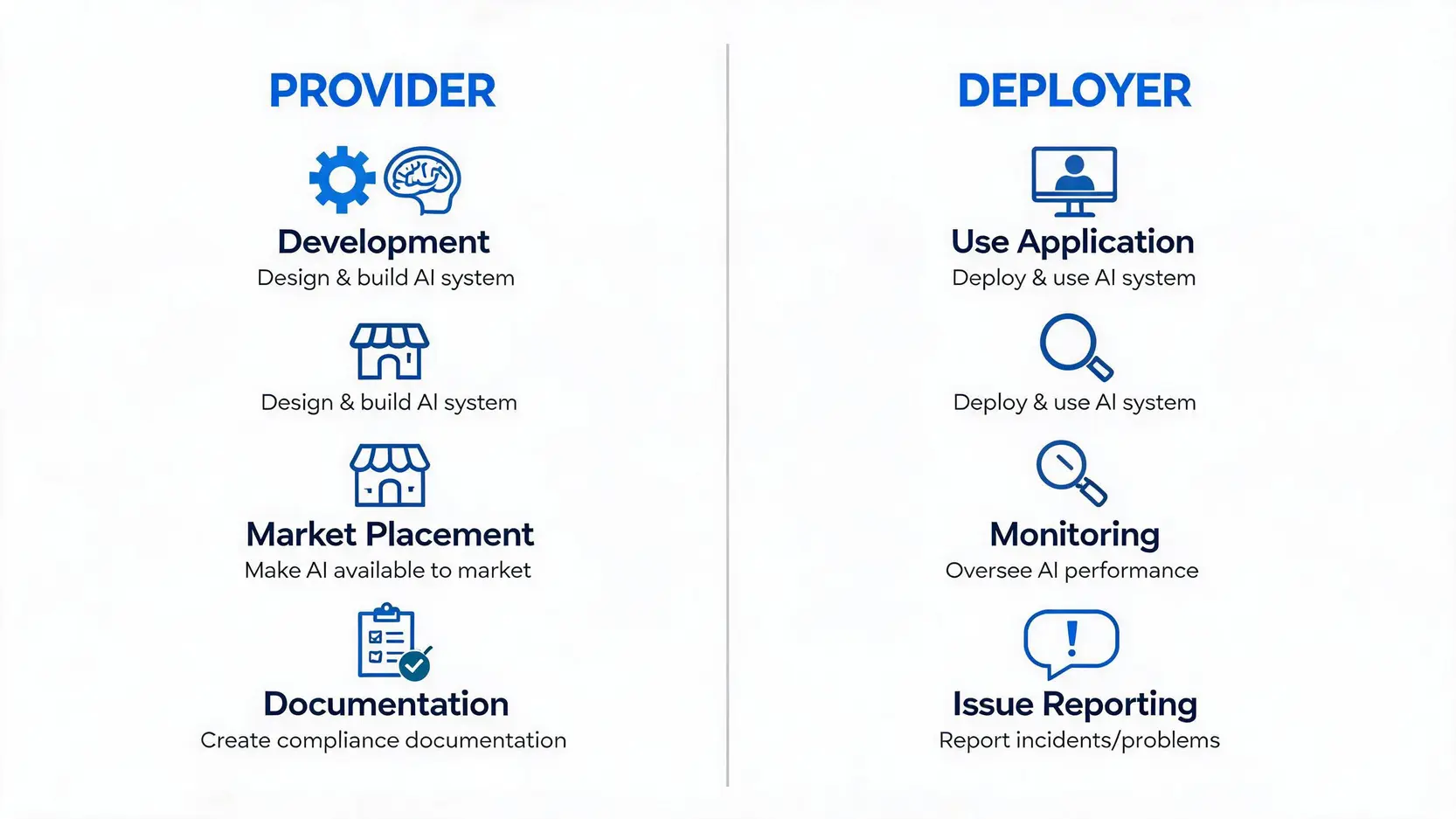
The AI Act makes a crucial distinction between two main types of entities, each with distinct responsibilities:
- Providers: An entity that develops an AI system with the intention of placing it on the market or putting it into service under its own name or trademark, whether for payment or free of charge. Providers bear the primary responsibility for ensuring their systems meet the Act’s requirements before market entry. This includes conducting conformity assessments, drafting technical documentation, and registering high-risk systems in an EU database.
- Deployers (formerly ‘Users’): An entity using an AI system under its authority, except where the use is in the course of a personal non-professional activity. Deployers must use high-risk AI systems in accordance with the provider’s instructions for use. They are also responsible for monitoring the system’s operation and reporting any serious incidents or malfunctions to the provider and relevant authorities.
Importantly, the Act has extraterritorial reach. If a company based outside the EU provides or deploys an AI system whose output is used within the Union, it falls under the Act’s jurisdiction. This impacts a vast number of international corporations, especially those in the tech and finance sectors. For insights into how AI is shaping markets, consider exploring Investing in AI Stocks.
The Core of Compliance: The Risk-Based Approach
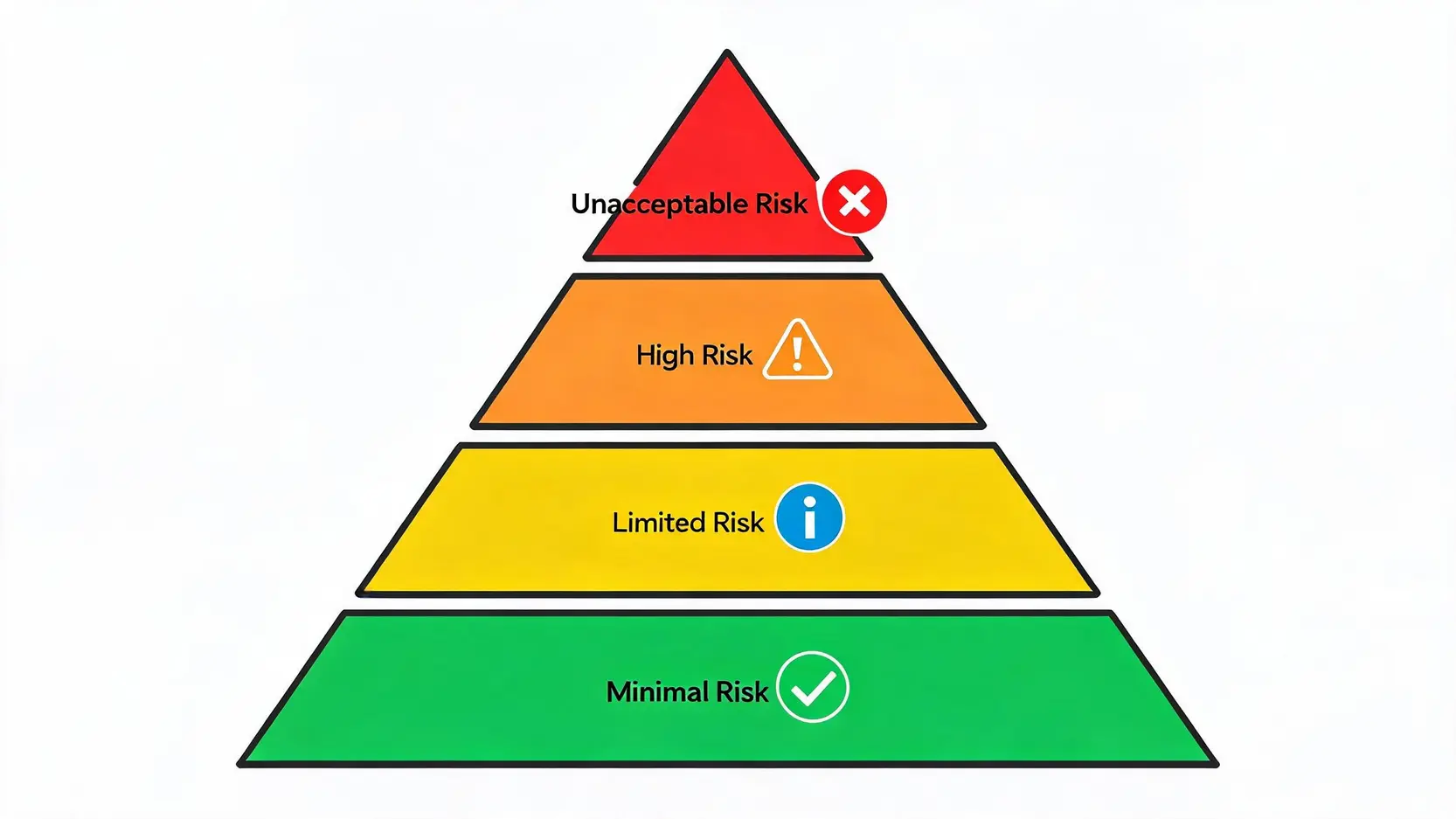
The EU AI Act is built upon a risk-based pyramid, categorizing AI systems into four levels: unacceptable risk, high risk, limited risk, and minimal risk. The compliance obligations are directly proportional to the level of risk a system poses. Given that the EU AI Act compliance for high-risk systems is the most complex area, it demands the most attention.
What Qualifies as a ‘High-Risk AI System’?
An AI system is classified as ‘high-risk’ if it is listed in Annex III of the Act and is used as a safety component of a product or is itself a product covered by specific EU legislation. Key examples include AI systems used for:
- Recruitment, such as CV-sorting software.
- Credit scoring and assessing creditworthiness.
- Medical device diagnostics.
- Biometric identification and categorization of natural persons.
- Operation of critical infrastructure like water, gas, and electricity grids.
- Educational and vocational training, such as exam scoring.
If your organization utilizes AI for any of these functions, it is almost certainly handling a high-risk system and must adhere to strict compliance protocols.
Essential Obligations: Conformity Assessments and Technical Documentation
Providers of high-risk AI systems must fulfill several key obligations before their products can enter the EU market. These include:
- Conformity Assessment: A mandatory procedure to demonstrate that a high-risk AI system complies with the Act’s requirements. For most systems, a self-assessment is sufficient, but for certain critical applications (like remote biometric identification), a third-party conformity assessment is required.
- Technical Documentation: Comprehensive documentation must be created and maintained. This includes detailed descriptions of the AI system’s purpose, architecture, data sources, training methodologies, and performance metrics. It must be robust enough to allow authorities to evaluate its compliance.
- Risk Management System: A continuous process must be established to identify, estimate, and mitigate risks throughout the AI system’s lifecycle.
- Data Governance: Strict rules apply to the data used for training, validation, and testing, ensuring it is relevant, representative, and free of errors and biases.
Special Rules for General-Purpose AI (GPAI) Models
The Act also establishes specific rules for GPAI models, such as large language models (LLMs). Providers of these models must provide detailed technical documentation to downstream providers who integrate them into their own AI systems. Furthermore, GPAI models that are deemed to pose a ‘systemic risk’ are subject to even more stringent obligations, including model evaluation, adversarial testing, and reporting serious incidents to the European AI Office.
🆕 Your Action Plan: A Step-by-Step Roadmap to 2026 Compliance
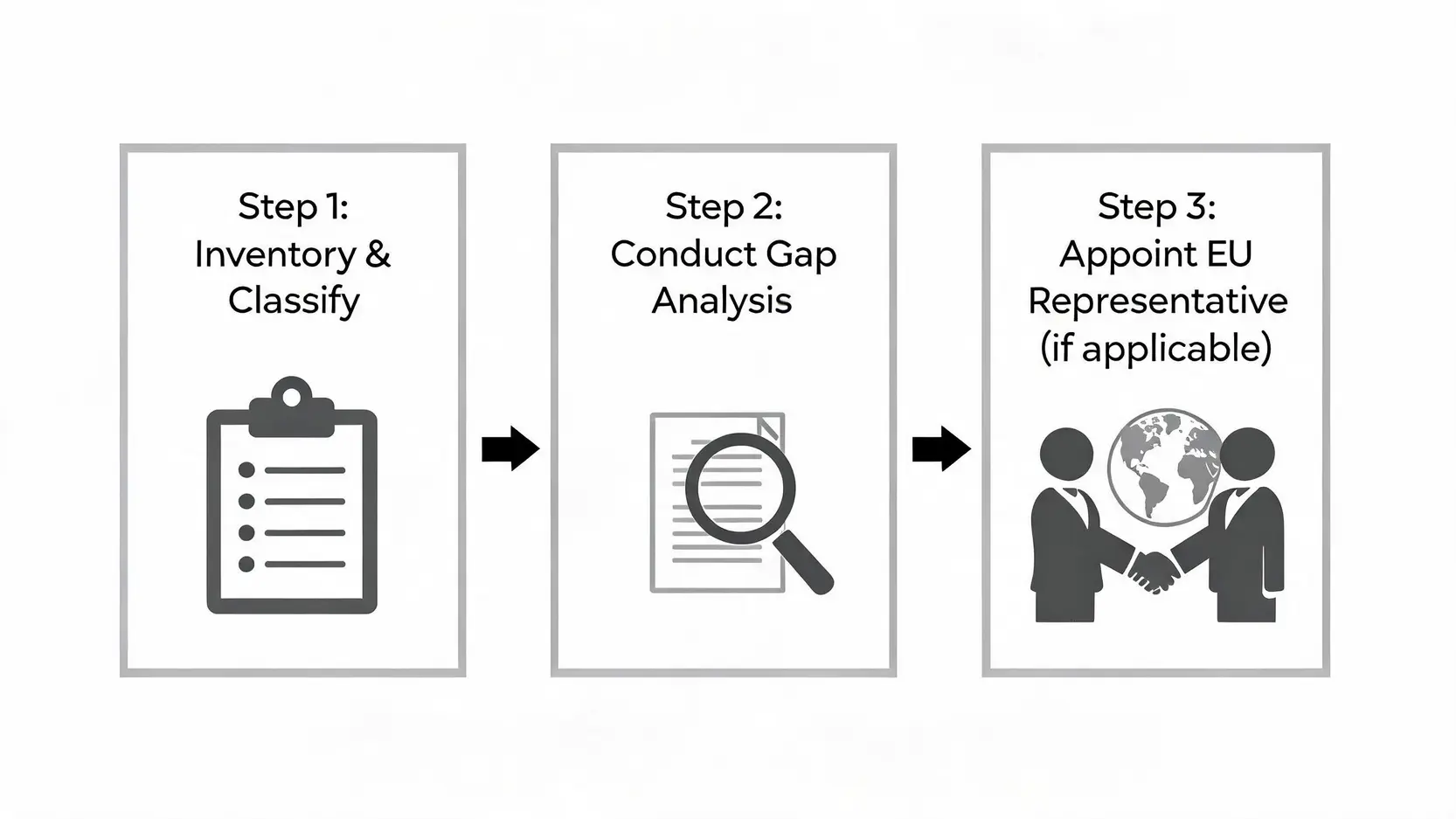
With the deadline for EU AI Act 2026 compliance firmly in the past, organizations must act decisively. A reactive approach is no longer viable. Here is a clear, step-by-step roadmap to guide your compliance efforts.
Step 1: Inventory and Classify All AI Systems in Use
You cannot manage what you do not measure. The first critical step is to create a comprehensive inventory of all AI systems currently in use or development across your organization. For each system, you must:
- Document its purpose and functionality.
- Identify whether you are acting as a ‘provider’ or ‘deployer’.
- Classify the system according to the Act’s risk pyramid (unacceptable, high, limited, or minimal).
This inventory will serve as the foundation for your entire compliance strategy, highlighting which systems require immediate and intensive focus.
Step 2: Conduct a Gap Analysis of Your Current AI Governance
Once your high-risk systems are identified, conduct a thorough gap analysis. Compare your existing AI governance policies, risk management frameworks, and documentation practices against the stringent requirements of the AI Act. This analysis should pinpoint specific deficiencies, such as:
- Inadequate technical documentation.
- Lack of a formal risk management process for AI.
- Insufficient data quality and governance protocols.
- Absence of human oversight mechanisms for high-risk systems.
Step 3: Appoint an Authorized Representative in the EU (If Applicable)
For companies based outside the European Union, this step is mandatory. You must appoint an authorized representative within the EU. This representative acts as the primary point of contact for EU authorities and consumers. They are responsible for holding the technical documentation and ensuring that conformity assessment procedures have been carried out correctly before the AI system is placed on the market.
The High Cost of Non-Compliance: Penalties and Risks
Ignoring the EU AI Act’s phased implementation timeline carries severe consequences. The penalties for non-compliance are among the highest for any regulation globally, designed to ensure the legislation has teeth. Businesses must understand that these are not just potential costs but existential threats to their European operations.
Understanding the Financial Penalties and Fine Structures
The fines for violating the AI Act are staggering and structured in tiers based on the severity of the infringement:
- Up to €35 million or 7% of total worldwide annual turnover (whichever is higher) for violations related to prohibited AI practices.
- Up to €15 million or 3% of total worldwide annual turnover for non-compliance with the obligations for high-risk systems.
- Up to €7.5 million or 1.5% of total worldwide annual turnover for supplying incorrect, incomplete, or misleading information to authorities.
These figures underscore the critical importance of a proactive compliance strategy. For businesses, implementing effective risk management strategies is essential to mitigate these financial threats.
Beyond Fines: Commercial and Reputational Damage
The financial penalties, while substantial, are only part of the risk. Non-compliance can lead to severe operational and reputational damage. Authorities have the power to demand that a non-compliant AI system be withdrawn from the market or recalled. This can disrupt business operations, invalidate contracts, and lead to significant loss of revenue. Furthermore, being publicly cited for violating a regulation designed to ensure trustworthy and ethical AI can cause irreparable harm to a company’s brand, eroding customer trust and providing a significant advantage to compliant competitors.
Conclusion
The EU AI Act’s 2026 compliance deadline has passed, marking a new era of AI regulation. For any organization leveraging AI that touches the EU market, adherence is not a future goal but a present-day necessity. The risk-based framework is the bedrock of this legislation, and understanding your obligations within it is paramount. By proactively inventorying AI systems, conducting rigorous gap analyses, and embedding compliance into the entire AI lifecycle, you can navigate this new landscape successfully. The time for deliberation is over; the time for decisive action and diligent governance is now to secure your future in the evolving digital world.
Frequently Asked Questions (FAQ)
Q: Do U.S. companies have to comply with the EU AI Act by 2026?
A: Yes, absolutely. The EU AI Act has extraterritorial scope. If a U.S. company places an AI system on the EU market, or if the output of its AI system is used in the EU, it must comply with the regulation. This has been a requirement since the final compliance deadlines passed in early 2026.
Q: What is the main difference between an AI ‘provider’ and an AI ‘deployer’?
A: A ‘provider’ is the entity that develops an AI system and places it on the market. They bear the primary burden of compliance, including conformity assessments and technical documentation. A ‘deployer’ is an entity that uses a third-party AI system. Their main responsibility is to use the system as intended and monitor its performance.
Q: When do the rules for General-Purpose AI models come into effect?
A: The rules for General-Purpose AI (GPAI) models became applicable in mid-2025, approximately 12 months after the Act’s entry into force. This means all providers of GPAI models are currently expected to be in full compliance with transparency and documentation requirements.
Q: What are the documentation requirements for high-risk AI?
A: The technical documentation for high-risk AI systems must be extensive. It needs to include a general description of the system, its intended purpose, its architecture, the data and algorithms used for its training and testing, cybersecurity measures, and a detailed risk management plan. This documentation must be kept for at least 10 years after the system is placed on the market.