The artificial intelligence revolution is not on the horizon; it has arrived. As we move through 2026, the critical question for discerning investors is no longer *if* the next market-defining breakout will occur, but *which* companies will spearhead it. The initial hype has subsided, making way for a more calculated investment landscape. This analysis provides a definitive roadmap for navigating the next wave of tech prosperity, detailing the key catalysts driving the AI stocks breakout 2026 and pinpointing 7 top-tier stocks with high-growth potential. These are the names positioned to deliver significant returns as AI transitions from a technological marvel to a core driver of enterprise profitability.
Table of Contents
Why 2026 is the Predicted Tipping Point for the AI Market
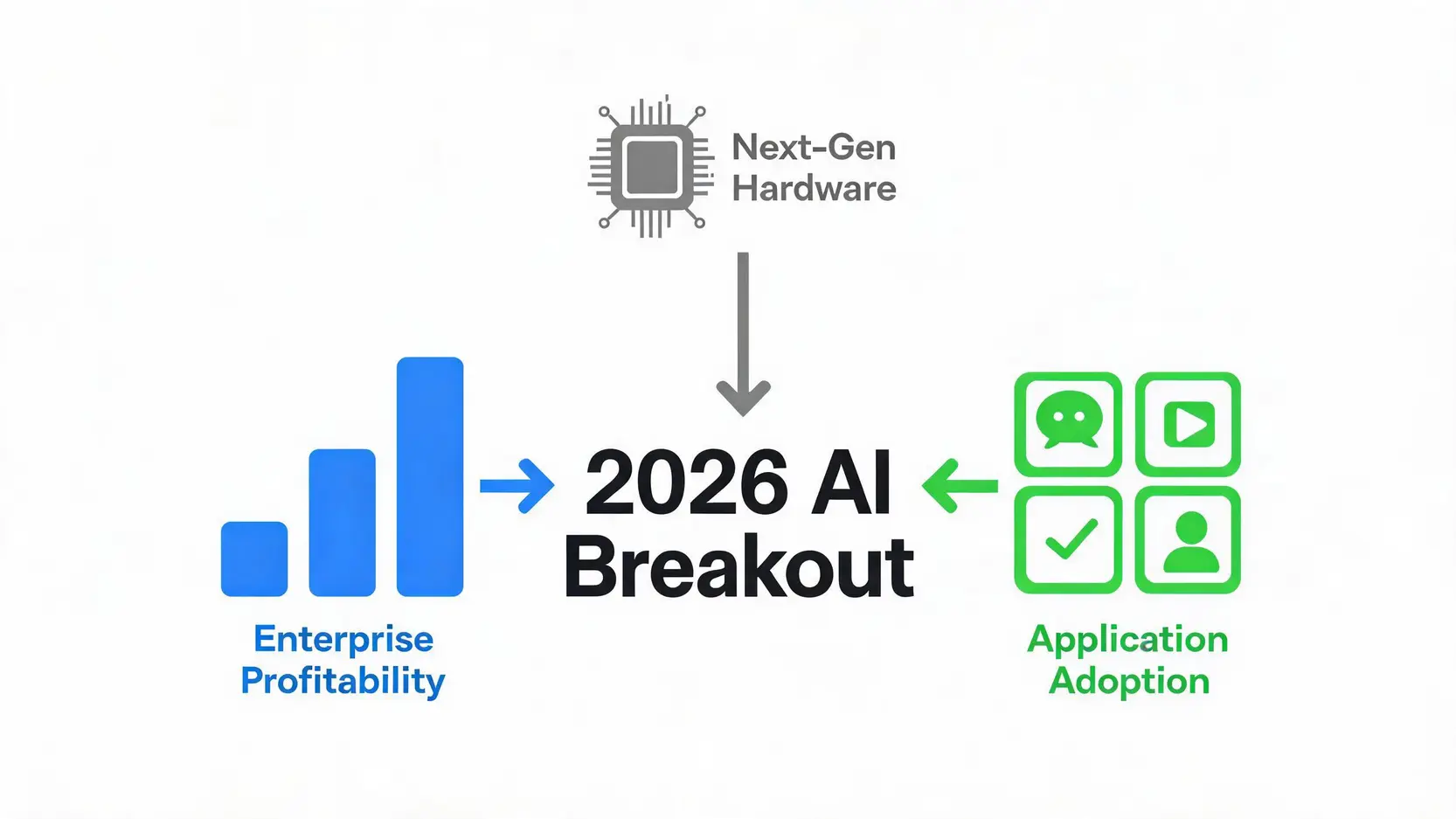
The year 2026 stands as an inflection point for the AI sector. The foundational investments of the past half-decade are beginning to bear fruit, creating a perfect storm of technological maturity, hardware accessibility, and widespread market adoption. Three primary catalysts are fueling this impending breakout, creating an environment ripe for explosive growth in select AI stocks.
Catalyst 1: The Shift from Infrastructure Hype to Enterprise Profitability
The first wave of the AI boom was characterized by massive capital expenditure on infrastructure—data centers, foundational models, and raw computing power. While essential, this phase was about building the engine. Now, in 2026, the focus has pivoted decisively to deploying that engine to generate tangible revenue and profit. Enterprises are no longer experimenting with AI; they are integrating specialized, vertical-specific AI solutions into their core operations to enhance efficiency, create new products, and drive bottom-line growth. This shift from potential to profit is a core driver for the next AI stock leaders.
Catalyst 2: Next-Generation Hardware and the AI Chip Race
The relentless demand for more powerful and efficient processing continues to fuel a hyper-competitive hardware market. Beyond the dominance of early leaders like NVIDIA, a new frontier of specialized silicon is emerging. We are seeing advancements in neuromorphic chips, optical computing, and energy-efficient data center GPUs. As industry analysis points out, the next wave of demand is coming from AI embedded in physical systems. This hardware evolution is lowering the barrier to entry for complex AI applications and opening up new markets, from autonomous vehicles to personalized medicine. Companies at the forefront of this AI chip race are fundamental to the 2026 breakout narrative.
Catalyst 3: Maturing AI Models and Widespread Application Adoption
Large Language Models (LLMs) have captured the public imagination, but the real value in 2026 is being unlocked by smaller, highly specialized AI models. These models are trained on proprietary industry data to perform specific, high-value tasks—such as drug discovery, fraud detection, and supply chain optimization. The proliferation of these applications through user-friendly APIs and SaaS platforms means that companies across every economic sector can now leverage advanced AI without needing a team of PhDs. This democratization of AI is massively expanding the total addressable market and creating fertile ground for a widespread AI stocks breakout.
Top 7 AI Breakout Stocks to Watch in 2026
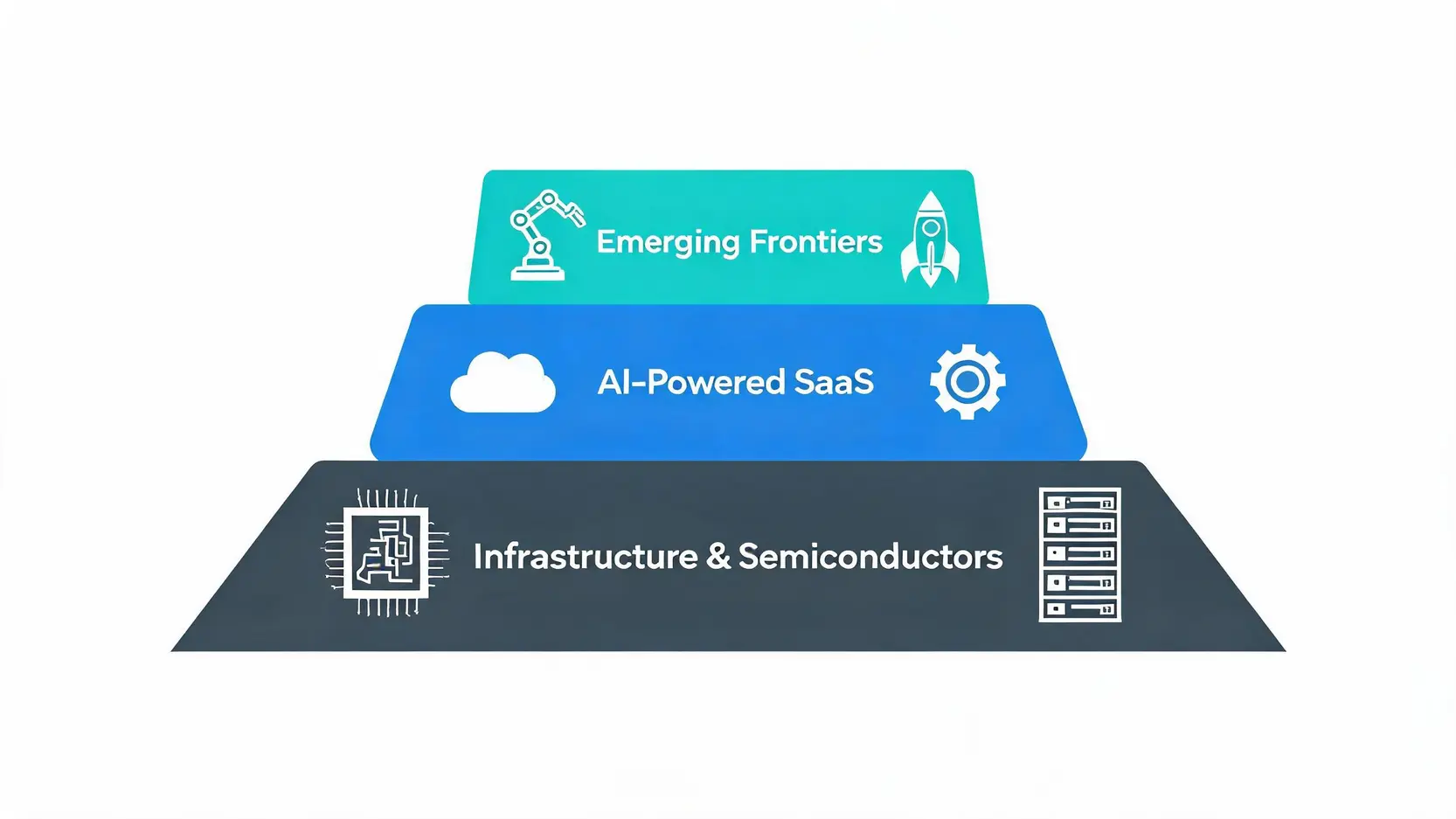
Identifying the leaders in this evolving landscape requires looking beyond the obvious mega-caps. The true breakout candidates for 2026 exist across the entire AI value chain, from the foundational hardware to the disruptive applications they enable. Here are seven companies, categorized by their market segment, that are strongly positioned for a breakout performance.
Semiconductor & Infrastructure Plays: The Shovels in the Gold Rush
These companies provide the critical hardware that powers the AI revolution. They are the essential enablers of the entire ecosystem.
- NVIDIA (NVDA): While already a giant, NVIDIA’s strategic roadmap for 2026 keeps it in the breakout conversation. Its next-generation data center GPUs and CUDA software ecosystem create a deep competitive moat. Continued expansion into AI enterprise software and autonomous systems positions it to capture value far beyond just chip sales.
- Advanced Micro Devices (AMD): AMD has solidified its position as a formidable competitor in the AI chip space. Its Instinct series of accelerators offers a powerful alternative for AI training and inference workloads. As enterprises seek to diversify their hardware suppliers to mitigate risk, AMD is a primary beneficiary, making it a key candidate for significant growth.
- Broadcom (AVGO): Often overlooked as an AI play, Broadcom is a powerhouse in custom silicon (ASICs). As major cloud providers like Google and Amazon design their own AI chips to optimize performance and cost, they turn to Broadcom for its design and manufacturing expertise. This behind-the-scenes role makes AVGO a critical and profitable player in the infrastructure build-out.
AI-Powered SaaS: The Software Eating the World
This category includes companies that aren’t just selling AI, but are using it to create superior software products with sticky, recurring revenue models. As outlined in the analysis of what is driving the tech rally, AI integration is a key factor.
- Palantir Technologies (PLTR): Specializing in AI-driven data analytics for government and large enterprises, Palantir’s platforms (Gotham and Foundry) are becoming indispensable for complex decision-making. Its Artificial Intelligence Platform (AIP) allows customers to deploy LLMs securely on their private networks, a crucial selling point for high-stakes industries.
- ServiceNow (NOW): A leader in digital workflow automation, ServiceNow has aggressively integrated generative AI across its platform. By automating IT services, HR processes, and customer support, it provides a clear and immediate ROI to its enterprise clients. Its ability to turn AI into a productivity engine makes it a standout performer.
Emerging Frontiers: AI in Robotics and Space Tech
This is where AI meets the physical world. These companies are more speculative but offer exposure to some of the largest long-term growth trends.
- UiPath (PATH): A leader in Robotic Process Automation (RPA), UiPath is leveraging AI to create more intelligent and autonomous software ‘robots.’ These bots can handle increasingly complex tasks, moving beyond simple automation to cognitive decision-making. The convergence of AI and RPA is a massive growth vector.
- Rocket Lab USA (RKLB): While primarily a space company, Rocket Lab’s value is increasingly tied to its AI-driven satellite and space systems division. From optimizing rocket trajectories to managing satellite constellations with AI, the company is at the intersection of two of the biggest growth themes of the next decade.
A Simple Framework for Identifying Your Own AI Breakout Candidates
Beyond this list, a disciplined framework can help investors identify the next wave of AI winners. The market is dynamic, and new leaders will emerge. Evaluating potential investments based on three pillars—technology, financials, and leadership—provides a robust method for cutting through the hype and focusing on fundamental strength. This approach is essential for anyone serious about AI investing.

Analyzing the Tech: Beyond the Hype, Is There a Moat?
A durable competitive advantage, or moat, is critical in the fast-moving tech sector. For AI companies, this often comes from one of three sources:
- Proprietary Data: The quality and quantity of a company’s data can be a more significant advantage than its algorithms. Companies with unique, hard-to-replicate datasets can train more effective and specialized AI models.
- Talent and Research: The world’s top AI talent is a scarce resource. Companies that can attract and retain elite researchers and engineers will consistently innovate faster than their rivals.
- Network Effects: For many AI platforms, value increases as more users join. This is true for SaaS products that improve as they process more user data and for hardware platforms with strong developer ecosystems.
Reading the Financials: Key Metrics for AI Growth Stocks
Financial analysis for AI stocks requires a forward-looking perspective. While traditional metrics matter, certain indicators are more telling of future potential:
- Revenue Growth Rate: A high, and ideally accelerating, growth rate is the clearest sign of market adoption and demand.
- R&D as a Percentage of Revenue: Sustained, significant investment in research and development is non-negotiable for staying at the cutting edge.
- Gross Margins: High gross margins, particularly in software, indicate a scalable business model with strong pricing power.
- Remaining Performance Obligation (RPO): For SaaS companies, RPO is a key indicator of future revenue that is already under contract, providing visibility into future growth.
Evaluating the Leadership and Vision for 2026 and Beyond
In a sector defined by rapid innovation, leadership is paramount. A visionary CEO with a deep technical understanding can navigate market shifts and make bold, long-term bets. Scrutinize the management team’s track record, their strategic communications, and their ability to execute on their stated roadmap. The leaders who can articulate a clear and compelling vision for how AI will transform their industry are the ones most likely to deliver a breakout performance.
Navigating the Risks: What Could Derail the 2026 AI Breakout?
No investment thesis is complete without a sober assessment of the risks. The path to AI-driven growth is not without potential obstacles. Understanding these challenges is crucial for managing a portfolio geared towards the best AI stocks to buy and mitigating potential downside. Investors must remain vigilant and informed about the factors that could temper the breakout.
Valuation Concerns and the Potential for an ‘AI Bubble’
The enthusiasm surrounding AI has driven valuations for many stocks to stratospheric levels. An ongoing debate questions whether we are in a sustainable new paradigm or an AI bubble. A market correction, driven by a shift in investor sentiment or a failure to meet lofty earnings expectations, could lead to a significant, broad-based pullback. Investors must differentiate between companies with solid fundamentals supporting their valuation and those running purely on hype. You need a solid understanding of market volatility and associated risks before committing capital.
Regulatory Hurdles and Geopolitical Tensions
Governments worldwide are grappling with how to regulate artificial intelligence. Issues surrounding data privacy, algorithmic bias, and national security could lead to new compliance costs and restrictions that slow down innovation. Furthermore, geopolitical tensions, particularly surrounding semiconductor supply chains and technology export controls, represent a significant risk. A flare-up in trade disputes could disrupt the production of essential AI hardware and impact the entire industry’s growth trajectory.
Frequently Asked Questions (FAQ)
Q: Is it too late to invest in AI stocks before 2026?
A: While the initial hype-driven rally has matured, 2026 marks the beginning of the enterprise adoption phase. The opportunity is shifting from speculative bets on foundational technology to more fundamentally-driven investments in companies applying AI to solve real-world problems. The largest long-term value creation is still ahead, but it requires a more selective and analytical approach.
Q: Which non-tech sectors will benefit most from an AI breakout?
A: The impact will be widespread. Key sectors to watch include: Healthcare (drug discovery, diagnostic imaging), Finance (algorithmic trading, fraud detection), Manufacturing (robotics, predictive maintenance), and Energy (grid optimization, resource exploration). Investing in incumbent leaders in these sectors that are effectively adopting AI is a viable secondary strategy.
Q: How should I balance my portfolio between established AI leaders and speculative plays?
A: A core-satellite approach is often prudent. The ‘core’ of your AI allocation could be in established leaders like NVIDIA or Microsoft, which offer robust growth with a more stable profile. The ‘satellite’ portion can be allocated to smaller, higher-risk, higher-reward companies in emerging frontiers like AI-driven biotech or robotics. The exact allocation depends on your individual risk tolerance.
Q: What’s the single most important metric for evaluating an AI stock’s potential?
A: While no single metric tells the whole story, for growth-stage AI companies, the rate of customer adoption and revenue growth is paramount. It is the clearest indicator that the company’s technology is solving a real problem and that it has found product-market fit. This should be supported by strong gross margins to ensure that growth is profitable and scalable.
Q: How do geopolitical tensions affect the AI chip sector?
A: Geopolitics are a major risk factor. The semiconductor supply chain is global and complex. Export controls on advanced chips and manufacturing equipment, as well as tariffs, can directly impact costs and market access for companies like NVIDIA, AMD, and their customers. Diversification within the sector and attention to a company’s geographical revenue exposure are key to managing this risk.
Conclusion
The road to and through 2026 is paved with immense opportunity for savvy investors who can look beyond today’s headlines. While no investment is without risk, the AI stocks set for a breakout will be those that masterfully combine technological superiority, clearly defined paths to monetization, and visionary leadership. The transition from speculative hype to tangible enterprise value is the defining characteristic of this new phase. By focusing on these fundamental drivers and employing a disciplined analytical framework, investors can position their portfolios to capitalize on the next transformative stage of the AI revolution.