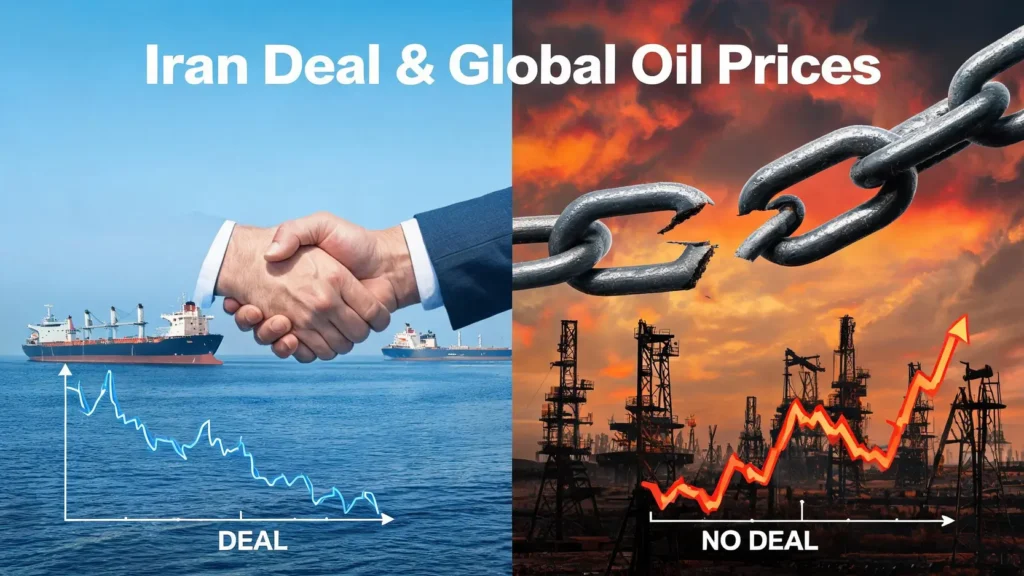
Global oil markets are on edge in 2026, with the trajectory of Iran deal oil prices 2026 hanging precariously on the outcome of renewed nuclear negotiations. Every headline concerning US-Iran tensions introduces fresh volatility, creating a high-stakes environment for traders and policymakers. The potential for a successful nuclear agreement looms large, promising a significant influx of Iranian crude that could send prices tumbling. Conversely, a diplomatic collapse threatens to remove that potential supply indefinitely, pushing benchmarks like Brent and West Texas Intermediate (WTI) back toward triple-digit territory. This article dissects the core factors driving this uncertainty, analyzing the two divergent paths for oil prices and what they mean for the global economy for the remainder of the year.
Timeline of Key Events in 2026: From New Threats to Renewed Talks
The first half of 2026 has been a masterclass in geopolitical brinkmanship, directly influencing oil price fluctuations:
- January: Talks resumed in Vienna amidst skepticism, with initial reports suggesting little progress. Oil prices firmed up, adding a $5/barrel risk premium.
- March: Iran announced advancements in its uranium enrichment program, leading to a sharp, albeit brief, price spike. The move was widely seen as a negotiation tactic to increase leverage.
- April: A series of back-channel meetings brokered by European intermediaries yielded a surprise joint statement, outlining a ‘framework for continued dialogue.’ This sparked a significant sell-off, with Brent shedding nearly 8% in a single week.
- May: As negotiations intensify, the market remains on a knife’s edge, reacting to every rumor and official comment. A deadline for a preliminary agreement is unofficially set for late Q3 2026.
Analyzing the Market’s Reaction: Why Prices Rise on Conflict and Fall on Hope
The market’s behavior is rooted in fundamental supply-and-demand principles, amplified by sentiment. The prospect of conflict or failed talks implies that Iranian sanctions will remain firmly in place, keeping approximately 1.5 to 2 million barrels per day (bpd) of exportable crude off the market. This tightens the global supply balance, making the market more vulnerable to other disruptions and thus driving prices higher. In contrast, even a glimmer of hope for a deal signals the potential for those barrels to return. Traders begin pricing in this future supply, creating bearish pressure and causing prices to fall long before any oil actually flows. This dynamic underscores the market’s forward-looking nature, where the anticipation of an event is often more impactful than the event itself.
Table of Contents
Forecasting 2026 Oil Prices: Two Core Scenarios for the Iran Deal Outcome
As we move into the second half of 2026, the oil market is coalescing around two primary scenarios, each with vastly different implications for the price of oil.
Scenario A: A Successful Deal – The Path to Lower Oil Prices
A successful agreement, even one with a phased implementation, would fundamentally alter the global oil supply landscape. Here is the likely chain of events:
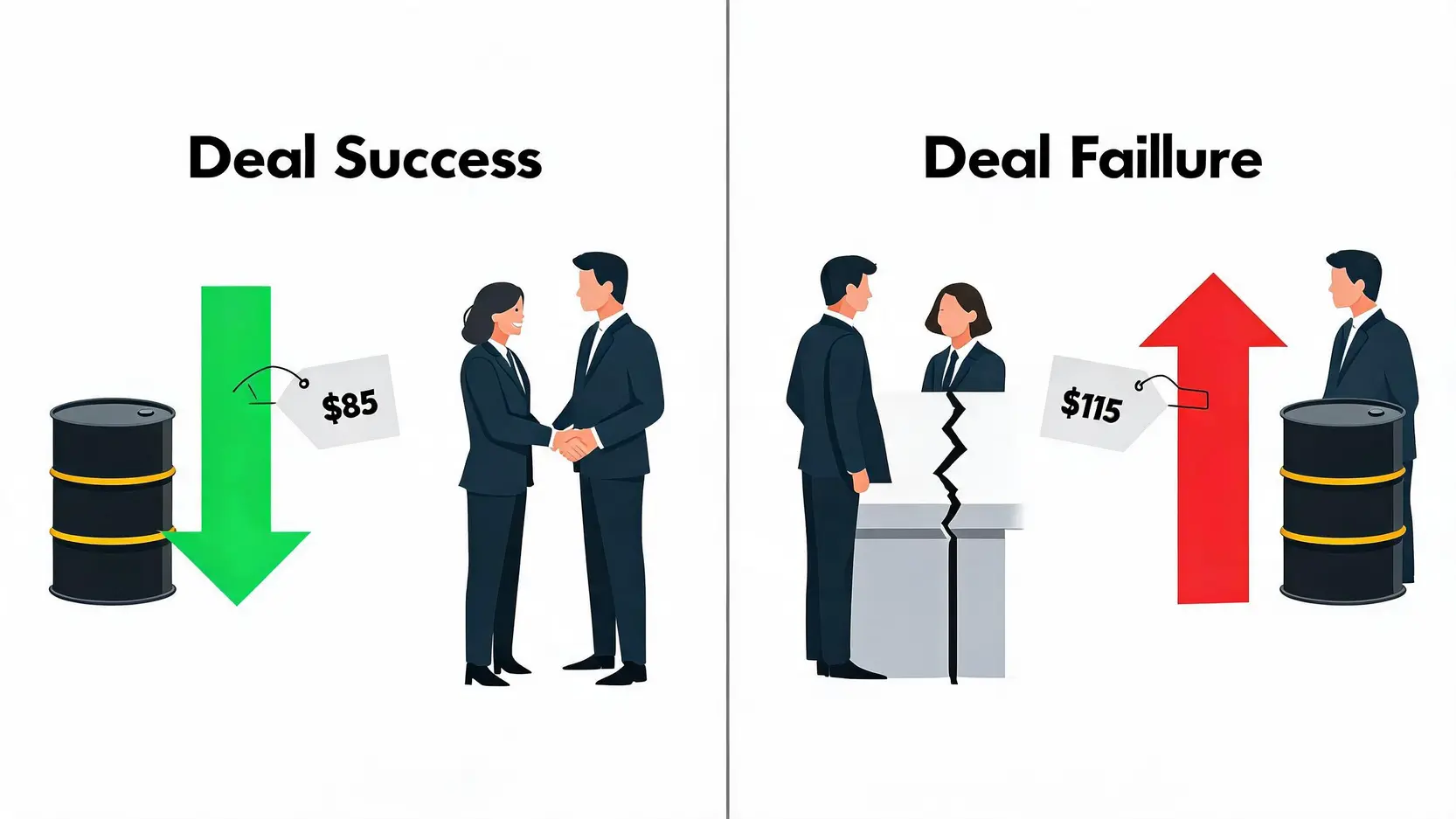
- Immediate Price Drop: The moment a deal is formally announced, oil prices could drop by $10-$15 per barrel almost instantly as the geopolitical risk premium evaporates.
- Phased Return of Iranian Oil: Sanctions relief would allow Iran to begin ramping up production and exports. According to analysis from the U.S. Energy Information Administration (EIA), Iran has the technical capacity to increase production by over 1 million bpd within months. This would involve releasing oil from its significant floating storage and restarting wells.
- New Price Equilibrium: As this new supply is absorbed, a new, lower price range would be established. Many analysts project that Brent crude could settle in an $80-$85 per barrel range, a significant relief from the $100+ levels flirted with earlier in the year. This would depend heavily on the reaction of OPEC+, which may consider adjusting its own production quotas to stabilize the market.
Scenario B: Negotiations Collapse – The Risk of a Sustained Price Rally
A breakdown in diplomatic talks represents the most significant bullish risk for oil prices. The implications would be immediate and severe:
- Sharp Price Rally: A definitive failure of negotiations would signal that Iranian barrels are off the market for the foreseeable future. This would likely trigger a rally back towards the year’s highs, with $115-$120 per barrel for Brent becoming a realistic target.
- Heightened Geopolitical Tensions: The collapse of talks would almost certainly escalate tensions in the Middle East, particularly in key shipping chokepoints like the Strait of Hormuz. The market would have to price in a higher risk of supply disruptions, further supporting prices.
- Focus on Spare Capacity: With the prospect of Iranian supply gone, the market’s focus would shift entirely to the spare production capacity of other major producers, mainly Saudi Arabia and the UAE. Any doubts about their ability to meet future demand growth would add fuel to the price fire. This is a classic example of how geopolitical risk impacts financial markets.
Beyond the Barrel: Broader Economic Impacts of the 2026 Iran Deal
The outcome of the Iran deal will reverberate far beyond the oil futures market, impacting everything from global inflation to consumer wallets.
How Iranian Oil Re-entering the Market Affects Global Supply
The re-entry of 1.5 million bpd or more of Iranian crude would be a game-changer for the global supply balance. In a market where marginal barrels set the price, this influx would provide a crucial buffer, increasing global spare capacity and reducing the system’s vulnerability to shocks. It would force a strategic recalculation for the OPEC+ alliance, which has spent years carefully managing supply to support prices. A deal could test the cohesion of the group, as members weigh the need for market share against stable revenue.
Ripple Effects on Inflation, Shipping, and Gas Prices for Consumers
The two scenarios present a stark contrast for the global economy:
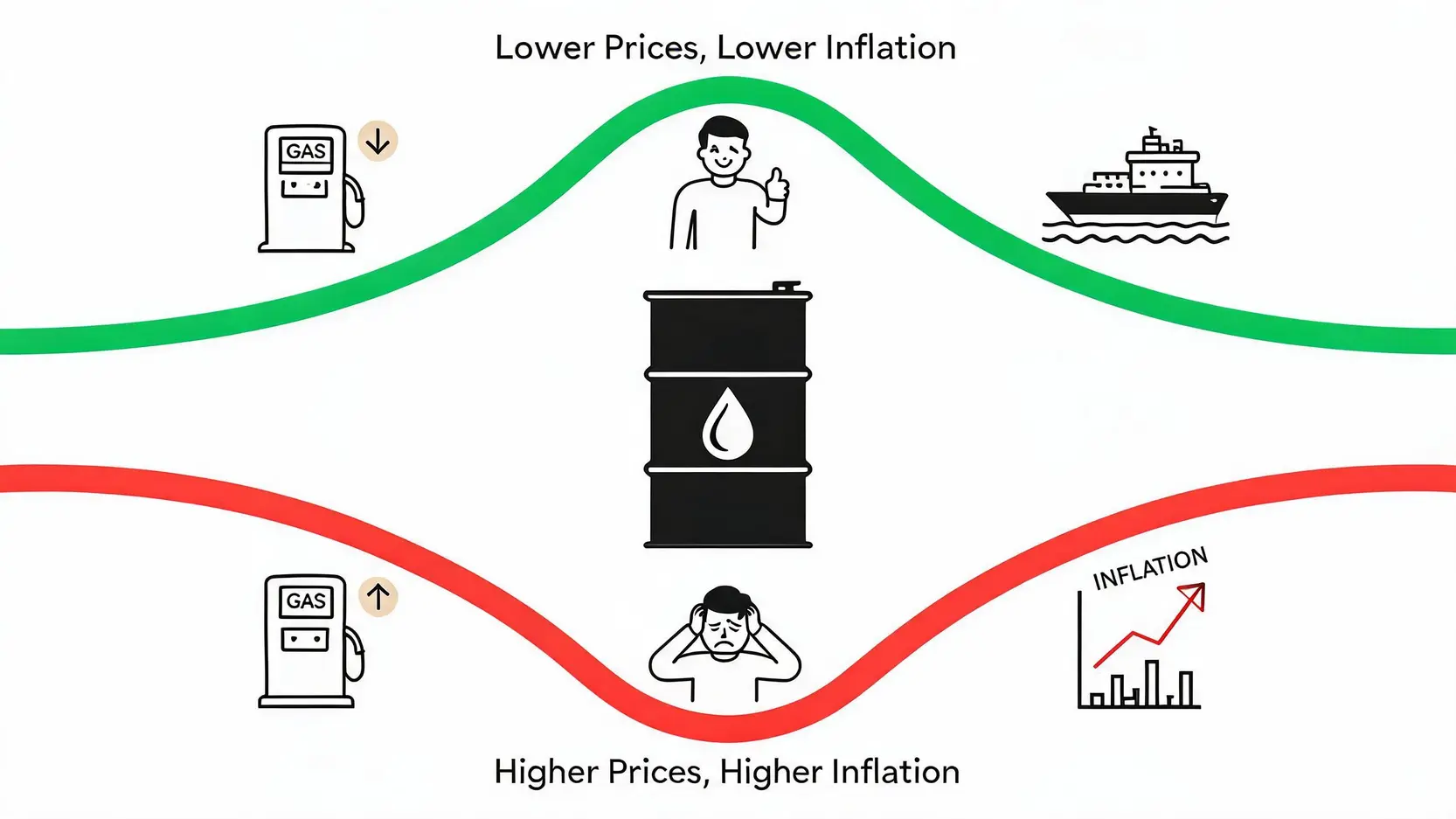
📉 Successful Deal: Lower oil prices would act as a global economic stimulus. Consumers would see immediate relief at the pump with lower gasoline prices. Transportation and shipping costs would fall, easing supply chain pressures. Most importantly, it would be a powerful disinflationary force, giving central banks more flexibility and potentially staving off further interest rate hikes.
📈 Failed Deal: A surge in oil prices would have the opposite effect. It would fuel global inflation, squeezing household budgets and increasing operating costs for businesses. This inflationary shock would complicate monetary policy for central banks, forcing them to choose between fighting inflation with higher rates and risking an economic slowdown. For consumers, it would mean a return to painfully high energy bills.
Lessons from History: What Past Iran Deals Taught the Oil Market
The market has learned crucial lessons from the 2015 Joint Comprehensive Plan of Action (JCPOA) and its eventual demise. The key takeaway is that the implementation and verification of any deal are just as important as the initial signing. In 2015, Iranian oil returned to the market faster than many expected, causing a prolonged period of price weakness. Traders in 2026 are acutely aware of this precedent. They will be scrutinizing the fine print of any new agreement for details on inspection protocols, sanctions snap-back mechanisms, and the timeline for export normalization. This historical context ensures that while a deal would be bearish, the market’s reaction will be tempered by a healthy dose of analytical rigor, focusing on the tangible flow of barrels rather than just diplomatic promises.
Conclusion
Ultimately, the fate of the Iran deal is the single most important variable shaping oil prices in 2026. The negotiations represent a critical fork in the road for energy markets. A successful agreement would unlock a significant new source of supply, providing much-needed relief to consumers and easing global inflationary pressures. A diplomatic failure, however, would tighten the market considerably, embedding a significant risk premium into the price of every barrel and heralding a return to sustained high energy costs. Investors, businesses, and consumers alike must monitor the delicate diplomatic dance, as its conclusion will directly determine the economic landscape for the foreseeable future.
Frequently Asked Questions (FAQ)
Q: How much Iranian oil could return to the market with a new deal?
A: Estimates suggest Iran could increase its exports by 1.5 to 2.0 million barrels per day (bpd). This would occur in phases, with an initial surge of ~1 million bpd from floating storage and quickly restarted production, followed by a more gradual increase over the subsequent 6-9 months as investment returns to its oil fields.
Q: What are the main obstacles to a successful Iran nuclear deal in 2026?
A: The primary obstacles include disagreements over the scope of Iran’s uranium enrichment program, the timeline for lifting sanctions (particularly those related to non-nuclear activities), and robust verification and monitoring mechanisms. Domestic political opposition in both the United States and Iran also presents a significant challenge to ratifying and sustaining any agreement.
Q: How quickly would oil prices drop if a deal is signed?
A: The price reaction would be almost instantaneous. An initial drop of $10-$15 per barrel could happen within hours of a credible announcement. However, the full price impact would unfold over several months as the market assesses the actual pace of returning Iranian barrels and the corresponding policy response from OPEC+.
Q: What is the role of OPEC+ in this scenario?
A: OPEC+ would play a critical role in managing the market’s rebalancing. In the event of a successful deal, the group would likely convene to discuss adjusting their collective production targets to accommodate the new Iranian supply and prevent a price crash. If talks fail, the pressure would be on OPEC+ to utilize its spare capacity to prevent prices from spiraling out of control.