Table of Contents
Market Snapshot: Oil Prices React to Iran Deal News
Global financial markets are witnessing a significant recalibration as oil prices fall, driven by renewed optimism surrounding a potential nuclear Iran deal. This development has introduced considerable volatility, directly impacting the energy sector and broader economic forecasts. The prospect of lifting sanctions on Iran has led to a notable dip in crude benchmarks, signaling a potential shift in the global energy supply landscape and influencing the impact of the Iran deal on oil prices.
The sentiment is one of cautious hope mixed with deep-seated uncertainty. While the market is pricing in the possibility of a successful agreement, the complex geopolitical dynamics at play mean that a definitive outcome is far from certain. Investors are closely monitoring every diplomatic signal, knowing that the stakes—ranging from global inflation rates to corporate profit margins—are incredibly high.
Brent and WTI Plunge: Analyzing the Recent Price Drop
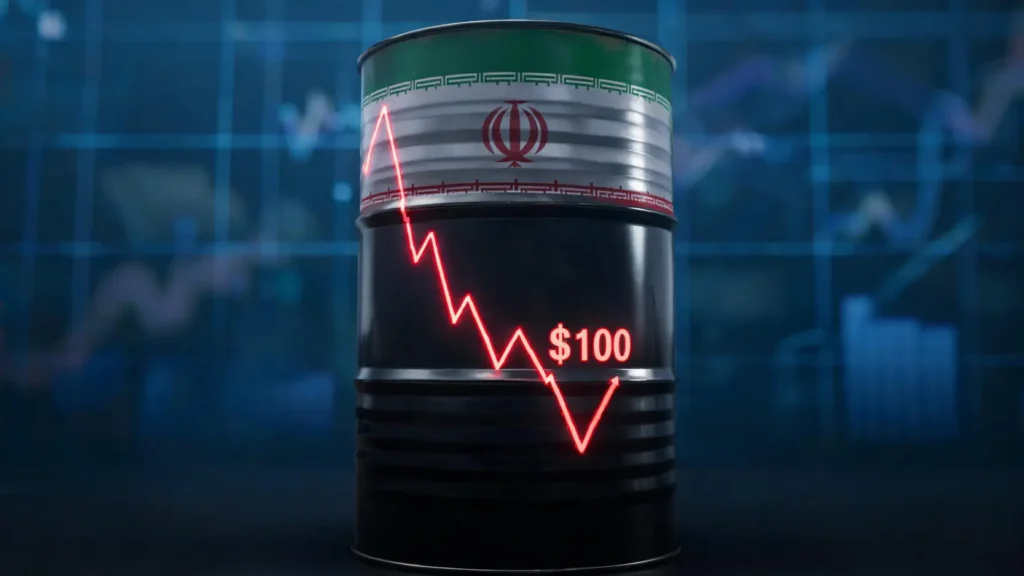
The most direct consequence of the negotiation progress has been a sharp decline in key oil benchmarks. Brent crude, the global benchmark, has notably breached the psychological threshold of $100 per barrel, a level not seen in months. Similarly, West Texas Intermediate (WTI), the U.S. benchmark, has experienced a parallel downturn. This synchronized plunge underscores the market’s sensitivity to supply-side news. The primary driver is the anticipation of several hundred thousand, and eventually over a million, barrels of Iranian oil re-entering a market that has been tightly balanced. For a deeper understanding of these benchmarks, it’s helpful to review Why Is U.S. Oil Higher Than Brent? The Shocking Reason, which explains the nuances of their pricing.
Stock Market and Investor Sentiment: A Cautious Optimism
The reaction in the broader equity markets has been more varied. Energy stocks have, predictably, come under pressure, with major producers seeing their valuations dip in response to lower future price expectations. Conversely, sectors that are heavy consumers of energy—such as airlines, shipping, and manufacturing—have seen a lift. This reflects the potential for lower operating costs and improved margins. ✈️
Investor sentiment remains on a knife’s edge. While the prospect of cheaper energy is a welcome deflationary pressure, the geopolitical implications of a deal with Iran are complex. The overarching mood is one of watchful waiting, with portfolio managers hedging their bets until the ink on any potential agreement is dry.
The Core Mechanics: Why an Iran Deal Means Lower Oil Prices
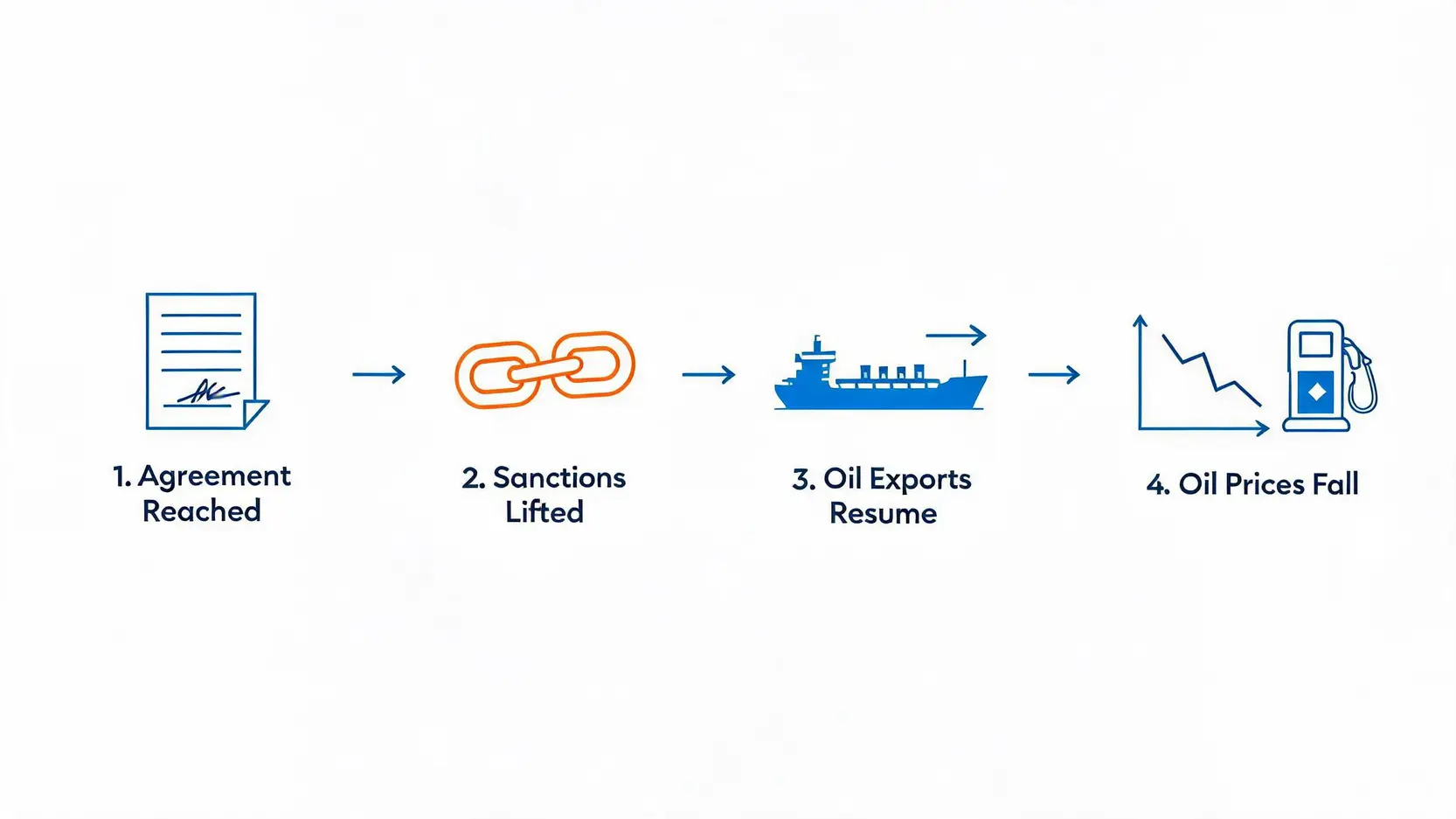
The fundamental reason an Iran deal lowers oil prices is straightforward: it unlocks a significant volume of crude oil supply that has been kept off the mainstream market by international sanctions. This injection of supply, if realized, would fundamentally alter the delicate supply-demand balance that has kept prices elevated.
Unlocking Supply: How Many Barrels Can Iran Add to the Market?
According to analyses from the U.S. Energy Information Administration (EIA) and other energy watchdogs, the impact would be substantial. Iran holds some of the world’s largest proven crude oil reserves. Estimates suggest that upon the lifting of sanctions, Iran could ramp up its production significantly.
- Initial Surge: Iran has a considerable amount of oil in floating storage (on tankers) that could be released into the market almost immediately, potentially adding 500,000 to 1 million barrels per day (bpd) within weeks.
- Medium-Term Increase: Within six to twelve months, experts project that Iran could increase its production from current levels to its pre-sanction capacity, potentially adding another 1.5 million bpd to global supply.
This potential surge is a formidable counterweight to the supply discipline exercised by OPEC+ and other producers, explaining the market’s bearish reaction.
The Impact of Sanctions Relief on Global Oil Flow
Sanctions have severely restricted Iran’s ability to sell its oil on the open market, forcing it into covert or discounted sales. The relief would dismantle this financial and logistical blockade. Re-integrating Iran into the global financial system, including access to SWIFT for transactions and securing international insurance for its shipping fleet, would normalize its export operations. Major trading hubs in Europe and Asia, which had ceased or heavily reduced purchases from Iran, would likely resume imports, redirecting global oil flows and increasing competition among suppliers.
Beyond the Barrel: Broader Economic Implications
The ripple effects of a sustained drop in oil prices, should the Iran deal be finalized, extend far beyond energy markets. The macroeconomic consequences would be globally significant, creating clear winners and losers and potentially altering the trajectory of inflation.
Relief at the Pump? Forecasting the Effect on Gasoline Prices
For consumers, the most tangible benefit would be lower prices at the gas pump. ⛽ Crude oil is the primary input cost for gasoline, and a sustained drop from over $100 per barrel would translate directly into relief for households. This acts as a de facto tax cut, increasing disposable income and potentially boosting consumer spending in other areas of the economy, which could provide a tailwind for retail and service sectors.
A Potential Brake on Global Inflation
From a macroeconomic perspective, lower oil prices are a powerful deflationary force. Central banks, including the Federal Reserve and the ECB, have been battling persistent inflation since the post-pandemic recovery. A significant and sustained decrease in energy costs would alleviate headline inflation, giving policymakers more flexibility. It could reduce the pressure for further aggressive interest rate hikes, a prospect that would be welcomed by equity and bond markets alike.
Winners and Losers: Which Industries Benefit from Cheaper Oil?
The shift in oil prices would create a clear divergence in economic fortunes across different sectors and countries:
| Potential Winners | Potential Losers |
|---|---|
| ✈️ Airlines & Transportation: Fuel is a major operating expense. | 🛢️ Other Oil-Exporting Nations: Reduced revenue for countries in OPEC+ and beyond. |
| 🏭 Manufacturing & Chemicals: Lower input and energy costs. | ⚡ Alternative Energy Sector: Cheaper oil can reduce the short-term economic incentive to switch to renewables. |
| 🛒 Consumer-Driven Sectors: Increased disposable income for consumers. | Oil & Gas Companies: Lower prices directly impact profitability and exploration budgets. |
What’s Next? Hurdles and Future Outlook
While the market has reacted to the headlines, the path to a finalized deal is fraught with obstacles. A successful outcome is not a foregone conclusion, and investors must analyze the remaining challenges and potential price scenarios. The interaction between diplomacy and market forces, as detailed in discussions of geopolitical risk and market behavior, is paramount.
Key Sticking Points in the US-Iran Negotiations
Finalizing the nuclear agreement involves navigating several critical and politically sensitive issues. As outlined by policy experts at institutions like the Council on Foreign Relations, these hurdles have historically been the most difficult to overcome:
- Scope of Nuclear Restrictions: Defining the precise limits on uranium enrichment levels and the monitoring mechanisms required by the International Atomic Energy Agency (IAEA).
- Sanctions Snapback Mechanism: Agreeing on a process to rapidly re-impose sanctions if Iran is found to be non-compliant is a key demand for the U.S. and its allies.
- Regional Security Concerns: Addressing Iran’s ballistic missile program and its influence in the Middle East, which are outside the original scope of the nuclear deal but remain a major concern for regional partners.
Expert Forecasts: Price Scenarios With vs. Without a Deal
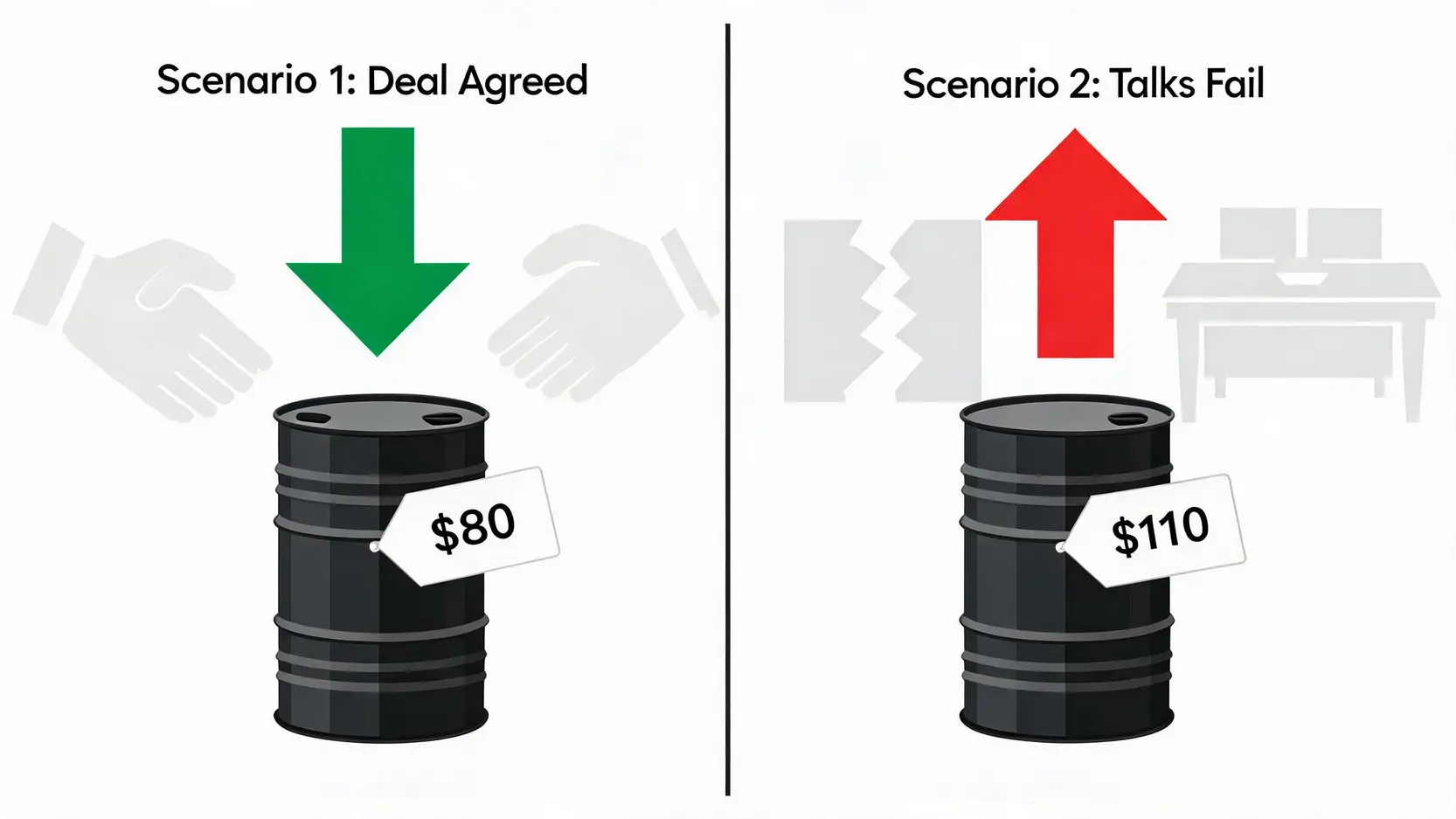
Analysts are modeling two distinct paths for oil prices, contingent on the outcome of the talks:
- Scenario 1: Deal Agreed and Implemented. In this case, most forecasts see oil prices stabilizing in a lower range. A swift return of Iranian barrels could push Brent crude down towards the $75-$85 per barrel range later in the year, assuming other supply and demand factors remain constant.
- Scenario 2: Negotiations Collapse. If the talks fail, the risk premium that has been priced out of the market would likely return with a vengeance. This outcome would put the focus back on the tight supply-demand balance, potentially sending Brent back above $100-$110 per barrel as the prospect of additional supply vanishes.
Conclusion
In conclusion, the prospect of a renewed Iran nuclear deal has injected a powerful bearish sentiment into energy markets, causing oil prices to fall on the tangible possibility of increased global supply. The mechanics are clear: sanctions relief would unlock millions of barrels of Iranian crude, fundamentally easing the supply constraints that have propped up prices. However, the path to a final agreement is riddled with geopolitical complexities. Investors and consumers alike must remain vigilant, as the outcome of these high-stakes negotiations will have lasting repercussions on gasoline prices, global inflation, and the world economy for the foreseeable future.
Frequently Asked Questions (FAQ)
Q: How quickly could Iranian oil enter the market after a deal?
A: The impact would be two-phased. First, oil stored on tankers could be sold almost immediately, potentially adding 500,000 to 1 million barrels per day (bpd) within a few weeks. Second, increasing production from oilfields would take longer, with experts estimating it could take six to twelve months for Iran to restore its full pre-sanction output, adding up to another 1.5 million bpd.
Q: What is the main reason an Iran deal lowers oil prices?
A: The primary reason is the principle of supply and demand. A successful deal would lift sanctions, allowing Iran to re-introduce a significant volume of crude oil—potentially over 2 million barrels per day in total—to the global market. This sudden increase in supply, assuming demand remains constant, naturally pushes prices lower.
Q: Are there other factors currently affecting oil prices?
A: Yes, absolutely. While the Iran deal is a major catalyst, oil prices are also influenced by OPEC+ production policies, demand growth from major economies like China and India, fluctuations in the U.S. dollar, and unforeseen geopolitical events in other oil-producing regions. The Iran factor is just one piece of a very complex puzzle.
Q: Who are the main parties involved in the negotiations?
A: The negotiations primarily involve Iran and the P5+1 group of world powers. This group consists of the five permanent members of the UN Security Council (the United States, United Kingdom, France, Russia, and China) plus Germany. The European Union also plays a significant coordinating role.