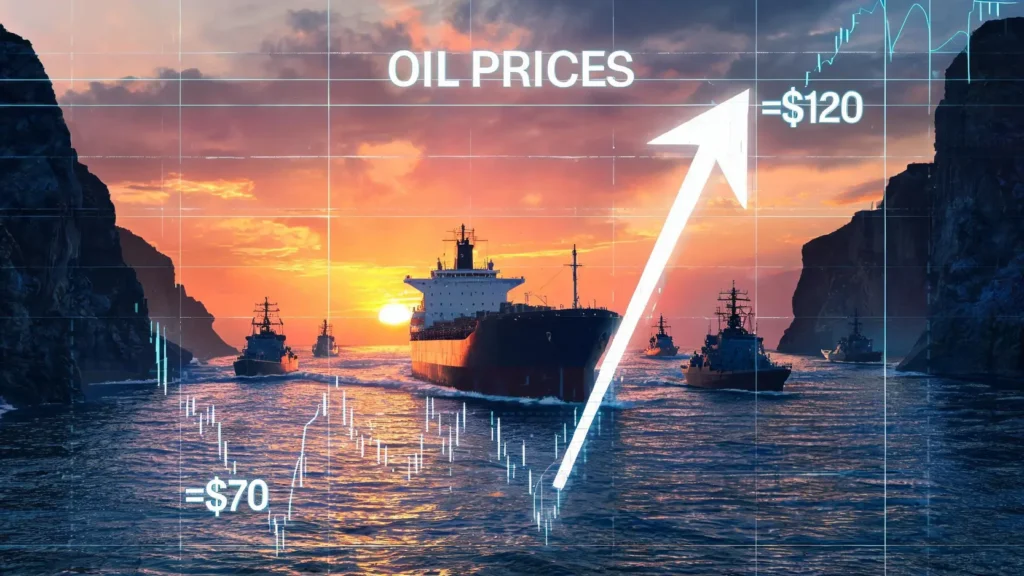
Recent escalations in the Strait of Hormuz have sent shockwaves through global energy markets, directly impacting Strait of Hormuz oil prices in 2026. With predictions from top financial institutions suggesting oil prices could surge dramatically, this analysis breaks down the core factors behind the geopolitical tensions’ impact on oil, delves into expert 2026 oil price forecasts, and explores what a potential closure of this critical waterway means for the world economy. The stability of the market is on a knife’s edge, and every barrel of oil passing through this chokepoint is under scrutiny.
Table of Contents
The Current Situation: Analyzing the 2026 Oil Price Spikes
The first half of 2026 has been characterized by heightened volatility in the oil markets, largely driven by events in the Persian Gulf. The delicate geopolitical balance has been tested, leading to significant price fluctuations that have kept traders and policymakers on high alert.
Timeline of Recent Tensions and Market Reactions
The year began with renewed diplomatic friction, which quickly escalated. Here is a brief timeline of key events and their immediate market impact:
- February 2026: A naval standoff involving Iranian Revolutionary Guard Corps (IRGC) vessels and an international coalition patrol leads to a sharp, albeit temporary, spike in Brent crude futures.
- March 2026: A major shipping company announces a temporary suspension of its tankers transiting the strait, citing rising insurance premiums and security concerns. This causes a 5% jump in oil prices over two days.
- May 2026: An incident involving a drone near a major oil terminal triggers another wave of panic buying. The market is now pricing in a significant risk premium, reflecting the persistent threat of disruption. These events highlight the market’s sensitivity to any perceived threat to the free flow of oil, a concept well-explored in analyses of market complacency towards geopolitical risk.
Key Price Points: From $87 to Potential Highs
WTI and Brent crude started the year trading in a stable range around $85-$87 per barrel. However, the recurring tensions have established a new, higher floor for prices. As of late May 2026, Brent is hovering around $95/bbl, with analysts noting that this includes a geopolitical risk premium of at least $8-$10. The key question now is not if prices will remain elevated, but how high they could go if the situation deteriorates further. Understanding the difference and spread between these benchmarks is crucial; for more detail, see our guide on understanding crude oil prices like WTI & Brent.
Statements from International Bodies (World Bank, UNCTAD)
International organizations are closely monitoring the situation. The World Bank, in its latest Commodity Markets Outlook, warned that a severe disruption in the Middle East could easily push oil prices into triple-digit territory. They noted that even a moderate disruption—reducing global supply by 3 million to 5 million barrels per day (bpd)—could increase prices by 21% to 35% in the initial months. Similarly, UNCTAD (United Nations Conference on Trade and Development) has voiced concerns over the impact on global trade, emphasizing that higher shipping costs and energy prices could fuel global inflation.
Why the Strait of Hormuz is the World’s Most Important Oil Chokepoint for Global Markets
The Strait of Hormuz is not just another waterway; it is the jugular vein of the global energy economy. Its strategic and geographic significance cannot be overstated, making it the focal point of any discussion about oil price stability and geopolitical risk.
Geographic and Strategic Importance
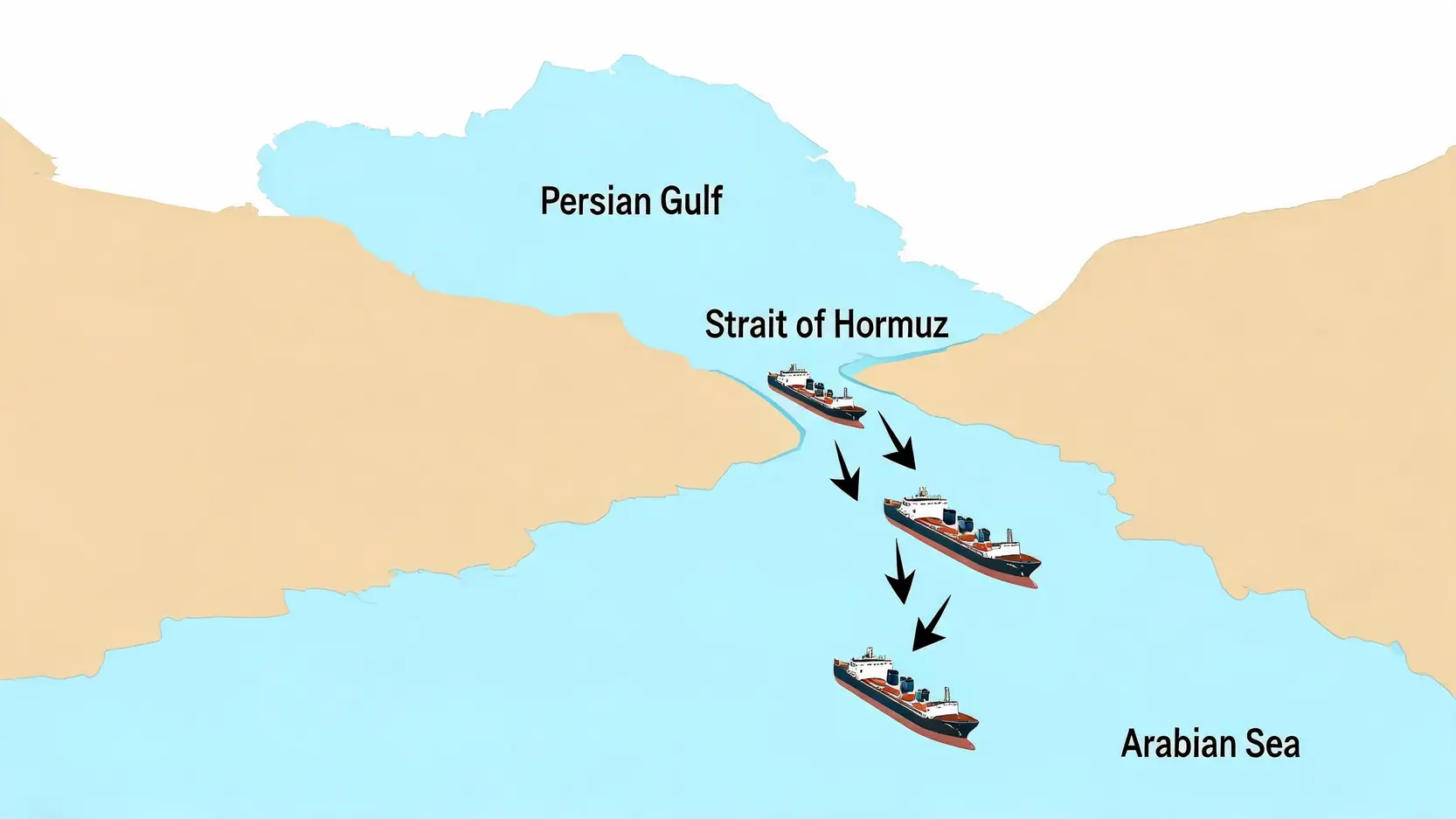
Located between Oman and Iran, the strait connects the Persian Gulf with the Gulf of Oman and the open Arabian Sea. At its narrowest point, it is only 21 miles wide, with shipping lanes just two miles wide in either direction. This narrow passage is the only sea route out of the Persian Gulf, making it an unavoidable transit point for the region’s vast oil and gas exports. Any disruption, whether accidental or intentional, has immediate and far-reaching consequences for global energy supplies.
How Much Global Oil Supply is at Risk?
The numbers are staggering. According to the U.S. Energy Information Administration (EIA), nearly 21 million barrels of petroleum liquids per day transit the strait. This represents approximately 21% of global petroleum liquids consumption. 🚢 Furthermore, about a third of the world’s liquefied natural gas (LNG) also passes through it. The sheer volume of energy flowing through this chokepoint means that even a minor delay can cause significant market jitters, while a full closure would represent an unprecedented global energy crisis.
Expert Forecasts: Scenarios for 2026 Oil Prices Amid Hormuz Tensions
Financial institutions and energy analysts are modeling various scenarios to quantify the potential impact of a Strait of Hormuz disruption. These forecasts range from manageable price spikes to a full-blown economic shock, with the $120/bbl figure emerging as a critical threshold in worst-case projections.
The Fitch Ratings Outlook: A Path to $120/bbl
Fitch Ratings has outlined a scenario where a significant military conflict leading to a partial and prolonged closure of the strait could indeed send oil prices soaring. In their stress-test model, a reduction of 5-7 million bpd from global supply for a quarter or more would likely push Brent crude to the $120-$130/bbl range. This forecast is based on the limited capacity of other producers to ramp up production quickly and the low levels of global spare capacity. Such a price level would have severe macroeconomic consequences, likely triggering recessions in energy-importing nations.
The World Bank’s Commodity Markets Outlook on Middle East Conflict
The World Bank’s analysis supports this view. Their framework for a “large disruption,” akin to the Arab oil embargo of 1973, projects a potential price surge of 56% to 75%. Starting from a baseline of around $90/bbl, this would place oil prices in a range of $140 to $157 per barrel. While they consider a full, protracted closure a low-probability event, they emphasize that the economic damage would be catastrophic, far exceeding the impact of recent conflicts.
Scenario Analysis: Short-Term Disruption vs. Protracted Closure
To provide clarity, let’s break down the two most likely scenarios:
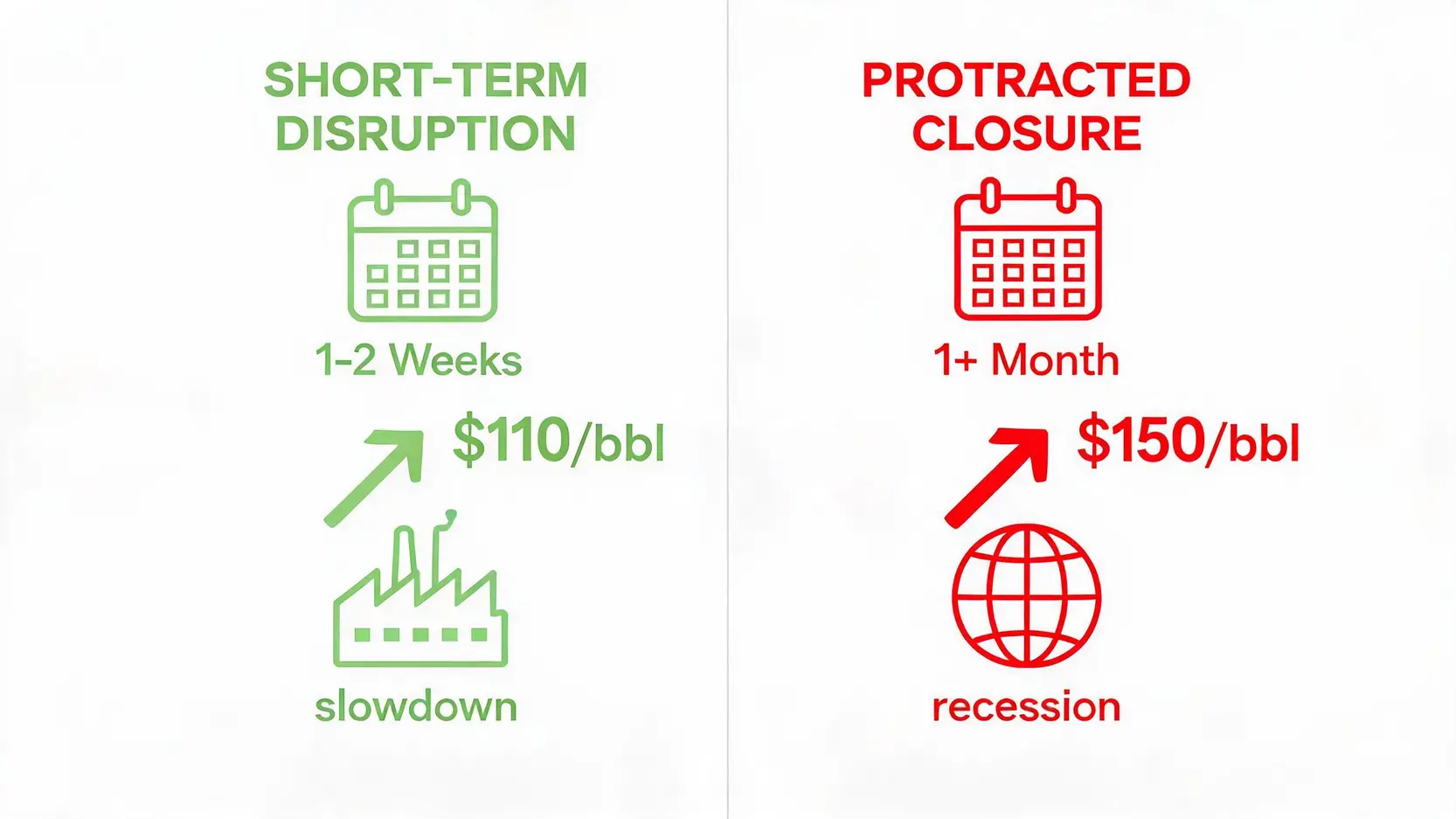
- Short-Term Disruption (1-2 weeks): In this scenario, a minor incident or temporary closure causes a panic-driven spike. Prices could jump to $105-$110/bbl but would likely retreat as shipping resumes. The primary impact would be on short-term trading and a temporary rise in shipping insurance rates.
- Protracted Closure (1+ month): A sustained closure is the nightmare scenario. With 21 million bpd taken offline, global markets would face a catastrophic supply deficit. Prices would quickly surge past $120 and could test the $150 mark. Strategic petroleum reserves in the U.S., Europe, and Asia would be released, but this would only be a temporary solution. The global economy would almost certainly enter a severe recession.
Beyond the Pump: The Broader Economic Ripple Effects of the Hormuz Effect
A spike in Strait of Hormuz oil prices for 2026 would be felt far beyond the gas station. The economic consequences would permeate every sector, from global logistics to corporate balance sheets and household budgets. Understanding these second-order effects is critical for investors and businesses alike.
Impact on Global Shipping and Trade Routes
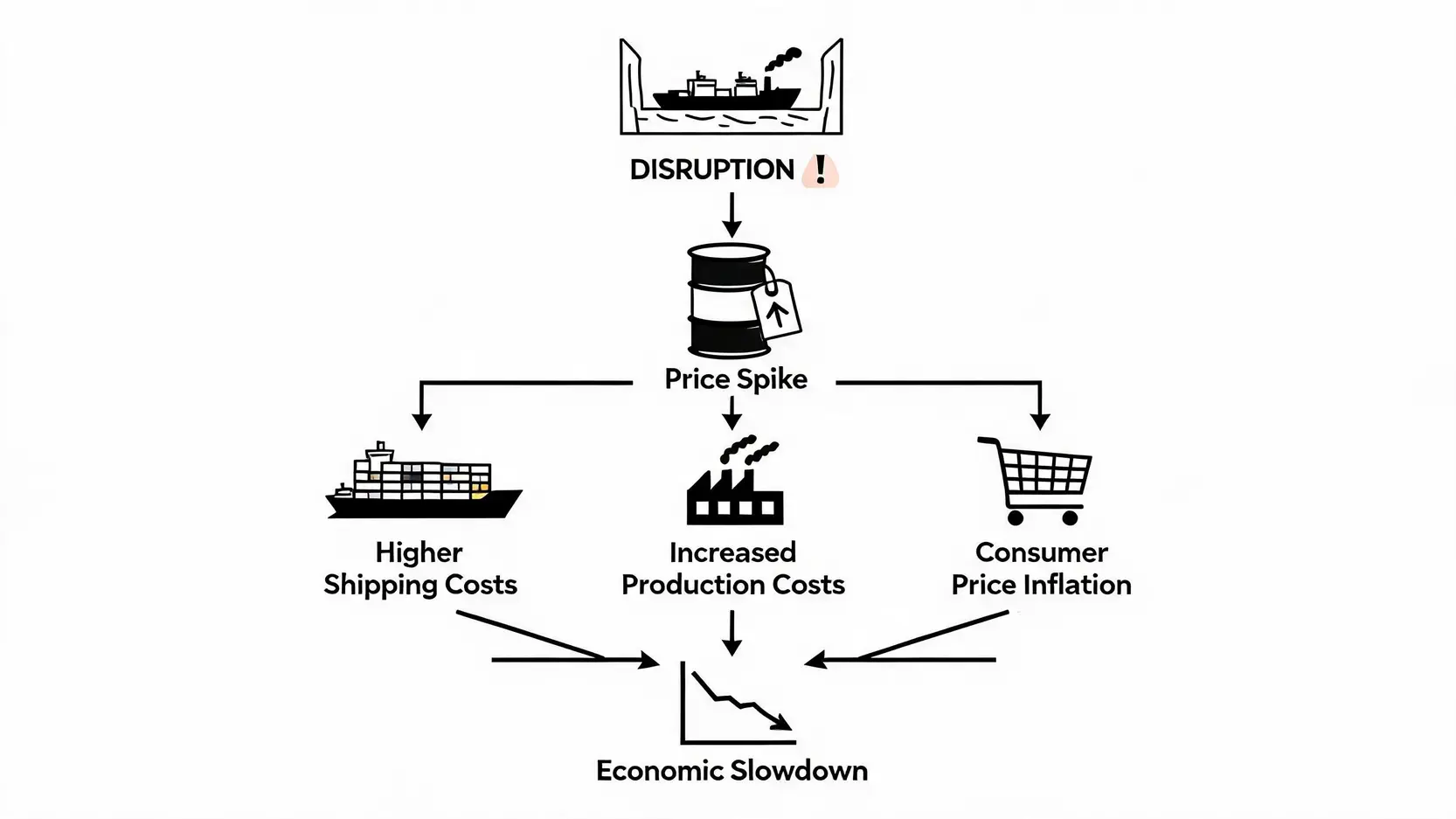
The most immediate impact after the energy sector would be on global shipping. War risk insurance premiums for tankers transiting the strait would skyrocket, adding millions of dollars to the cost of each voyage. Some shippers might refuse the route altogether, forcing a scramble for the limited alternative pipeline and land routes. This logistical nightmare would cause delays, increase freight costs globally, and disrupt supply chains for all manner of goods, not just oil. 🌐
Inflationary Pressures on Energy-Dependent Economies
Higher oil prices act as a global tax. For energy-importing countries in Europe and Asia, a surge to $120/bbl would trigger a significant inflationary shock.
- Higher Production Costs: Energy is a key input for manufacturing, agriculture, and services. Rising costs would be passed on to consumers.
- Reduced Consumer Spending: As households spend more on fuel and heating, they have less to spend on other goods and services, dampening economic growth.
- Central Bank Dilemma: Central banks would face the difficult choice of raising interest rates to combat inflation (risking a deeper recession) or allowing inflation to run hot (eroding purchasing power). The broader economic impact of rising oil prices is a complex issue that affects monetary policy worldwide.
Implications for Investors and Corporate Strategy
For investors, this environment is fraught with peril and opportunity. While most sectors would suffer, certain industries could benefit. Companies in the energy sector, particularly those with production assets outside the Persian Gulf, would see their profits soar. This makes understanding how to invest in energy stocks a critical component of portfolio strategy in 2026. Conversely, airlines, shipping companies, and energy-intensive manufacturing firms would face severe margin compression. Corporate strategies would need to adapt, with a renewed focus on hedging energy costs, diversifying supply chains, and managing geopolitical risk.
Conclusion
In conclusion, the stability of 2026 oil prices is inextricably linked to the geopolitical situation in the Strait of Hormuz. The waterway’s status as the world’s foremost energy chokepoint means any disruption poses a direct threat to the global economy. While a temporary disruption may cause limited spikes, a prolonged closure holds the potential to push prices towards the $120 mark, triggering a severe inflationary shock and impacting global trade. Investors, corporations, and policymakers must remain vigilant, as the evolution of the Hormuz effect will be a defining factor for financial markets throughout the year.
Frequently Asked Questions
Q: What is the primary reason for the oil price volatility related to the Strait of Hormuz in 2026?
A: The primary reason is geopolitical instability. Tensions involving Iran and Western powers, including naval standoffs, threats of closure, and incidents involving tankers or drones, create uncertainty about the safe passage of roughly 21% of the world’s daily oil supply. This forces the market to price in a significant risk premium.
Q: How much of the world’s oil passes through the Strait of Hormuz?
A: According to the U.S. Energy Information Administration (EIA), approximately 21 million barrels of oil and petroleum products transit the strait each day. This represents about one-fifth of global daily consumption, making it the world’s most critical oil chokepoint.
Q: What are the best-case and worst-case scenarios for oil prices if the strait is closed?
A: In a best-case scenario involving a brief, temporary disruption (a few days to a week), prices might spike to $105-$110 per barrel before quickly retreating. In a worst-case scenario—a protracted closure lasting a month or more—the global supply deficit would be so severe that prices would likely surge past $120 and potentially reach the $150 mark, triggering a global recession.
Q: Are there any viable alternatives to bypass the Strait of Hormuz?
A: Yes, but their capacity is extremely limited. The main alternative is the East-West Pipeline in Saudi Arabia, which can transport about 5 million barrels per day to the Red Sea. The UAE also has a smaller pipeline with a capacity of around 1.5 million bpd. Together, these pipelines can only handle a fraction of the 21 million bpd that flows through the strait, making them insufficient to prevent a major supply shock.