Table of Contents
What Triggered the ASX 200 Drop Today?
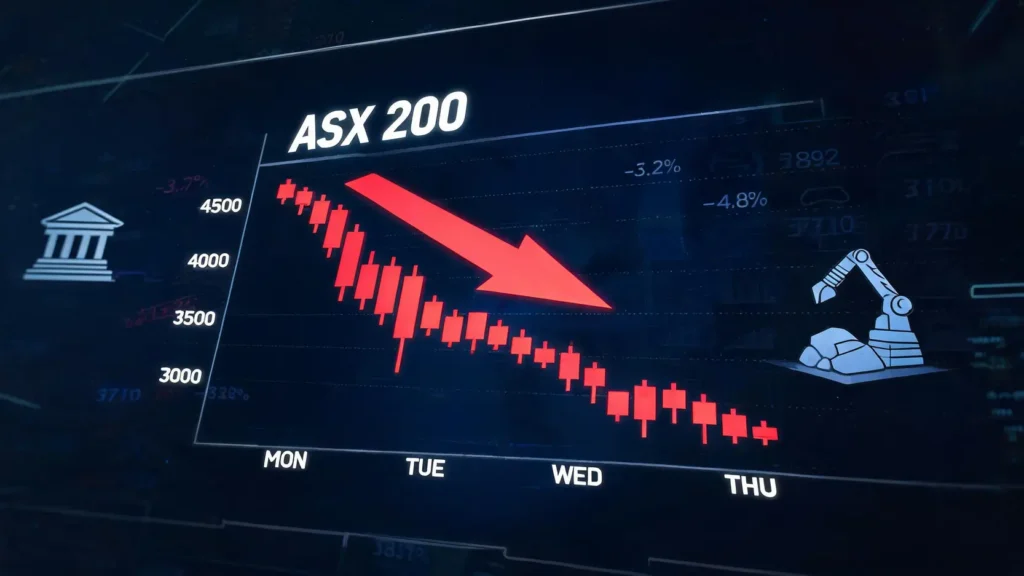
For investors checking their portfolios, seeing the Australian share market in the red can be unsettling. If you are wondering why is ASX 200 down today, you are not alone. The recent Australian share market drop is a complex reaction to a mix of global economic signals and local challenges. This sell-off is not random; it’s a reflection of investor sentiment shifting in response to powerful macroeconomic forces. In this article, we will break down the exact reasons behind today’s ASX 200 sell-off and what it means for your investments in 2026.
US Federal Reserve and Interest Rate Speculations
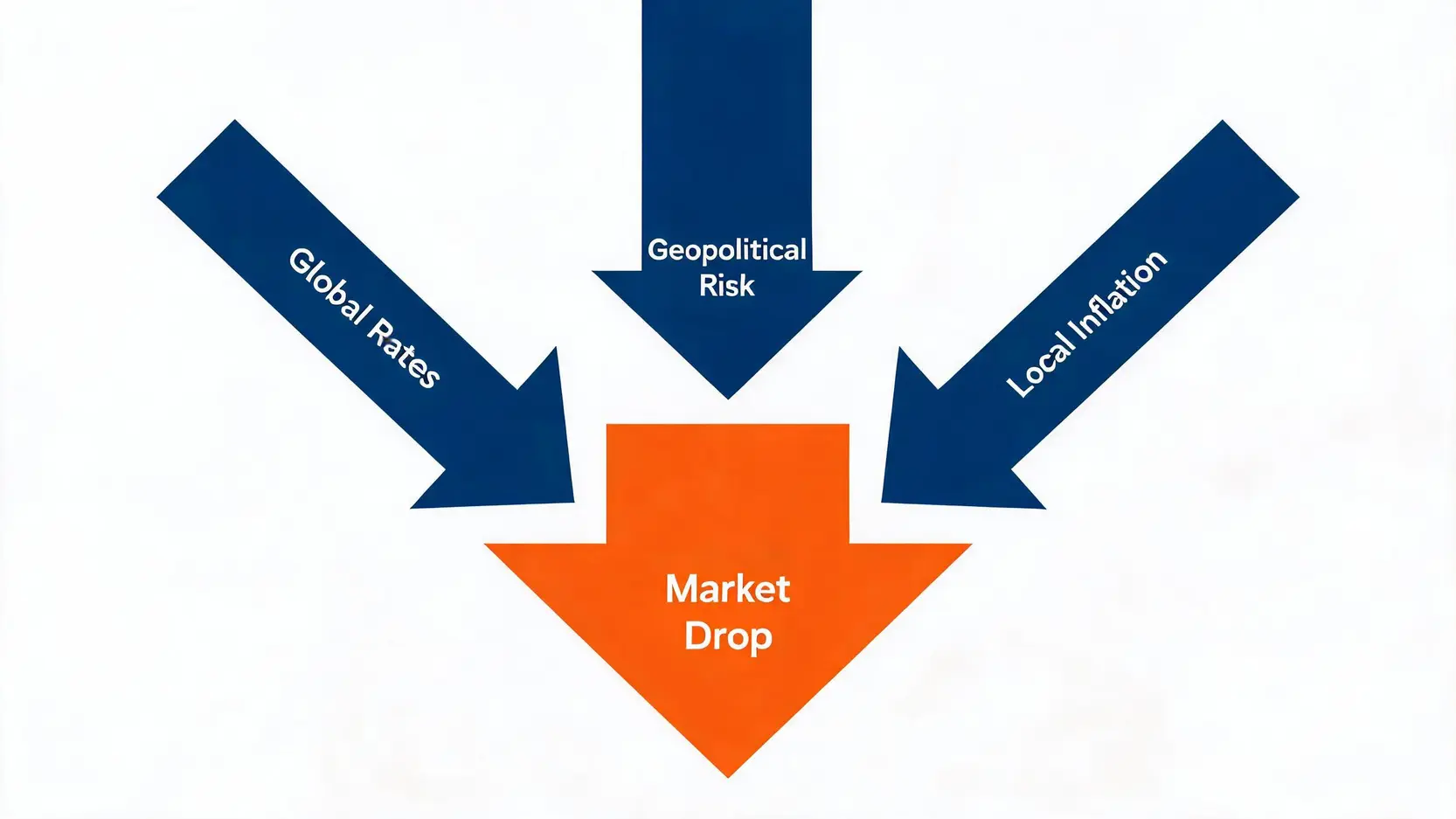
Global markets often take their cues from the United States, and the US Federal Reserve’s (Fed) monetary policy is a primary driver. Recent communications from the Fed have leaned hawkish, signaling that the fight against inflation is far from over. Even subtle shifts in language can send ripples across international markets. When the Fed indicates that interest rates might stay higher for longer, it recalibrates growth expectations worldwide. This prompts a risk-off sentiment, where investors sell assets like stocks and move towards safer havens. The Australian market, being closely linked to the global economy, is immediately impacted by this change in appetite for risk.
Geopolitical Tensions and Global Market Sentiment
Beyond economic policy, the geopolitical landscape remains a significant source of market volatility. Ongoing tensions in key regions, whether related to trade disputes or active conflicts, disrupt supply chains and create uncertainty. For a market like Australia’s, which is heavily reliant on commodity exports, any threat to global trade stability can have an outsized impact. These tensions affect everything from energy prices to the availability of essential goods, fueling inflation and souring investor confidence. The current ASX 200 sell-off reflects a pricing-in of these heightened global risks.
Local Factors: Persistent Inflation and RBA Policy
While global factors set the stage, domestic issues are the main act. Persistent inflation remains a thorn in the side of the Australian economy. In its latest meeting in June 2026, the Reserve Bank of Australia (RBA) held the official cash rate at 4.35%.
This decision, while expected, underscores the central bank’s ongoing concern about inflation not returning to its target band quickly enough. A high-interest-rate environment puts pressure on corporate earnings and dampens consumer spending, leading to a direct hit on stock valuations.
The market is interpreting the RBA’s firm stance as a sign that economic conditions may tighten further before they ease, triggering the current sell-off as investors adjust their forecasts. Understanding the nuances of inflation and its impact on stocks is crucial in this environment.
How Major ASX Sectors Reacted to the Sell-Off
A market-wide drop rarely affects all sectors equally. Today’s Australian share market drop saw distinct reactions from its largest constituents, particularly the banking and mining industries, which together dominate the ASX 200 index.
Banking and Financials: Profit-Taking or Panic?
The ‘Big Four’ banks—Commonwealth Bank, Westpac, NAB, and ANZ—were significant drags on the index. Initially, a rising rate environment can boost bank profits by widening their net interest margins (NIMs).
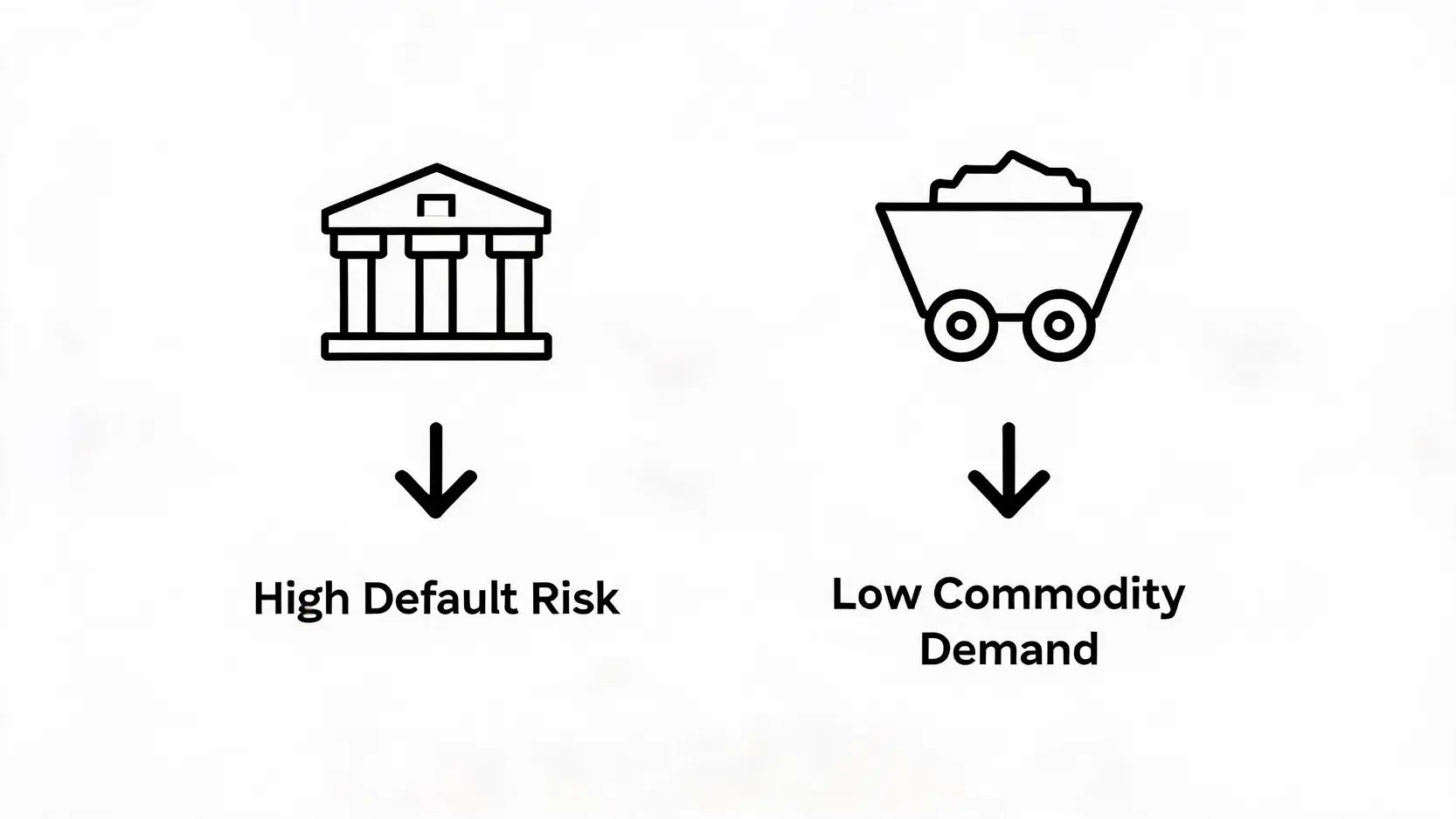
However, the market is now looking past this initial benefit and focusing on the secondary effects. Persistently high rates increase the risk of loan defaults, slow down the mortgage market, and reduce overall credit growth. Investors are now weighing the risk of a potential economic slowdown, which could lead to a rise in bad debts.
The selling in this sector appears to be a mix of profit-taking after a strong run and genuine concern about the long-term economic outlook. 📉
Mining and Energy Commodities: The Impact of Global Prices
As a resource-heavy index, the ASX 200’s fate is intrinsically tied to commodity prices. The mining giants like BHP Group, Rio Tinto, and Fortescue Metals Group are bellwethers for global industrial health. A slowdown in global growth, particularly in major economies like China, directly translates to lower demand for iron ore, copper, and other key resources. Today’s sell-off in the mining sector is a direct response to wavering commodity prices and concerns about future demand. Similarly, energy stocks have pulled back as oil and gas prices fluctuate amidst geopolitical uncertainty and shifting demand forecasts. This highlights the vulnerability of the Australian share market to global industrial cycles.
What Does This Mean for Retail Investors? (Actionable Strategies)
Seeing red in your portfolio can be nerve-wracking, but market downturns are also moments of opportunity for the prepared investor. The key is to act rationally, not emotionally. Here are some strategies to consider during the current ASX 200 sell-off.
Should You Sell or Hold? Expert Market Perspectives
The age-old dilemma: cut your losses or ride it out? For most long-term investors, the answer is often to hold. Market timing—selling at the peak and buying at the bottom—is notoriously difficult, even for professionals. Panic selling during a dip locks in your losses and risks missing the eventual recovery. Instead, this is an ideal time to review your portfolio and your original investment thesis.
- Re-evaluate Your Goals: Is your investment timeline still the same? Has your risk tolerance changed?
- Assess Your Holdings: Are the fundamental reasons you invested in specific companies still valid?
- Avoid Emotional Decisions: Base your choices on strategy and research, not on fear. Remember, volatility is a normal feature of the stock market.
Identifying Buying Opportunities During a Market Dip
For investors with capital on the sidelines, a market correction can be a gift. High-quality companies often get sold off along with weaker ones in a broad-based panic, creating attractive entry points. This is the classic “buy the dip” strategy. Look for businesses with:
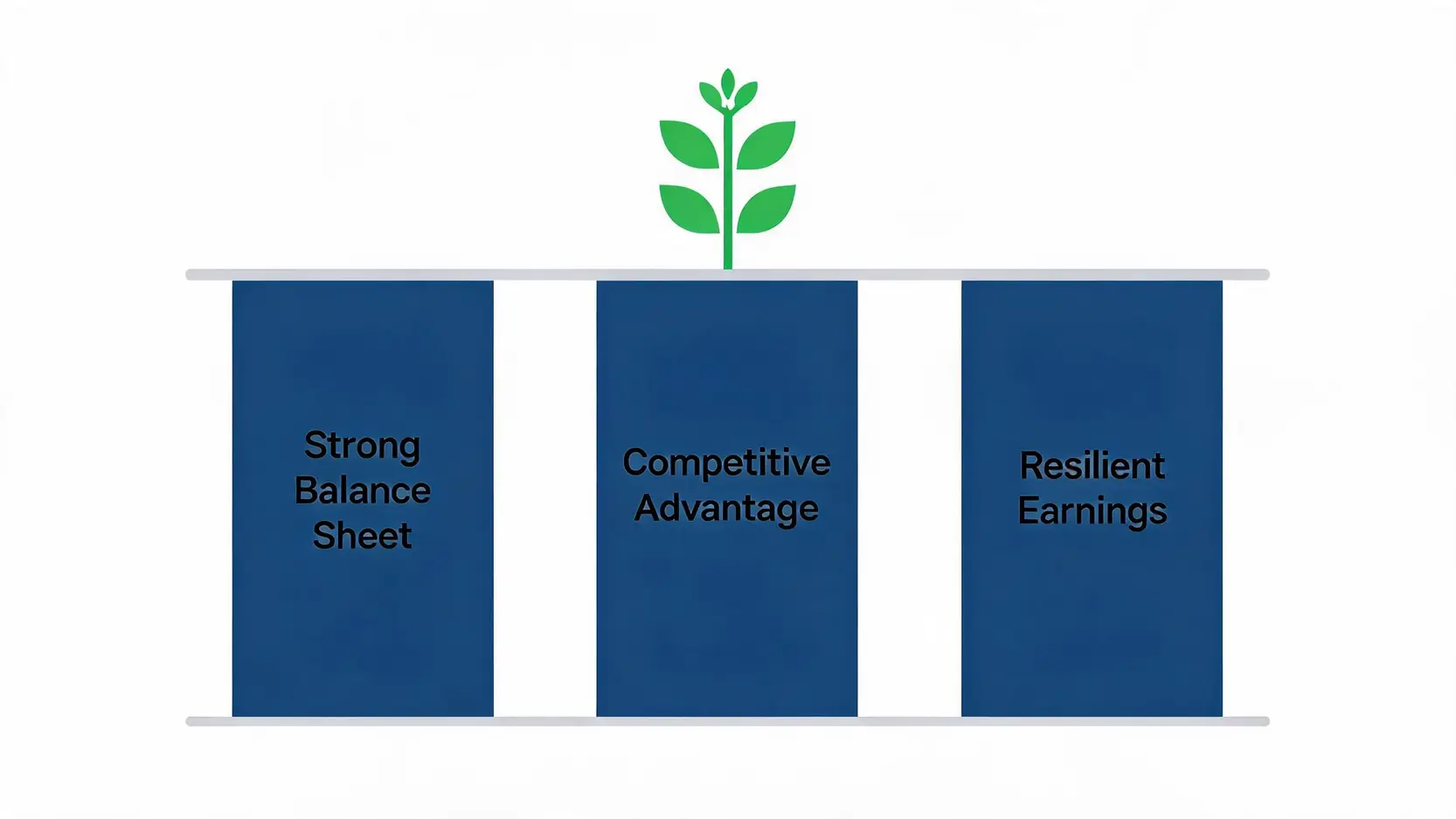
- Strong Balance Sheets: Low debt and healthy cash flow.
- Durable Competitive Advantages: A strong brand, unique technology, or market position that protects them from competition.
- Resilient Earnings: A history of performing well even during economic downturns.
A market dip allows you to buy these fundamentally sound companies at a discount. 🧐
Historical Context: How Quickly Does the ASX 200 Usually Recover?
History shows that while downturns are inevitable, so are recoveries. The S&P/ASX 200 has a long track record of bouncing back from sell-offs. According to Market Index, including dividends, the index has returned an average of 8.27% per year since its inception. While past performance is not a guarantee of future results, it provides valuable perspective. Recoveries can be swift and often begin when market sentiment is at its worst. Investors who stay invested are best positioned to benefit from the rebound, whereas those who sell out of fear often miss the best recovery days, which can significantly harm long-term returns.
Conclusion
In summary, the reasons why ASX 200 is down today stem from a potent combination of anxiety over global interest rate policy, persistent geopolitical events, and sector-specific struggles within the domestic market. While red numbers on a screen can be alarming, market corrections are a normal and healthy part of the investing cycle, shaking out excess and creating new opportunities. The most effective approach for investors is to remain informed, critically review their long-term strategy, and avoid making rash decisions based on short-term noise. Navigating volatility is the price of admission for achieving long-term returns in the equity market.
Frequently Asked Questions (FAQ)
Q: Will the ASX 200 continue to fall tomorrow?
A: It is impossible to predict short-term market movements with certainty. The direction of the ASX 200 tomorrow will depend on overnight developments on Wall Street, breaking news regarding inflation or geopolitical events, and shifts in commodity prices. Rather than focusing on daily predictions, investors should monitor key indicators like upcoming inflation data (CPI), central bank statements, and employment figures to gauge the medium-term trend.
Q: How do global markets like Wall Street impact the ASX?
A: The Australian market is highly correlated with major global indices, particularly the S&P 500 in the US. This is due to several factors: institutional investors managing global portfolios, the influence of US economic data on global sentiment, and the fact that many large ASX companies have international operations. The performance of Wall Street overnight often sets the tone for the ASX at the start of its trading day.
Q: What are the best defensive stocks to hold during a market downturn?
A: Defensive stocks belong to sectors whose products and services are in constant demand, regardless of the economic cycle. These typically include consumer staples (e.g., supermarkets like Woolworths), healthcare (e.g., CSL), and utilities (e.g., AGL Energy). These companies tend to have more stable earnings and often pay reliable dividends, making them a popular safe haven during a volatile ASX 200 sell-off.
Q: Is the current ASX 200 sell-off a sign of a recession?
A: Not necessarily. A stock market correction (a drop of 10% or more) is a relatively common event and does not always lead to a recession (defined as two consecutive quarters of negative GDP growth). The current sell-off is primarily driven by fears of inflation and rising interest rates. While these factors can slow the economy, a recession is not a foregone conclusion. It is a risk factor that investors are pricing in, but not yet a certainty.