
In a market shaped by AI spending, rate-cut expectations and uneven global growth, analyst ratings can help investors narrow down where professional conviction is strongest. This 2026 watchlist focuses on seven stocks with strong buy ratings, including leaders in artificial intelligence, cybersecurity, healthcare, cloud computing, renewable energy, semiconductor equipment and digital payments.
Table of Contents
What Does a ‘Strong Buy’ Stock Rating Actually Mean?
In the lexicon of investment analysis, a “Strong Buy” is the highest and most bullish recommendation an analyst can assign to a stock. It signifies a strong conviction that the stock will dramatically outperform the broader market or its sector average over a specified period, typically the next 12 to 18 months. This rating is reserved for companies that analysts believe are not just good, but exceptional opportunities.
Understanding the Analyst Rating System
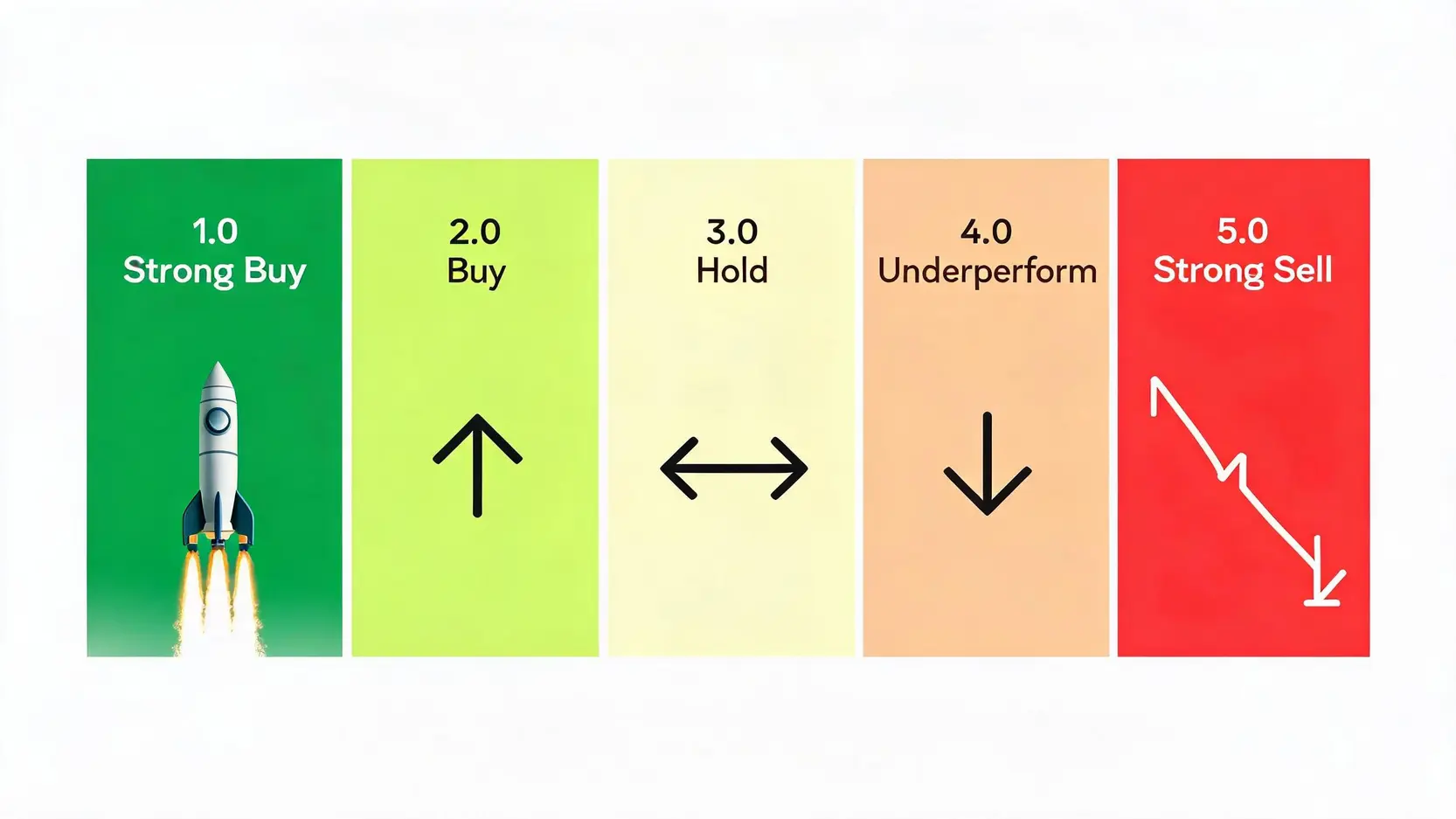
Analyst ratings are typically presented on a five-point scale, although the terminology can vary slightly between firms:
- 1.0 – Strong Buy: Expects significant outperformance.
- 2.0 – Buy (or Moderate Buy): Expects moderate outperformance.
- 3.0 – Hold: Expects performance in line with the market.
- 4.0 – Underperform (or Sell): Expects the stock to perform worse than the market.
- 5.0 – Strong Sell: Expects significant underperformance.
A stock receives a consensus “Strong Buy” rating when a significant majority of analysts covering it assign their highest recommendation. This collective bullishness is a powerful indicator, though not an infallible one.
Who Issues These Ratings and Are They Reliable?
These ratings are issued by sell-side analysts who work for investment banks and brokerage firms like Goldman Sachs, J.P. Morgan, and Morgan Stanley. Their job is to conduct in-depth research on companies, including financial analysis, industry trend evaluation, and management interviews. While their insights are valuable, it’s crucial to understand their limitations. As defined by Investopedia, a strong buy is a recommendation for a stock expected to dramatically outperform the average market return, but it is not a guarantee. Ratings can be influenced by prevailing market sentiment and are subject to change. Therefore, they should be used as one component of a broader investment thesis, not as the sole reason to buy a stock.
Top 7 Stocks with Consensus Strong Buy Ratings for 2026
After a rigorous screening process based on analyst consensus, financial health, and future growth catalysts, here are seven companies that have earned a consensus ‘Strong Buy’ rating heading into the second half of 2026.
Stock #1: NVIDIA (NVDA) – Why Analysts Are Bullish
NVIDIA continues its reign as the undisputed leader in artificial intelligence (AI) and accelerated computing. Analysts remain overwhelmingly bullish due to its dominance in the data center market, fueled by the insatiable demand for its GPUs to train and run complex AI models. For 2026, the launch of its next-generation architecture is expected to create another significant upgrade cycle. With a consensus price target hovering around $298-$305, analysts see continued upside driven by AI monetization, expansion into automotive and robotics, and a robust software ecosystem (CUDA) that creates a deep competitive moat.
Stock #2: CrowdStrike (CRWD) – Growth Drivers for 2026
In an era of escalating digital threats, cybersecurity is a non-negotiable enterprise expense. CrowdStrike stands out as a leader in cloud-native endpoint security. Analysts have a ‘Strong Buy’ rating on CRWD, citing the superior efficacy of its Falcon platform, which leverages AI and a massive threat graph to proactively stop breaches. Key growth drivers for 2026 include the expansion into new security modules (Cloud Security, Identity Protection), increasing Annual Recurring Revenue (ARR) from existing clients, and winning market share from legacy vendors. The shift to remote work and cloud adoption provides a durable tailwind for CrowdStrike’s continued growth.
Stock #3: Eli Lilly (LLY) – A Leader in Its Sector
Eli Lilly has transformed into a pharmaceutical powerhouse, and analysts are taking notice. The ‘Strong Buy’ consensus is largely built on the blockbuster success of its drugs in the diabetes and weight-loss markets, such as Zepbound and Mounjaro. Looking into 2026, the pipeline remains a key focus. The potential approval and ramp-up of Donanemab for Alzheimer’s disease represents a massive, untapped market. Analysts are bullish on LLY’s ability to execute on its pipeline, expand indications for its existing drugs, and deliver double-digit revenue growth, a rarity for a company of its size in the pharmaceutical sector.
Stock #4: Amazon (AMZN) – Undervalued Potential
Despite its mega-cap status, analysts see significant upside for Amazon in 2026. The ‘Strong Buy’ case is a two-pronged story. First, Amazon Web Services (AWS) is re-accelerating, capturing enormous demand from the AI boom. Projections show AWS growth could exceed 20-25% in 2026 as enterprises invest heavily in cloud-based AI infrastructure. Second, the e-commerce and advertising businesses are demonstrating renewed profitability and efficiency. Margin expansion from regionalization, fulfillment improvements, and the high-margin advertising segment are key factors driving upgraded earnings forecasts. The combination of a high-growth cloud business and a highly profitable retail media network makes AMZN a top pick.
Stock #5: NextEra Energy (NEE) – Innovation and Market Position
As the world transitions toward clean energy, NextEra Energy is perfectly positioned. It is the world’s largest producer of wind and solar energy. Analysts favor NEE with a ‘Strong Buy’ rating due to its predictable, regulated utility business in Florida (FPL) combined with its high-growth renewable energy development arm (NextEra Energy Resources). For 2026, the company is expected to benefit from significant tax credits under the Inflation Reduction Act, a massive backlog of renewable projects, and continued population growth in its core Florida market. Its consistent dividend growth and leadership in a secular growth industry make it a favorite among analysts.
Stock #6: ASML Holding (ASML) – Financial Health and Outlook
ASML holds a monopoly in the critical technology of extreme ultraviolet (EUV) lithography, the machines required to manufacture the world’s most advanced semiconductor chips. The ‘Strong Buy’ rating stems from its indispensable role in the entire tech ecosystem. As AI, high-performance computing, and smart devices demand smaller, faster, and more powerful chips, demand for ASML’s EUV systems is projected to soar. The 2026 forecast is exceptionally strong, with analysts raising sales forecasts based on the ramp-up of High-NA EUV systems, which will be essential for chipmakers producing sub-3-nanometer nodes. Its massive backlog and unparalleled technological lead give it outstanding visibility and pricing power.
Stock #7: Visa (V) – Consistent Performer with High Ratings
Visa’s dominance in the global payments network makes it a remarkably consistent and profitable enterprise. The ‘Strong Buy’ thesis is rooted in the ongoing secular shift from cash to digital payments, both in consumer and B2B transactions. Growth drivers for 2026 include the continued recovery in cross-border travel (a high-margin segment), expansion of value-added services like risk and identity solutions, and its key role in the burgeoning fintech ecosystem through Visa Direct. Its “toll road” business model, which collects a small fee on a massive volume of transactions, generates incredible operating margins and free cash flow, which is consistently returned to shareholders via dividends and buybacks.
How to Find Your Own ‘Strong Buy’ Stocks (Our Methodology)
While this list provides a solid foundation, learning the methodology behind stock selection is invaluable. Empowering yourself to identify potential winners is a key step in becoming a more informed investor.
Key Criteria We Used for This List
Our selection process for this 2026 watchlist was multi-faceted, focusing on both qualitative and quantitative factors:
- ✅ Strong Analyst Consensus: A significant majority of covering analysts rated the stock as ‘Buy’ or ‘Strong Buy’.
- ✅ Market Leadership: The company holds a dominant or leading position in a growing industry.
- ✅ Clear Growth Catalysts: Identifiable drivers, such as new products, market expansion, or secular trends, are in place for 2026 and beyond.
- ✅ Financial Health: Robust balance sheets, strong free cash flow generation, and a history of profitability.
- ✅ Reasonable Valuation: While not necessarily ‘cheap,’ the stock’s price is justifiable relative to its growth prospects (e.g., a reasonable Price/Earnings-to-Growth ratio).
Using Stock Screeners to Filter for Analyst Ratings
One of the most effective tools for finding new investment ideas is a stock screener. Platforms like Finviz, Yahoo Finance, and those offered by major brokerages allow you to filter thousands of stocks based on criteria you set. To find potential ‘Strong Buy’ candidates, you can set up a screen with filters such as:
- Analyst Recommendation: Set to ‘Buy’ or ‘Strong Buy’ (often represented by a score of 2.0 or lower).
- Market Capitalization: e.g., >$10 Billion to focus on established companies.
- Forward P/E Ratio: e.g., <30 to screen for reasonably valued growth.
- Projected EPS Growth (Next Year): e.g., >15% to find companies with strong forward-looking prospects.
This Guide to using stock screeners can provide a more detailed walkthrough of setting up effective filters to find winning stocks.
Beyond Ratings: Performing Your Own Due Diligence
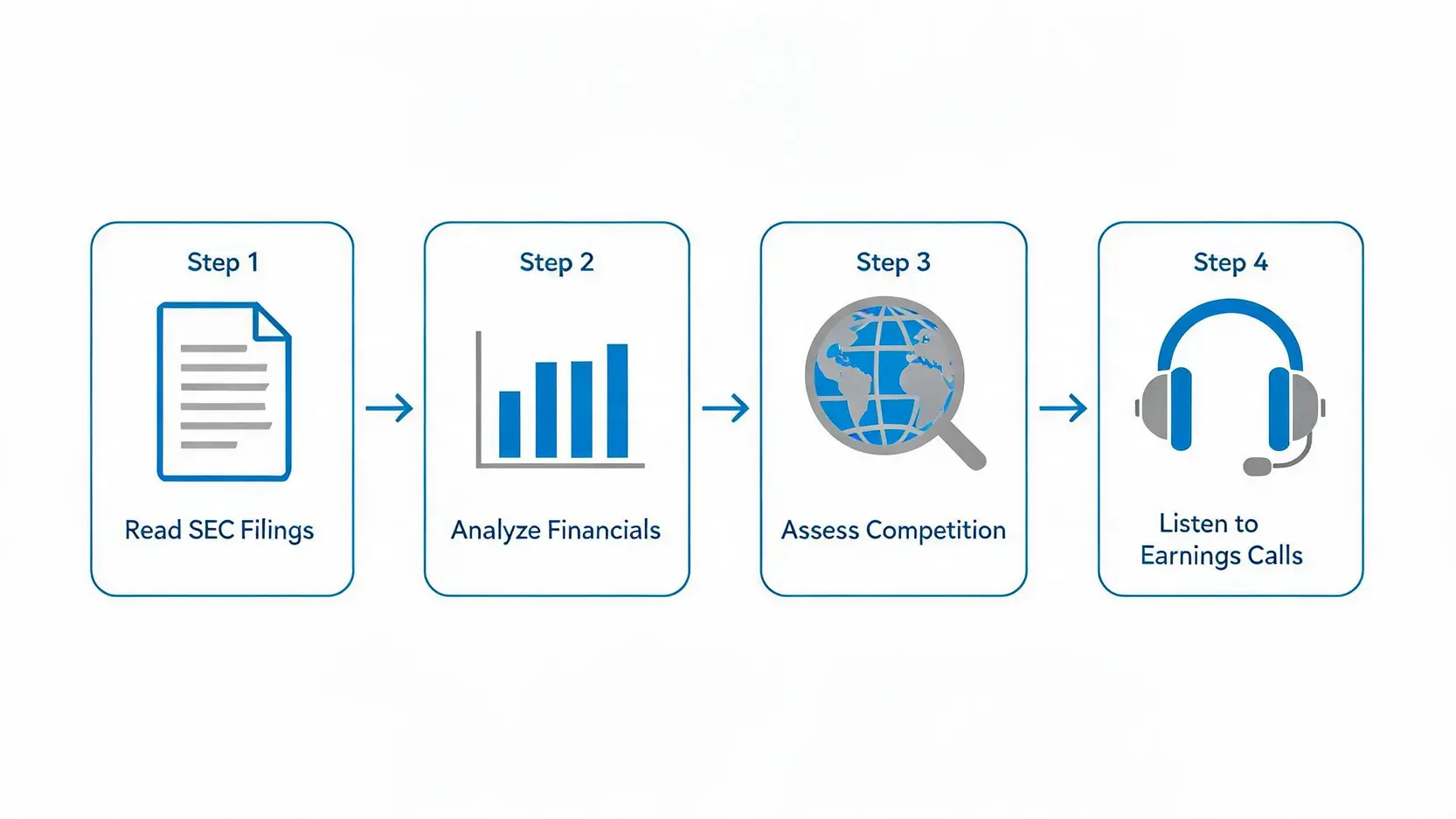
Analyst ratings are a starting point, not the finish line. Once a screener generates a list of promising stocks, the real work of due diligence begins. This process involves a deeper dive into the company’s fundamentals to validate the analysts’ bullish thesis. Key steps in your own research should include:
- Reading the Latest 10-K and 10-Q Reports: These SEC filings provide an unfiltered look at the company’s financial performance, business strategy, and identified risks.
- Analyzing Financial Statements: Look for trends in revenue growth, profit margins, debt levels, and cash flow. Is the company’s growth accelerating or decelerating?
- Understanding the Competitive Landscape: Who are the main competitors? What is the company’s competitive advantage (e.g., technology, brand, network effect)?
- Listening to Earnings Calls: Management commentary on quarterly earnings calls offers valuable insights into recent performance and the outlook for the future.
Ultimately, performing your own due diligence is the most critical step to building conviction in an investment and aligning it with your personal financial goals.
Frequently Asked Questions (FAQ)
Q: Are stocks with ‘strong buy’ ratings a guaranteed investment?
A: No. A ‘Strong Buy’ rating is an educated opinion, not a guarantee of future performance. It indicates a high degree of confidence from the analyst community, but markets are unpredictable, and unforeseen events can impact a stock’s price. These ratings are best used as a high-quality starting point for your own research.
Q: How often do analyst ratings change?
A: Analyst ratings are dynamic and can change frequently. An analyst may upgrade or downgrade a stock following a quarterly earnings report, a major company announcement, shifts in industry trends, or changes in the macroeconomic environment. It is common for ratings and price targets to be updated every few months.
Q: What’s the difference between a ‘Buy’ and a ‘Strong Buy’?
A: The primary difference is the level of conviction and expected upside. A ‘Buy’ rating suggests the stock is expected to outperform the market. A ‘Strong Buy’ rating indicates a higher level of conviction and implies that the stock is expected to significantly outperform the market. It is the most bullish rating an analyst can issue.
Q: Where can I find analyst ratings for stocks?
A: Analyst ratings and consensus estimates are widely available on major financial news websites like Yahoo Finance, Bloomberg, and Reuters. Additionally, most online brokerage platforms provide access to detailed analyst reports and rating summaries for their clients.