Table of Contents
Why High Insider Ownership is a Bullish Signal for Growth Stocks
When navigating the complex world of growth stock investing, metrics that signal genuine confidence are invaluable. High insider ownership stands out as one of the most compelling indicators. This isn’t just a number on a screen; it’s a powerful statement from the individuals who know the company best—its executives, directors, and largest shareholders. Their decision to hold a significant portion of the company’s equity aligns their financial fate directly with that of common shareholders.
Aligning Management’s Interests with Shareholders
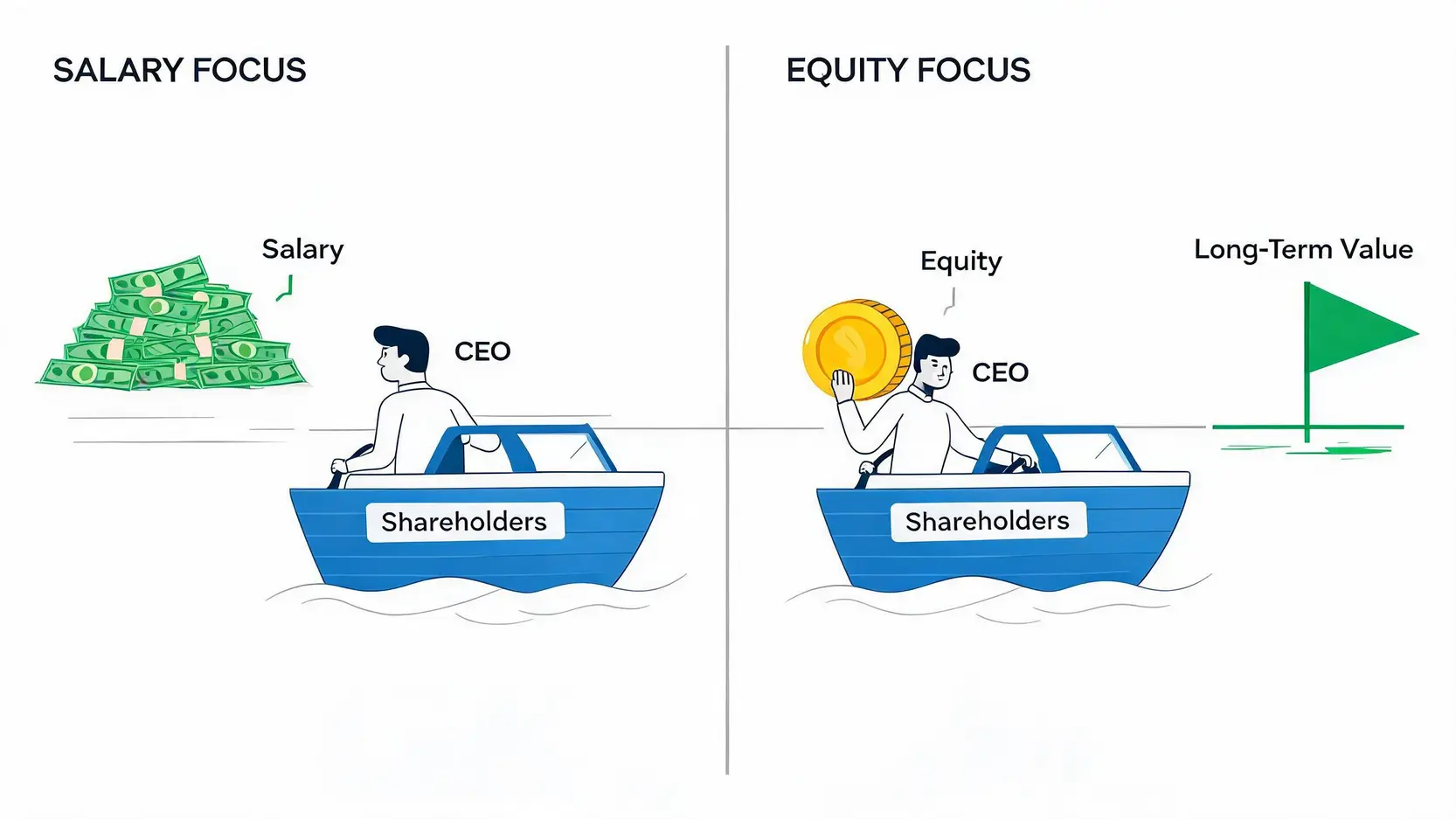
The core principle behind tracking insider ownership is ‘skin in the game.’ When a CEO or a board member has a substantial part of their net worth tied up in company stock, their motivations shift. They are no longer just salaried employees; they are owners. This ownership mindset fosters a culture of prudent risk-taking, long-term strategic planning, and a relentless focus on creating sustainable shareholder value. Their success is inextricably linked to the stock’s performance, creating a powerful alignment of interests that benefits all investors.
A Strong Indicator of Long-Term Confidence
Insider ownership is more than just a snapshot; it’s a vote of confidence in the company’s future. These individuals have access to a level of operational detail and strategic insight unavailable to the public. As defined by market regulators like the U.S. Securities and Exchange Commission (SEC), insiders’ transactions are closely monitored because they can reflect the company’s health. A high and stable level of insider ownership suggests that the leadership team believes the company’s best days are ahead. They are willing to bet their own capital on the long-term growth trajectory, a signal that often precedes significant market outperformance, especially in innovative growth sectors.
Deep, Unmatched Knowledge of the Company’s Potential
While external analysts rely on public filings and industry trends, insiders operate with a 360-degree view of the business. They understand the competitive landscape, the product pipeline, operational efficiencies, and internal culture in a way no outsider can. This deep, unmatched knowledge makes their ownership a potent signal. When they hold onto—or increase—their stakes, it implies they see untapped potential and a clear path to future profitability that the broader market may have yet to recognize. For investors seeking promising growth stocks with high insider ownership in 2026, this metric acts as a crucial first screen for identifying quality opportunities.
Top 5 Growth Stocks with Strong Insider Backing for 2026
Identifying companies where management has significant ‘skin in the game’ can be a powerful strategy. For 2026, we’ve analyzed several sectors to pinpoint growth stocks where high insider ownership signals exceptional confidence from the top. Here are five compelling examples to watch.
Stock #1: QuantumLeap Computing (NASDAQ: QLC) – Analysis & Insider Stake
Analysis: QuantumLeap Computing is at the forefront of the next generation of processing power. Their proprietary quantum-hybrid architecture is poised to revolutionize industries from pharmaceutical research to financial modeling. With a projected 35% year-over-year revenue growth driven by enterprise cloud adoption, QLC is a pure-play on the future of data.
Insider Stake: Founder and CEO, Dr. Aris Thorne, holds approximately 18% of the company’s outstanding shares. This significant stake underscores a deep-seated belief in the firm’s long-term disruptive potential. The board collectively owns over 25%, demonstrating unified confidence.
Stock #2: BioGen Innovations (NASDAQ: BGI) – Analysis & Insider Stake
Analysis: BGI specializes in CRISPR-based gene-editing therapies targeting rare genetic disorders. Their lead candidate for treating congenital retinal diseases is in its final trial phase, with market analysts forecasting a multi-billion dollar addressable market. The company’s pipeline includes promising treatments for hematological conditions, positioning it as a key player in the biotech space.
Insider Stake: Over 22% of BGI is owned by insiders, including the Chief Scientific Officer who was instrumental in developing their core technology. This high level of ownership from the scientific leadership is a powerful endorsement of the underlying science and its commercial prospects.
Stock #3: NextWave Energy (NYSE: NWE) – Analysis & Insider Stake
Analysis: As the world transitions to sustainable energy, NextWave Energy is a leader in decentralized power grid solutions. Their smart microgrid technology and advanced battery storage systems are critical for managing the intermittent nature of renewables. With major municipal and corporate contracts secured in 2025, NWE’s growth is accelerating.
Insider Stake: The executive team and directors hold a combined 15% stake. Notably, several key engineers and early investors have maintained their positions, signaling confidence not just in the market, but in NWE’s technological edge over competitors.
Stock #4: DataSphere AI (NASDAQ: DSAI) – Analysis & Insider Stake
Analysis: DataSphere AI provides a sophisticated platform for enterprise-level data analytics and predictive modeling. Their AI-driven tools help companies optimize supply chains, personalize marketing, and reduce operational risks. In an increasingly data-centric world, DSAI’s scalable, subscription-based model offers a clear path to recurring revenue growth.
Insider Stake: The co-founders, who still lead the engineering and product divisions, collectively own 20% of the company. Their continued hands-on involvement and substantial equity position highlight their commitment to innovation and market leadership in the competitive SaaS landscape.
Stock #5: FinSecure Technologies (NYSE: FST) – Analysis & Insider Stake
Analysis: FST is a cybersecurity firm that has carved out a niche in protecting decentralized finance (DeFi) platforms and digital assets. As blockchain technology becomes more integrated into the mainstream financial system, the need for FST’s specialized security protocols has exploded. Their expertise makes them a critical infrastructure player in the digital economy.
Insider Stake: Approximately 17% of FinSecure is held by its management team. The CEO, a renowned figure in the cybersecurity community, has consistently increased their stake through open-market purchases, demonstrating a strong conviction in the company’s pivotal role and growth runway.
Risks and Considerations: What to Look Out For
While high insider ownership is a compelling bullish indicator, it is not a silver bullet. A sophisticated investment approach requires a nuanced understanding of the potential risks and a commitment to a broader analytical framework. Relying solely on this one metric can expose a portfolio to unforeseen vulnerabilities. Therefore, it’s crucial to consider the complete picture before making any investment decisions, especially when evaluating high-growth stocks.
Understanding the Nuances of Insider Selling
Insider selling often triggers alarm bells for investors, but it’s essential to analyze the context. Not all selling is a bearish signal. Insiders, like any other investor, may sell shares for reasons entirely unrelated to the company’s prospects, such as personal financial planning, tax obligations, or portfolio diversification. 📈
Key questions to ask include:
- Who is selling? A sale by a founder or CEO is more significant than a sale by a junior executive.
- How much are they selling? A small trim of a large position is less concerning than a complete liquidation.
- Is there a pattern? Consistent, heavy selling by multiple insiders is a major red flag, whereas a one-off sale may be benign.
Conversely, look for patterns of insider *buying*, which is almost always a signal of strong conviction.
Beyond Ownership: Assessing Overall Financial Health
High insider ownership cannot compensate for poor financial fundamentals. It should be the starting point of your research, not the end. Before investing, a thorough due diligence process must include a deep dive into the company’s financial health. An excellent guide on how to research stocks can provide a solid foundation for this analysis.
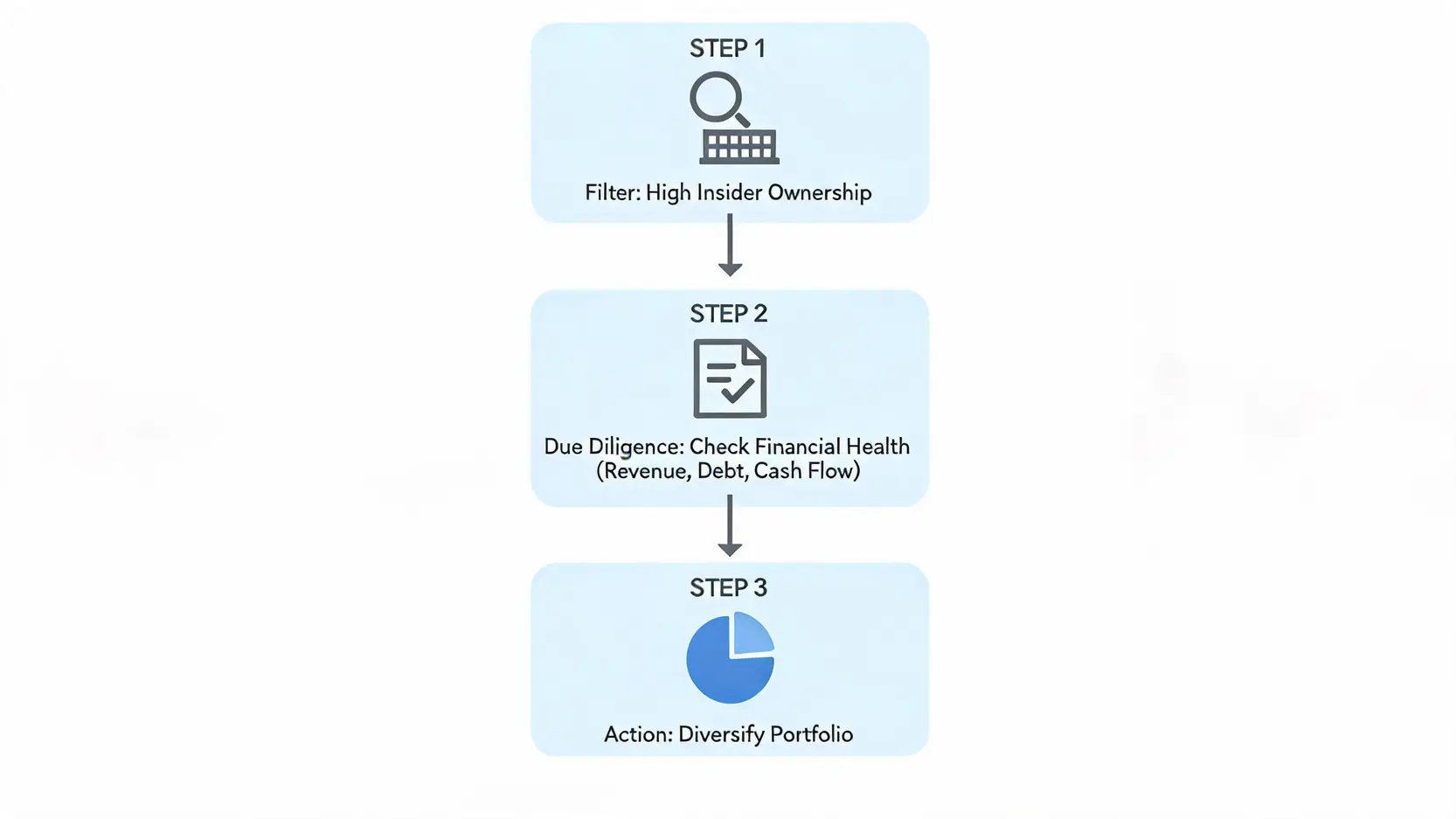
Critical financial metrics to evaluate:
- Revenue Growth: Is it consistent and accelerating?
- Profit Margins: Are they stable or expanding?
- Debt Levels: Is the company over-leveraged? A high debt-to-equity ratio can be a significant risk.
- Cash Flow: Is the company generating positive free cash flow to fund its growth initiatives?
A company with strong insider backing and robust financial health presents a much more compelling investment case.
The Importance of Diversification in Your Portfolio
Finally, concentrating your capital in a few high-conviction stocks, even those with strong insider ownership, is a high-risk strategy. The future is inherently uncertain, and even the most promising companies can face unexpected challenges. Portfolio diversification remains one of the most effective tools for managing risk.
By spreading your investments across different companies, sectors, and asset classes, you can mitigate the impact of a poor performance from any single holding. A well-thought-out diversification strategy ensures that your financial goals are not overly dependent on the success of just one or two growth stocks. It provides a buffer against volatility and is a hallmark of disciplined, long-term investing.
Frequently Asked Questions
Q: What is considered a high level of insider ownership?
A: While there is no universal number, a general benchmark for a ‘high’ level of insider ownership is typically 10% or more. For smaller growth companies, seeing insider ownership above 20% or even 30% is a very strong signal. The significance also depends on the company’s size and age; a mature, large-cap company might have lower insider ownership than a founder-led startup, but any significant stake held by top management is noteworthy.
Q: How can I find data on insider ownership for a stock?
A: Data on insider ownership is publicly available through several reliable sources. The most direct source is regulatory filings, such as Forms 3, 4, and 5 filed with the U.S. Securities and Exchange Commission (SEC). Additionally, major financial news portals (like Yahoo Finance, Bloomberg) and specialized stock screening tools provide this data, often presenting it in an easy-to-digest format under the ‘Holders’ or ‘Ownership’ tab for a specific stock ticker.
Q: Is high insider ownership a guarantee that a stock will go up?
A: Absolutely not. High insider ownership is a strong positive indicator, but it is not a guarantee of future performance. It signals confidence and alignment of interests, but the company’s success still depends on its business strategy, market conditions, competitive landscape, and overall execution. It should be used as one component of a comprehensive investment thesis, not as the sole reason to buy a stock.
Q: Can insiders manipulate the stock price with their ownership?
A: Regulations are in place to prevent direct manipulation. Insiders are subject to strict reporting requirements and are prohibited from trading on material non-public information. While their buying and selling can influence market sentiment, overt manipulation is illegal. The transparency required by filings (like SEC Form 4) ensures that all their transactions are visible to the public, allowing investors to track their activity.