The market’s early 2026 optimism, once buoyed by expectations of multiple Federal Reserve interest rate cuts, has been abruptly checked by a harsh new reality. A significant surge in global oil prices has reignited persistent inflation fears, forcing a strategic reconsideration from policymakers. This complex interplay between oil inflation and monetary policy now dictates the economic landscape, making the prospect of Fed rate cuts in 2026 increasingly uncertain and data-dependent.
Table of Contents
The 2026 Oil Shock: Understanding the Primary Driver of New Inflation
The primary catalyst for the current inflationary pressure is a classic supply-side shock in the energy markets. Unlike demand-driven price increases, this shock stems from external factors that constrain the availability of crude oil, creating a ripple effect across the global economy. This sudden spike has caught many analysts off-guard, resetting economic forecasts for the remainder of the year.
Geopolitical Tensions and Supply Constraints: What’s Behind the Price Surge?
The recent spike in oil prices is not a random market fluctuation; it is deeply rooted in escalating geopolitical instability. Renewed conflicts in key oil-producing regions, coupled with strategic production cuts by major oil-exporting nations aiming to shore up their revenues, have significantly tightened global supply. These events create a high-risk premium on crude oil, as traders price in the potential for further disruptions. The intricate dance of global diplomacy and conflict directly translates into higher costs, a reality investors must now contend with. As explored in How Does an Oil Shock Affect the Stock Market in 2026?, such events introduce a layer of volatility that impacts everything from energy stocks to the broader indices.
From the Gas Pump to Core Services: How Oil Prices Permeate the Economy
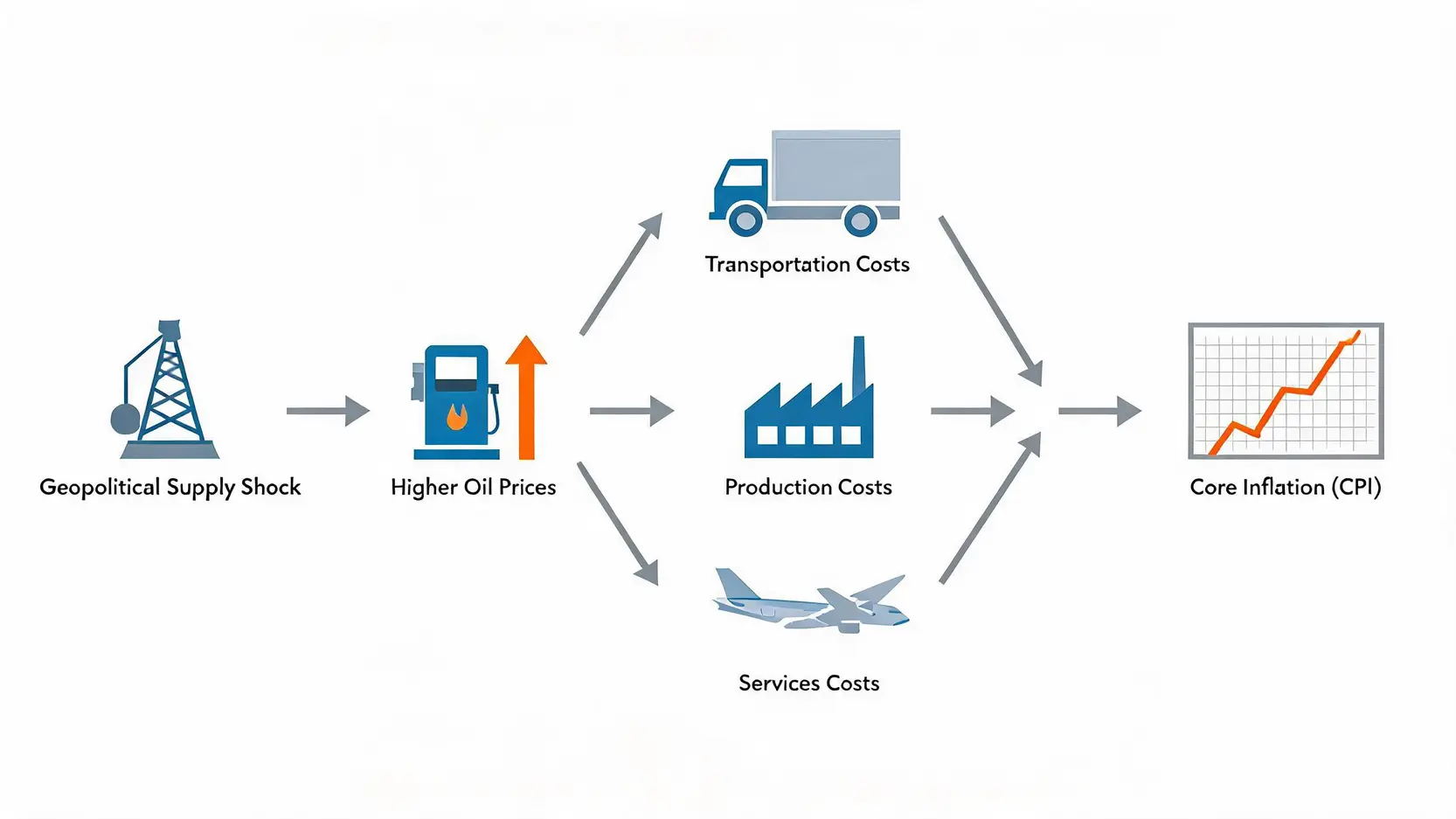
The impact of an oil shock extends far beyond the price displayed at the gas station. Energy is a fundamental input for nearly every sector of the economy. Here’s how the price increase infiltrates core economic data:
- Transportation Costs: Rising fuel prices immediately increase the cost of shipping goods, a cost that is invariably passed on to consumers.
- Manufacturing and Production: Many industries rely on petroleum products not just for energy but also as raw materials (e.g., plastics, chemicals). Higher input costs squeeze corporate profit margins or lead to higher prices for finished goods.
- Services Inflation: Even service-based industries are affected. Airlines face higher jet fuel costs, and businesses with physical footprints see increased utility bills. This contributes to the stubbornness of services inflation, a key metric for the Federal Reserve.
Crucially, while energy prices are volatile and often excluded from “core” inflation metrics, their secondary effects are not. When higher transport and production costs lead to price increases for clothing, food, and other goods, it directly pushes up the core Consumer Price Index (CPI) that the Fed watches so closely.
The Fed’s Policy Dilemma: Recalibrating Rate Cut Expectations Amid Oil Price Volatility
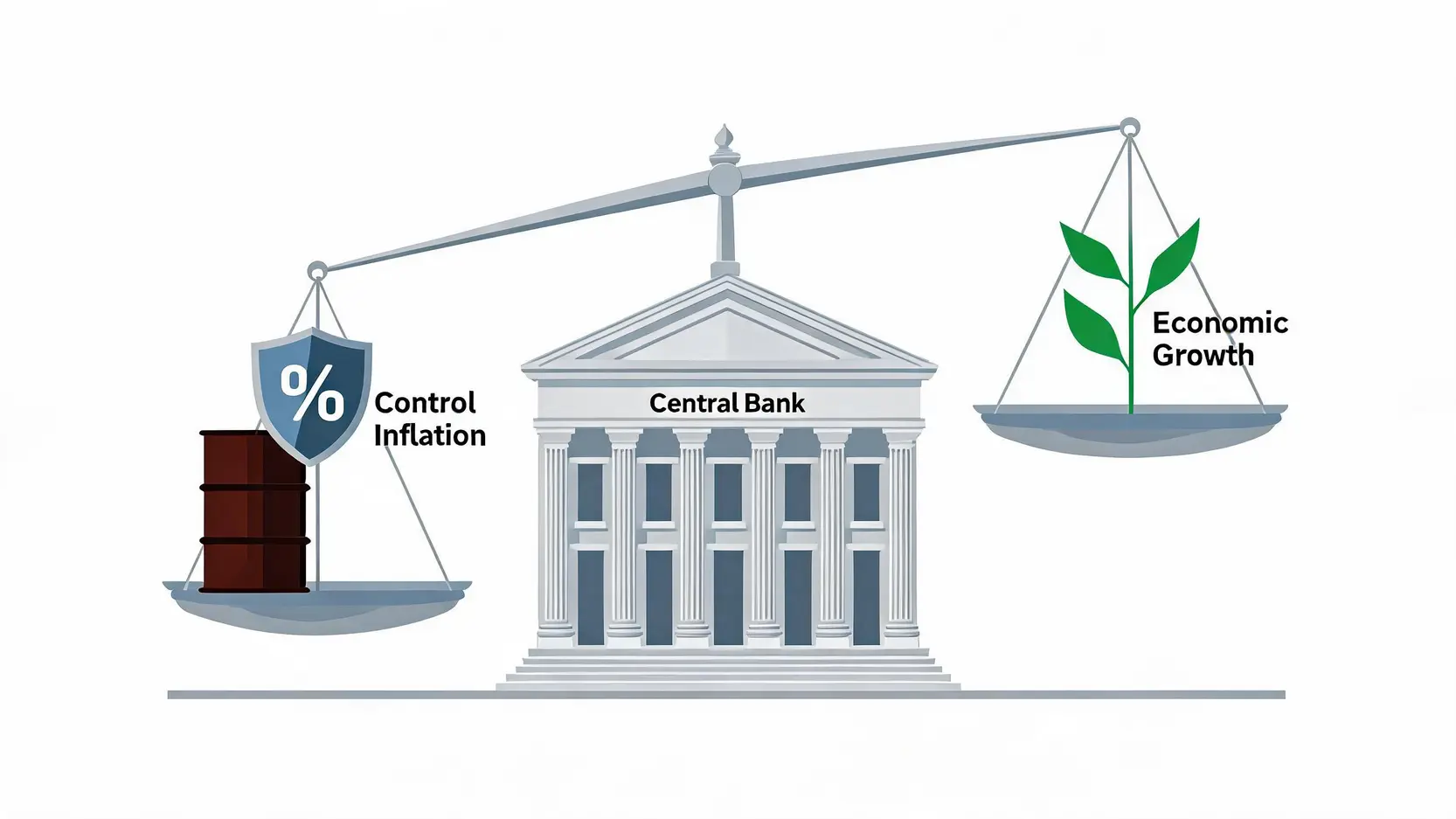
The Federal Reserve now finds itself in a precarious position. After a period of aggressive tightening to bring post-pandemic inflation under control, the central bank had signaled a pivot towards monetary easing. The 2026 oil shock has thrown a wrench into those plans, forcing a re-evaluation of the path forward and highlighting the challenge of navigating external supply shocks.
Why Stubborn Inflation is the Fed’s Top Concern
The Fed’s primary mandate is to maintain price stability, which it defines as an inflation rate of 2% over the longer run. The recent oil-induced price pressures threaten to undo the progress made in the past 18 months. The central bank’s biggest fear is that a temporary shock could un-anchor inflation expectations, leading to a more persistent and damaging wage-price spiral. If consumers and businesses start to expect high inflation to continue, they will adjust their behavior accordingly, making it much harder and more painful for the Fed to bring prices back under control. This is why policymakers are now communicating a more cautious, data-dependent approach to any potential rate adjustments.
Analyzing the Shift: From Multiple Cuts to a ‘Higher for Longer’ Stance
At the start of 2026, fed funds futures markets were pricing in two, or even three, quarter-point rate cuts by the end of the year. That sentiment has evaporated. The narrative has shifted dramatically to a “higher for longer” interest rate environment. Fed officials, in their recent public appearances and meeting minutes, have emphasized the need for more confidence that inflation is on a sustainable path back to 2% before they will consider cutting rates. The oil shock has delayed the timeline for achieving that confidence, pushing back the expected start of the easing cycle and even introducing a non-zero probability of further tightening if inflationary pressures broaden.
Future Outlook: Scenarios for Oil, Inflation, and Fed Policy in 2026
The path forward for the U.S. economy and financial markets is now heavily contingent on the evolution of the energy shock. Investors and analysts must consider a range of potential outcomes, as the Federal Reserve’s next move hangs in the balance. Understanding these scenarios is key to navigating the uncertainty of the coming months.
Scenario 1: Oil Prices Stabilize – What This Means for a Potential Rate Cut
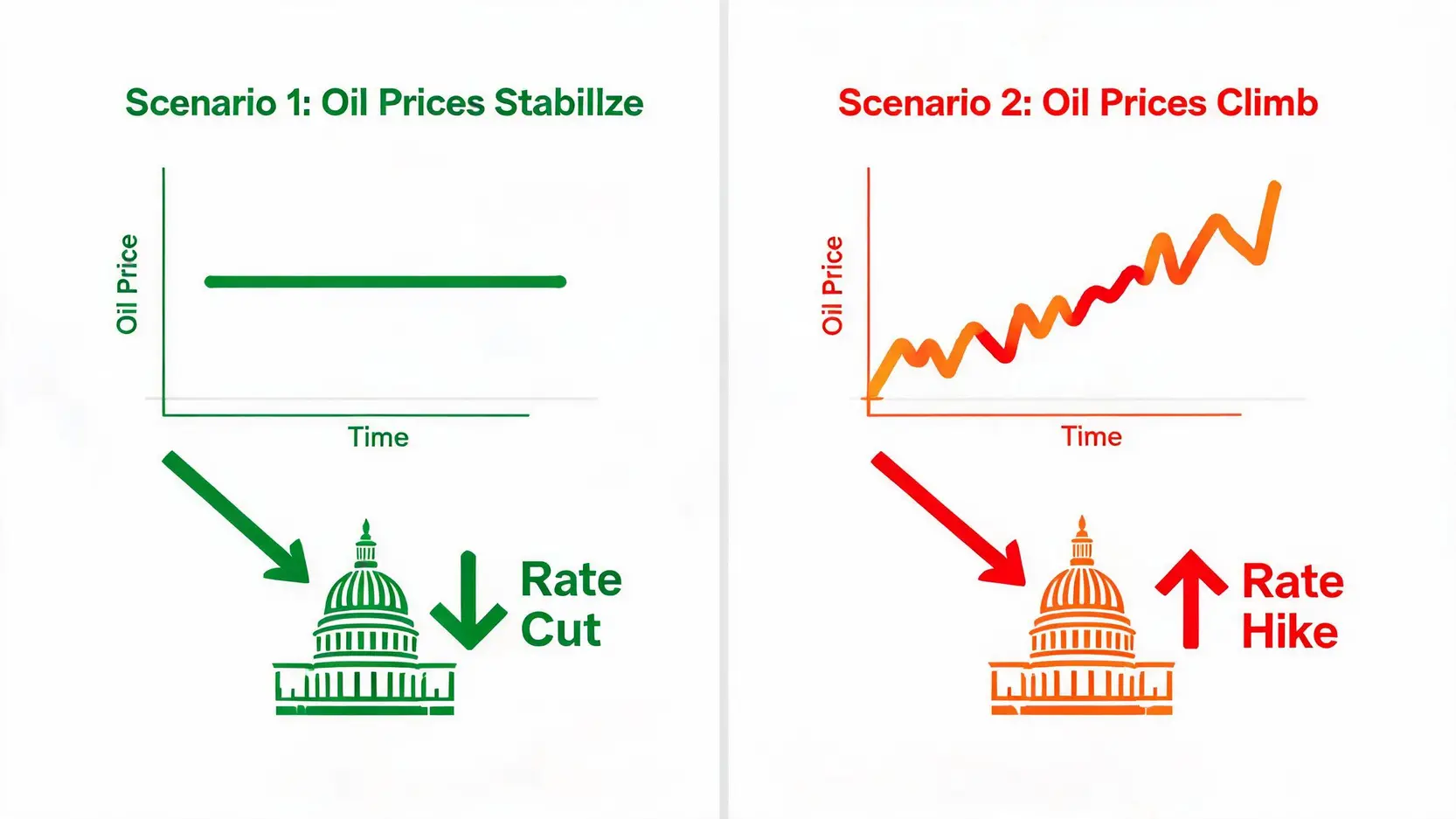
In the most optimistic scenario, geopolitical tensions ease, or non-OPEC production increases to offset existing constraints, leading to a stabilization or modest pullback in oil prices. If this occurs in the next quarter, the inflationary impulse would be contained. This would allow the Fed to look past the temporary spike and refocus on the underlying disinflationary trends. In this case, a late-year rate cut could come back on the table, especially if labor market data begins to show signs of softening. Markets would likely react positively, with risk assets rallying on the prospect of monetary easing.
Scenario 2: Oil Prices Continue to Climb – The Risk of Further Policy Tightening
A more pessimistic scenario involves a worsening of geopolitical conflicts or further coordinated supply cuts, pushing crude oil prices consistently higher throughout the second half of 2026. This would ensure that inflation remains stubbornly above the Fed’s target, with significant bleed-through into core prices. Faced with this reality, the Fed’s hands would be tied. The discussion would shift from *when* to cut to *whether* another rate hike is necessary to quash inflation. This outcome would almost certainly trigger a significant downturn in equity markets and could increase the risk of a hard landing for the economy.
Impact on Markets: What Investors Should Watch for the Rest of the Year
Regardless of which scenario unfolds, investors should remain vigilant and focus on key data points. 📊 Keep a close eye on:
- Monthly CPI and PPI Reports: Pay special attention to core components to see if the energy shock is becoming embedded in the broader economy.
- Weekly Oil Inventory Data: This provides a real-time gauge of supply and demand dynamics in the energy market.
- Fed Communications: Every speech and press conference from Fed officials will be scrutinized for shifts in tone or policy bias.
- Geopolitical Developments: Monitoring headlines from major oil-producing regions is now a crucial part of risk management. Exploring strategies for managing geopolitical risks is more important than ever.
Conclusion
The intricate dance between volatile oil prices, persistent inflation, and the Federal Reserve’s policy decisions has reached a critical juncture in 2026. Hopes for imminent rate cuts have been dashed by an oil shock that serves as a stark reminder of how vulnerable modern economies are to geopolitical and supply-side disruptions. The path of monetary policy is no longer a clear-cut trajectory toward easing; it is now heavily dependent on the stabilization of energy markets and the signals from upcoming inflation data. For investors and consumers alike, the message is clear: the era of easy money remains on hold, and navigating the remainder of the year will require a keen understanding of the macroeconomic forces at play.
Frequently Asked Questions (FAQ)
Q: What is the historical relationship between oil shocks and Fed policy?
A: Historically, the Federal Reserve’s response to oil shocks has evolved. During the stagflation of the 1970s, oil price shocks led to high inflation and economic stagnation. Some analyses suggest the Fed’s policy response was not aggressive enough initially. As documented by institutions like the Federal Reserve History, these episodes taught the central bank a crucial lesson about the importance of anchoring inflation expectations. In subsequent decades, the Fed has been more inclined to act decisively to prevent energy price spikes from feeding into a broader, more persistent inflation dynamic, even at the risk of slowing economic growth.
Q: How does the current situation affect mortgage and loan rates for consumers in 2026?
A: The delay or cancellation of Fed rate cuts directly translates to higher borrowing costs for consumers. Mortgage rates, auto loans, and credit card APRs are all influenced by the Fed’s policy rate. A ‘higher for longer’ stance means that the relief consumers were expecting in 2026 will not materialize as quickly, if at all. This can dampen housing market activity and curb consumer spending on big-ticket items, acting as a brake on the overall economy.
Q: Could the Fed be forced to raise rates again if inflation worsens?
A: While not the base case, the possibility of another rate hike is no longer off the table. If the second scenario—continuously climbing oil prices—materializes and core inflation re-accelerates convincingly for several consecutive months, the Federal Open Market Committee (FOMC) could be forced to consider further policy tightening. This would be a last resort, as it would significantly increase the risk of a recession, but their primary mandate is to ensure price stability.