Are you worried that your portfolio is too heavily concentrated in a few mega-cap tech stocks? As the stock market landscape shifts, analyzing S&P 500 market breadth in 2026 has become essential for investors looking to minimize concentration risk. With the market finally broadening beyond the top tier of stocks, utilizing the right ETF strategies for 2026 can help you capture gains across a wider range of sectors. In this guide, explore why equal-weight S&P 500 ETFs are quietly outperforming and reveal the best funds to diversify your investments this year.
Table of Contents
Understanding S&P 500 Market Breadth in 2026
To grasp the current market dynamics, one must first understand what market breadth entails. It refers to how many stocks are participating in a given market move. When the S&P 500 rallies on the backs of just a handful of technology giants, breadth is poor. Conversely, when the majority of the 500 companies are trending upward, breadth is robust. In 2026, the shift from narrow to broad participation is the defining theme for institutional portfolios.
Why Mega-Cap Tech Dominance is Shifting
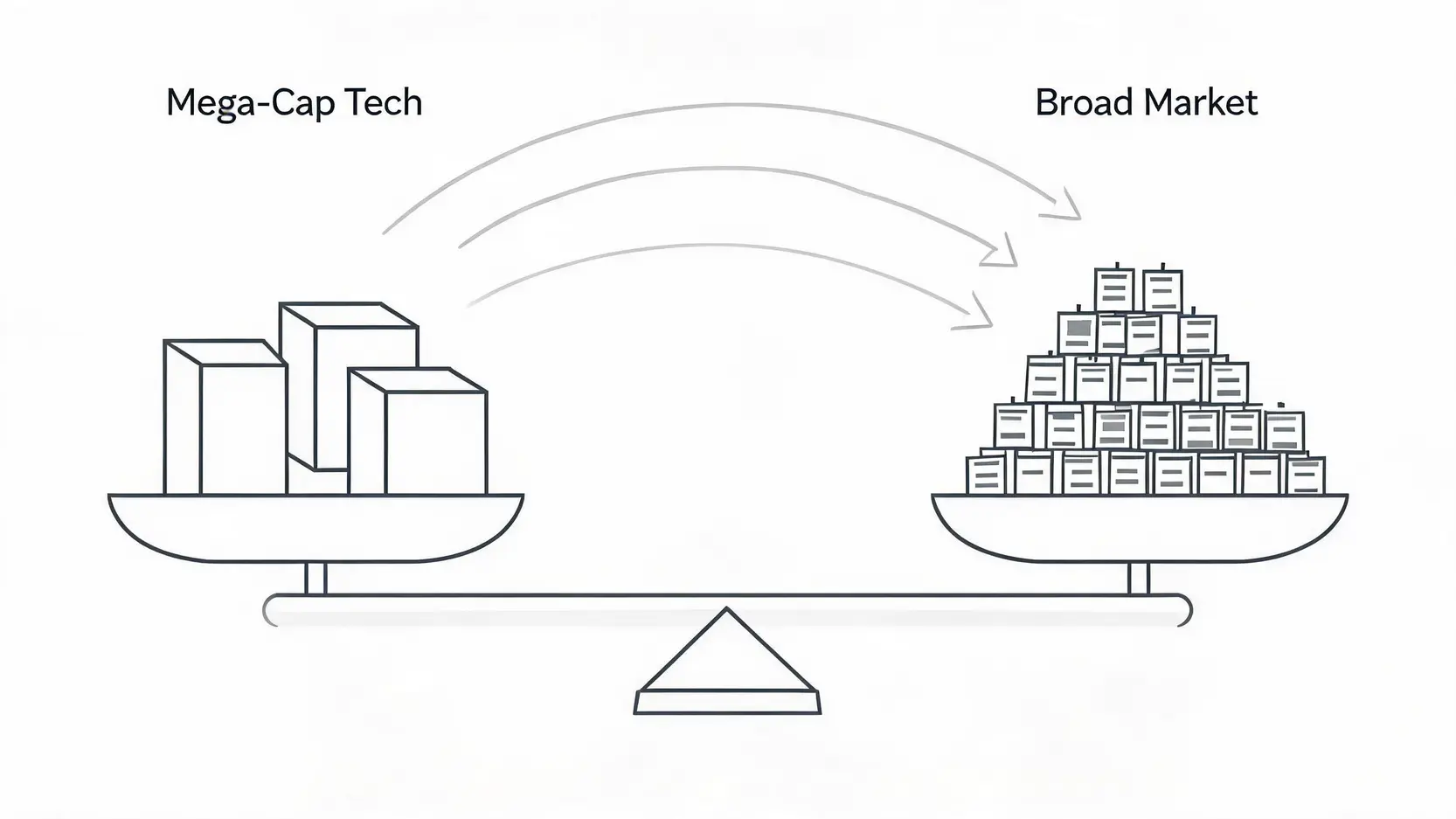
For years, a small cohort of tech behemoths dictated the direction of standard market-cap weighted indices. However, elevated valuations and shifting monetary policies in 2026 have prompted capital rotation. Investors are locking in profits from high-flying tech names and reallocating capital into undervalued sectors such as industrials, healthcare, and financial services. This rotation is breathing life into the broader market.
Key Market Breadth Indicators to Monitor
- Advance/Decline (A/D) Line: A rising A/D line alongside a rising index confirms that a broad range of stocks is participating in the bullish trend.
- Fear & Greed Index: Tracking investor sentiment helps identify potential market tops or bottoms. Extreme greed in mega-caps often precedes a rotation into equal-weight alternatives.
- Percentage of Stocks Above 200-Day SMA: A critical gauge of long-term health across the entire index.
Why Equal-Weight S&P 500 ETFs are Outperforming
As the narrative pivots toward broad market participation, equal-weight S&P 500 ETFs have emerged as a superior structural vehicle compared to traditional market-cap weighted funds.
Market Cap-Weighted vs. Equal-Weight Indices Explained
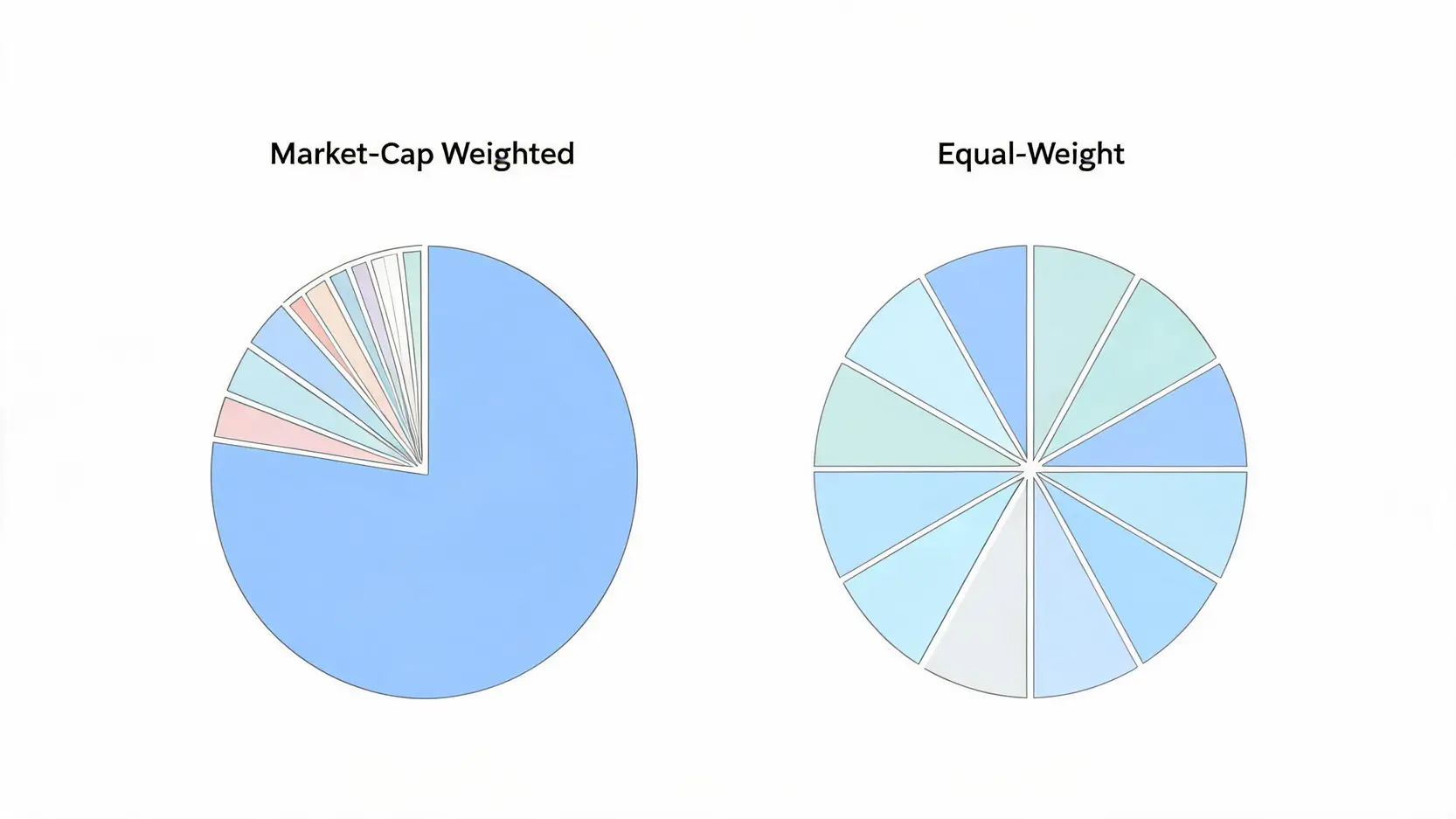
In a standard S&P 500 ETF, the largest companies hold the highest weightings, meaning Apple, Microsoft, or Nvidia disproportionately influence the fund’s performance. In contrast, an equal-weight ETF assigns a fixed ~0.2% weight to all 500 companies, systematically buying low and selling high during quarterly rebalancing. You can track this foundational index methodology directly via the S&P 500 Equal Weight Index.
2026 Earnings Growth Forecasts and Sector Broadening
Corporate earnings growth is no longer monopolized by tech. Forecasts for 2026 highlight a resurgence in earnings for the “other 493” companies. When average stock performance accelerates, equal-weight strategies mathematically benefit from the uniform distribution of these fundamental gains.
Top Market Breadth ETFs to Buy in 2026
Selecting the right investment vehicles is critical for capitalizing on this structural shift. Here are the premier ETFs to capture the broadening equity rally.
Invesco S&P 500 Equal Weight ETF (RSP): The Core Breadth Play
The undisputed titan in this space is the Invesco S&P 500 Equal Weight ETF (RSP). By enforcing strict rebalancing, RSP acts as an automatic contrarian strategy, trimming overvalued winners and scooping up lagging value stocks. It stands as the quintessential proxy for S&P 500 market breadth.
Small-Cap ETFs Benefiting from U.S. Market Broadening
Beyond the S&P 500, domestic small-cap stocks are a prime beneficiary of improving economic conditions and lower capital costs in 2026. Vehicles tracking the Russell 2000 or the S&P SmallCap 600 offer aggressive exposure to the market breadth expansion, complementing a core equal-weight holding.
Using Volatility Indices and Protective ETFs for Broad Market Protection
No strategy is without risk. While breadth improves, macroeconomic shocks remain a reality. Integrating defensive ETFs or utilizing volatility-linked products can hedge against sudden correlations moving to 1.0 during market panics.
Conclusion
To summarize, the evolving S&P 500 market breadth in 2026 presents a unique opportunity for investors to pivot away from top-heavy concentration. By incorporating an equal-weight ETF or small-cap funds into your portfolio, you can capitalize on the overall market broadening and improve your risk-adjusted returns. Rebalance your investment strategy today and consider adding these breadth-focused ETFs to safeguard and grow your wealth in the year ahead.
Frequently Asked Questions
What is the best S&P 500 equal-weight ETF for 2026?
The Invesco S&P 500 Equal Weight ETF (RSP) remains the industry standard due to its deep liquidity, historical tracking efficiency, and substantial assets under management, making it optimal for both retail and institutional traders.
How does market breadth affect the performance of the S&P 500?
Strong market breadth implies that a rally is sustainable, supported by diverse sectors rather than a fragile cluster of large-cap stocks. Weak breadth often signals underlying vulnerability, leaving the index susceptible to sharp corrections if the leading mega-caps stumble.
Why is an equal-weight ETF considered safer during periods of low market breadth?
Actually, an equal-weight ETF outperforms when breadth is improving or high. During low breadth (when only top stocks win), equal-weight lags. However, equal-weight ETFs mitigate concentration risk, preventing a portfolio from suffering catastrophic losses if a single top-heavy sector experiences a severe downturn.
Are equal-weight ETFs tax-efficient?
Generally, ETF structures provide excellent tax efficiency. However, the mandatory quarterly rebalancing inherent in equal-weight methodologies generates slightly higher turnover compared to market-cap weighted funds, though the ETF creation/redemption process largely shields investors from significant capital gains distributions.