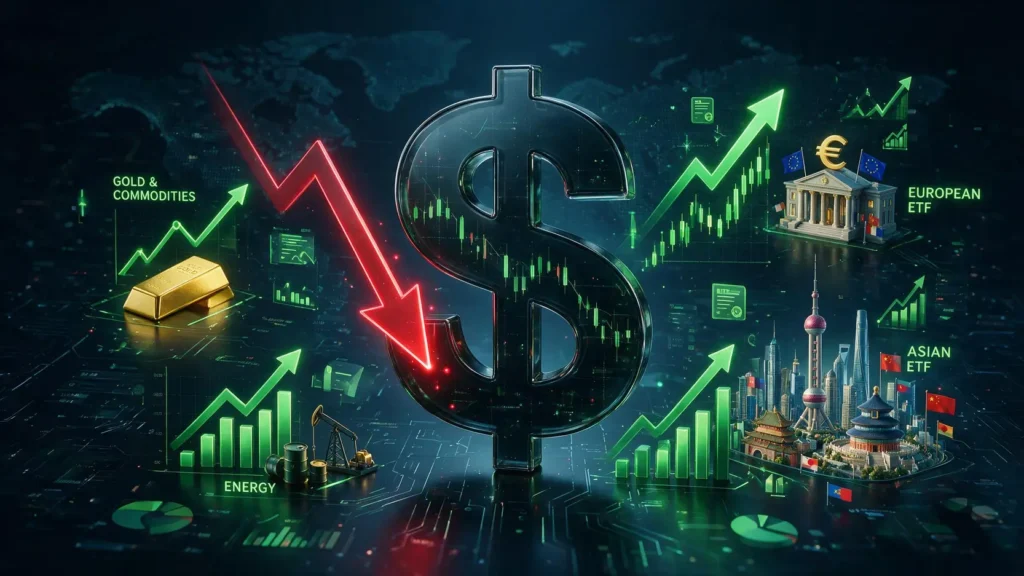
Observing the steady decline of the US dollar and wondering how to adapt your investment portfolio? As of mid-2026, a period of sustained US dollar weakness presents unique challenges and significant opportunities. For savvy investors, this is a critical time to implement a robust US dollar weakness ETF strategy. This playbook provides actionable approaches for investing in a weak dollar environment, focusing on how to not only protect your assets but also to capitalize on global market shifts driven by a softer dollar, particularly through international equity ETFs and commodity funds.
Table of Contents
Understanding How a Weak Dollar Impacts Your Investments
A weakening US dollar reverberates through the global financial system, creating distinct winners and losers. When the dollar’s value falls relative to other currencies, it alters the returns of international assets and changes the pricing dynamics of globally traded goods. For a US-based investor, this environment requires a strategic portfolio adjustment.
The Boost for International Equity ETFs (like VXUS, VEA)
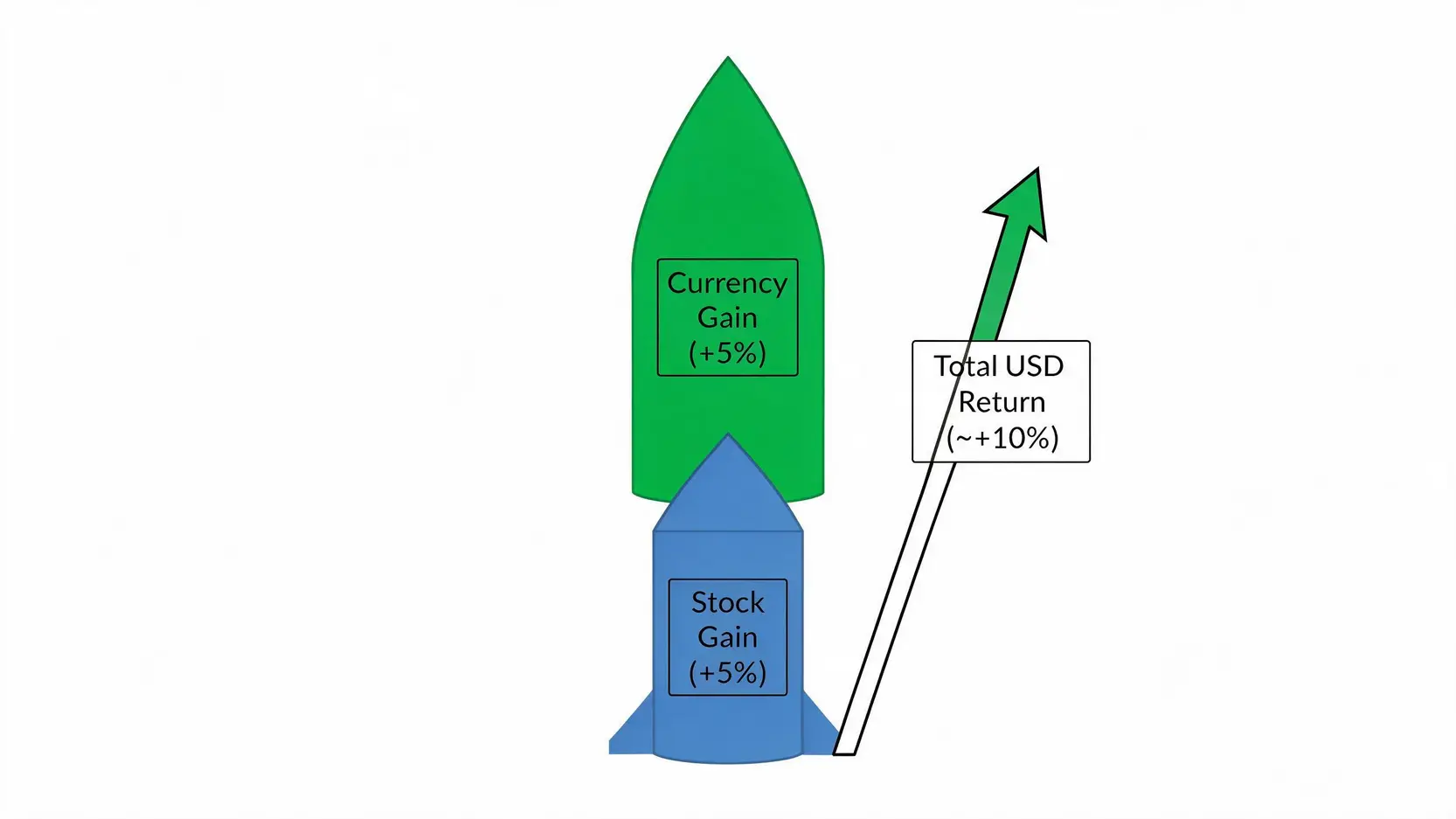
The most direct beneficiaries of a weak dollar are US investors holding international assets. When you invest in an international equity ETF, you are buying shares of companies that earn revenue in foreign currencies (e.g., euros, yen, pounds). If the dollar weakens, those foreign earnings translate back into more dollars, boosting your returns. 📈
- Example: Imagine a European company’s stock gains 5% in euro terms. If the euro also strengthens by 5% against the dollar during the same period, your total return in USD terms is approximately 10%.
- Leading ETFs: Funds like the Vanguard Total International Stock ETF (VXUS) and the Vanguard FTSE Developed Markets ETF (VEA) offer broad exposure to thousands of companies outside the US, making them a cornerstone for diversifying away from dollar-centric risk.
The Bull Case for Commodity & Precious Metal ETFs (like DBC, GLD)
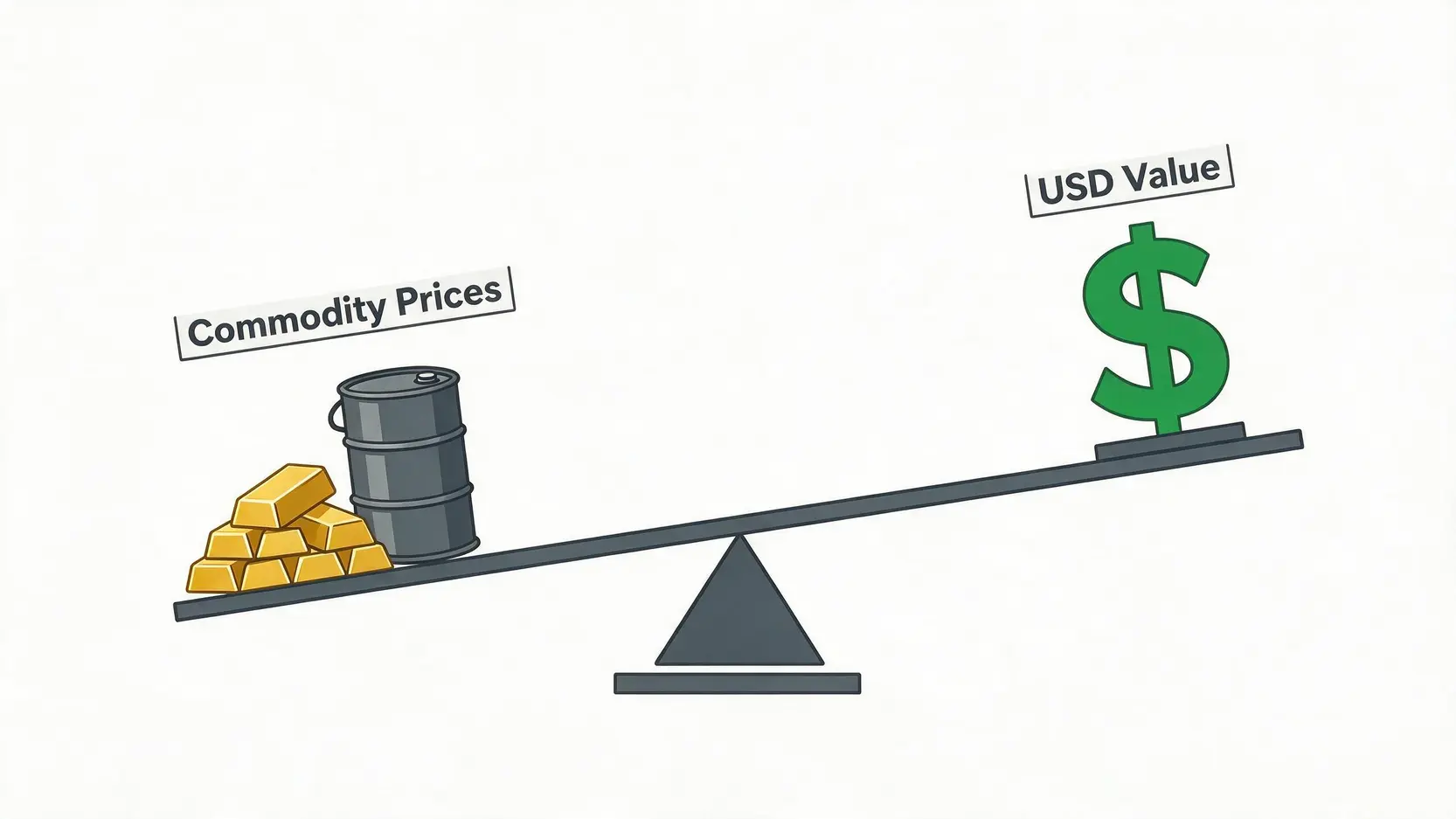
Most major commodities, including crude oil, copper, and precious metals like gold, are priced in US dollars. There is an inverse relationship between the dollar’s value and these commodity prices. As the dollar weakens, it takes more dollars to buy the same amount of a commodity, pushing its price higher. This is a fundamental principle for any investor looking at strategies for a weak dollar environment. According to a 2025 study published on ScienceDirect.com, periods of commodity price booms have historically coincided with US dollar depreciation. This makes commodity ETFs a powerful hedging tool.
- Gold’s Role: Gold, often seen as a safe-haven asset, has a particularly strong negative correlation with the dollar. Investors flock to gold when they lose confidence in fiat currencies. ETFs like the SPDR Gold Shares (GLD) provide direct exposure to the price of gold bullion.
- Broad Commodities: For broader exposure, the Invesco DB Commodity Index Tracking Fund (DBC) offers a portfolio of futures contracts on 14 of the most heavily traded physical commodities, providing a diversified hedge against a falling dollar.
Core ETF Strategies to Counter a Weakening Dollar
With a clear understanding of the market dynamics, investors can implement several proven ETF strategies. The right choice depends on your risk tolerance and investment horizon. Here are three core approaches for building an ETF portfolio for the US dollar decline.
Strategy 1: Diversify with Broad International Stock ETFs
The simplest and most effective long-term strategy is to increase your allocation to international stocks. By holding unhedged international equity ETFs, you automatically benefit from the currency translation effect when the dollar is weak. This approach captures both the performance of foreign companies and the tailwind from a declining dollar.
Consider ETFs that cover both developed and emerging markets for maximum diversification. A fund like the iShares Core MSCI Total International Stock ETF (IXUS) is an excellent all-in-one solution.
Strategy 2: Target Growth with Emerging Market ETFs (e.g., VWO, IEMG)
For investors with a higher risk appetite, emerging market (EM) ETFs offer amplified potential returns during periods of dollar weakness. These economies are often commodity exporters and benefit doubly: their exports become cheaper, and the value of their foreign-currency debt decreases. A weaker dollar typically fuels a risk-on sentiment that drives capital flows into EM assets.
- Top Tier ETFs: The Vanguard FTSE Emerging Markets ETF (VWO) and the iShares Core MSCI Emerging Markets ETF (IEMG) are the two giants in this space, offering deep liquidity and extensive diversification across markets like China, India, Taiwan, and Brazil.
- Considerations: While the upside is significant, emerging markets come with higher geopolitical and economic volatility. This strategy is best suited for a smaller, tactical portion of your portfolio.
Strategy 3: Directly Hedge with Inverse Dollar & Commodity Funds (e.g., UDN, PDBC)
If your goal is a more direct and tactical play against the dollar, specialized ETFs are available. These are powerful but can be more complex and volatile.
- Inverse Dollar ETFs: The Invesco DB US Dollar Index Bearish Fund (UDN) is designed to move in the opposite direction of the US Dollar Index (DXY). If the DXY falls by 1%, UDN aims to rise by 1%, providing a direct hedge. This is a pure currency play.
- Optimized Commodity ETFs: While DBC is excellent, the Invesco Optimum Yield Diversified Commodity Strategy No K-1 ETF (PDBC) offers similar exposure but is structured as a regular ETF, avoiding the hassle of a K-1 tax form. It actively manages its futures contracts to mitigate negative roll yield, making it a popular choice for long-term holders.
🆕 Advanced Playbook: ETF Selection & Risk Management
Choosing the right ETF involves more than just picking a ticker. A sophisticated investor must analyze the underlying mechanics and manage the associated risks. This advanced playbook covers the critical decisions for refining your weak dollar ETF strategy.
Comparative Analysis: International vs. Commodity vs. Currency ETFs
Each ETF category offers a different risk-return profile. Understanding their distinctions is key to building a resilient portfolio.
| ETF Type | Primary Driver | Pros | Cons |
|---|---|---|---|
| International Equity | Foreign company earnings + currency translation | Captures economic growth; Good for long-term diversification | Exposed to foreign market risk; Slower reaction to pure currency moves |
| Commodity | Inverse correlation to USD; Supply/demand dynamics | Direct inflation hedge; Strong performance in a weak dollar cycle | High volatility; Can suffer from negative roll yields (contango) |
| Inverse Currency | Directly mirrors the inverse performance of the USD | Pure, direct hedge against the dollar; Simple to understand | No exposure to economic growth; Can be costly to hold long-term |
The Currency Hedging Dilemma: To Hedge or Not to Hedge Your International ETFs?
A crucial decision for international investors is whether to use currency-hedged ETFs. A currency-hedged fund uses derivatives to strip out the impact of exchange rate fluctuations, isolating the local-market stock returns.
- When Not to Hedge: In a weak dollar environment, you generally do not want to hedge. An unhedged ETF (like VXUS) allows you to profit from both the stock’s performance and the appreciation of the foreign currency against the dollar.
- When to Consider Hedging: If you believe the dollar is about to strengthen, but you still want exposure to international stocks, a hedged ETF (like the iShares Currency Hedged MSCI EAFE ETF (HEFA)) becomes attractive. It protects your returns from being eroded by a rising dollar. Developing effective currency hedging strategies for portfolios is an advanced topic that requires careful consideration of the macroeconomic outlook.
Managing the Risk: What Happens if the Dollar Suddenly Strengthens?
No trend lasts forever. A sudden hawkish shift from the Federal Reserve, a global flight to safety, or stronger-than-expected US economic data could cause the dollar to reverse course and strengthen sharply. This would create a headwind for all the strategies discussed.
Risk Mitigation Steps:
- Position Sizing: Do not over-allocate to this single theme. Ensure your weak-dollar plays are part of a globally diversified portfolio.
- Set Stop-Losses: For tactical positions in inverse or commodity ETFs, use stop-loss orders to protect capital if the trend reverses.
- Take Profits: Periodically rebalance your portfolio. If your international or commodity ETFs have performed exceptionally well, trim your positions and re-allocate the gains.
- Stay Informed: Monitor key indicators like the US Dollar Index (DXY), Federal Reserve statements, and inflation data to anticipate shifts in the currency landscape. 📰
Conclusion
Formulating an effective ETF strategy is crucial for navigating the investment landscape defined by US dollar weakness. By strategically diversifying into international equities to capture currency translation gains, hedging with commodities to protect against inflation, or utilizing inverse currency ETFs for a direct tactical play, you can position your portfolio for resilience and growth. It is imperative to continuously assess your own risk tolerance and investment horizon. Use this playbook to make informed, data-driven decisions that align with your financial goals in the dynamic economic environment of 2026.
Frequently Asked Questions (FAQ)
Q: What is the best single ETF for a weak dollar environment?
A: There is no single ‘best’ ETF, as it depends on your risk tolerance. However, for a balanced, long-term approach, a broad unhedged international stock ETF like the iShares Core MSCI Total International Stock ETF (IXUS) or Vanguard Total International Stock ETF (VXUS) is often considered the most strategic and diversified choice.
Q: How does a weak dollar affect US-based stock ETFs like VOO or VTI?
A: The effect is mixed. A weak dollar makes US exports cheaper, which can boost sales and profits for large multinational corporations in the S&P 500 (tracked by VOO) that generate significant revenue overseas. However, it also increases the cost of imported materials, which can squeeze profit margins. For smaller, domestic-focused companies, the impact is generally less pronounced.
Q: Are non-US bonds a good investment when the dollar is weak?
A: Yes, they can be. Similar to international equities, investing in non-US bonds provides returns in a foreign currency. A weakening dollar will enhance the total return when those bond yields and principal are converted back into USD. However, you must also consider the interest rate policies of the foreign central banks, as this will be the primary driver of the bond’s price.
Q: How long might the dollar remain weak in the current 2026 cycle?
A: Currency cycles can last for several years. The current dollar weakness in 2026 is driven by factors including the Federal Reserve’s neutral policy stance, moderating US inflation, and a narrowing of growth differentials with other major economies. Most analysts project this trend could persist for another 12-24 months, but investors should monitor central bank policies closely, as any unexpected hawkish pivot from the Fed could trigger a reversal.