Retail earnings consumer spending 2026 trends are becoming one of the most important signals for investors watching the U.S. retail sector. As the global economy navigates a complex year, the outlook for retail earnings hinges on a critical and somewhat paradoxical variable: the resilience of consumer spending. With leading industry bodies projecting steady growth, the central question for investors and business leaders is whether this momentum can continue to support earnings despite inflation pressure, weak sentiment, and sector-specific divergence.
Table of Contents
The Official 2026 Retail Sales Forecast: A Story of Resilience
The narrative for the 2026 retail landscape is one of cautious optimism, anchored by robust headline figures. Despite lingering macroeconomic uncertainties, the data points towards a consumer base that continues to spend, providing a crucial tailwind for retail earnings. This strength is a testament to what analysts are calling ‘consumer resilience,’ a phenomenon driven by a unique combination of factors in the post-pandemic era.
Decoding the NRF’s 4.4% Growth Projection
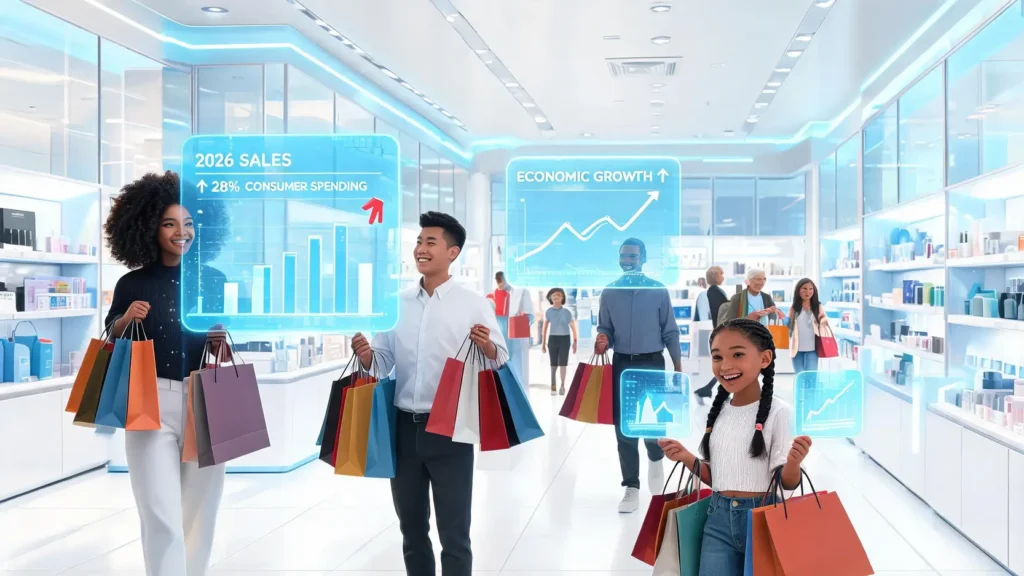
The most significant benchmark for the year comes from the National Retail Federation (NRF), which projects that U.S. retail sales will grow by 4.4% in 2026, reaching a staggering $5.6 trillion. This forecast, which outpaces the 3.6% average annual growth of the previous decade, is built on the foundation of a persistently strong labor market and moderating, though still present, inflation. The NRF’s projection signals confidence that even as consumers become more selective, their capacity and willingness to spend will not evaporate.
Insights from U.S. Census Bureau and BEA Data
Supporting the NRF’s annual outlook, recent high-frequency data from government sources provides a granular view of current momentum. The latest Advance Monthly Retail Sales Report from the U.S. Census Bureau shows a 0.5% month-over-month increase in retail trade sales as of May 2026. This indicates that spending has maintained its upward trajectory into the second quarter. Data from the Bureau of Economic Analysis (BEA) further corroborates this by showing a steady, albeit modest, rise in Personal Consumption Expenditures (PCE), a core component of GDP. These official figures underscore that the growth is not merely a forecast but a reflection of ongoing economic activity.
Understanding the ‘Consumer Resilience’ Phenomenon
The term ‘consumer resilience’ has become central to any analysis of the 2026 economy. It describes the consumer’s ability to sustain spending levels despite challenges like elevated interest rates and persistent inflation. This resilience is fueled by several factors:
- Strong Labor Market: Low unemployment rates and consistent wage growth have provided a stable floor for household income.
- Shifting Priorities: While spending on big-ticket discretionary items may be moderating, consumers are redirecting funds towards services and experiences, which still contributes to overall retail sales figures (especially in food service and travel-related retail).
- Wealth Effect: For many households, asset appreciation from previous years continues to support a higher level of confidence and spending.
Understanding this dynamic is crucial for investors. For an in-depth perspective, How to Tell if AI Valuations Are Justified in 2026: A Trader’s 5-Test Framework provides insights into how market valuations are being reassessed in this new economic climate.
Key Economic Drivers Shaping Consumer Spending in 2026
While the headline forecasts are positive, retail earnings in 2026 will be shaped by a complex interplay of powerful economic drivers. These forces will determine the extent of consumer spending power and influence where and how capital is allocated across the retail sector.
The Labor Market’s Impact on Disposable Income
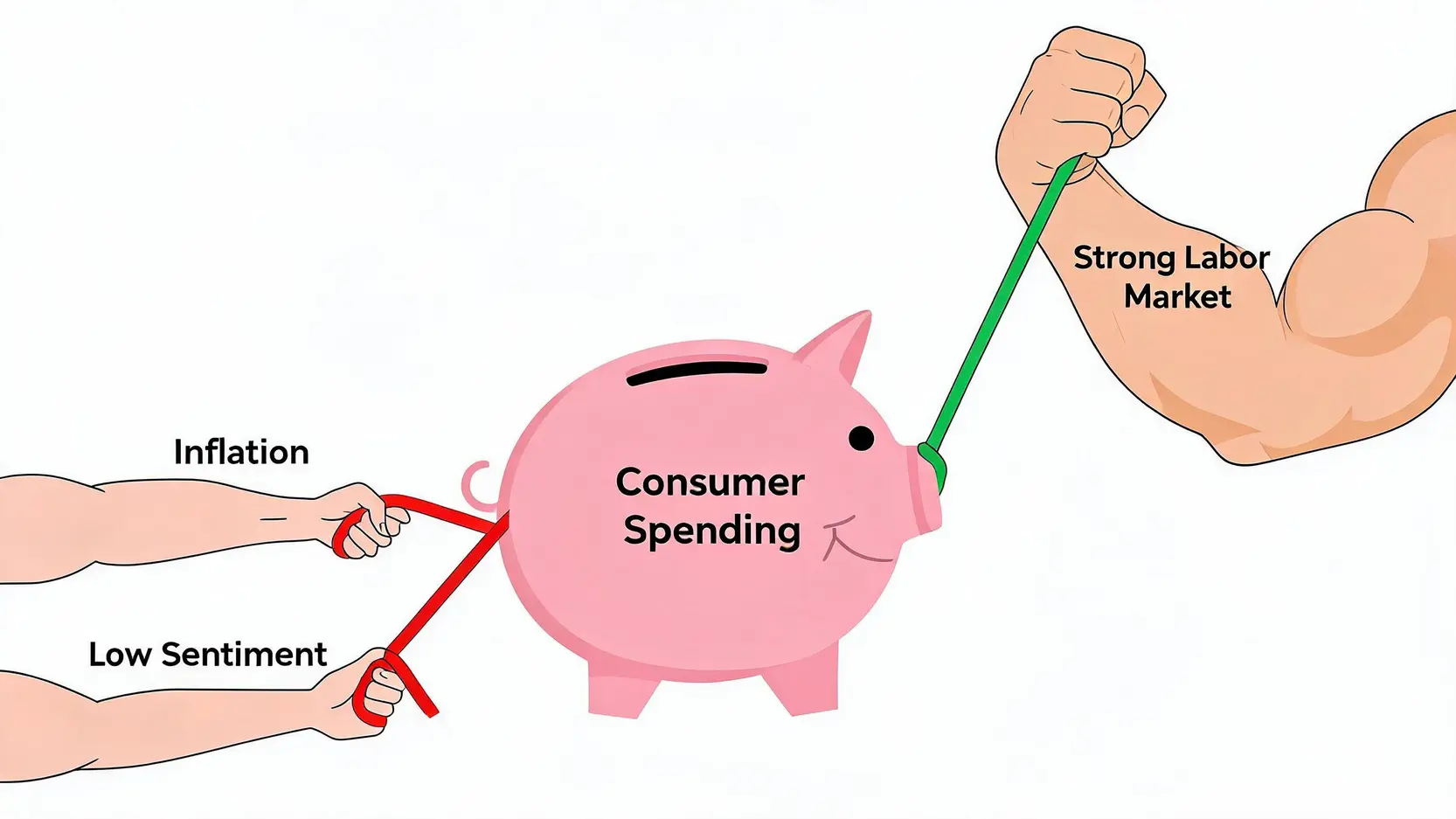
The single most important pillar supporting consumer spending is the health of the labor market. As of mid-2026, the U.S. continues to exhibit a tight job market, characterized by low unemployment and positive, albeit slowing, wage growth. This environment directly boosts disposable personal income, giving consumers the financial capacity to absorb higher prices and continue purchasing goods and services. However, any significant weakening in the labor market would pose the most immediate and substantial threat to the retail sales forecast, making employment data a critical indicator to watch.
Gauging Consumer Sentiment and Confidence
There is a growing disconnect between the ‘hard’ data of retail sales and the ‘soft’ data of consumer sentiment. The University of Michigan’s Survey of Consumers, for instance, has shown fluctuating and often subdued readings throughout 2026. The final results for May 2026 showed the Index of Consumer Sentiment at a low 44.8. This suggests that while consumers *are* spending, they are not necessarily *feeling* confident about the long-term economic outlook. High prices and political uncertainty are weighing on their minds. This divergence is a key risk factor; prolonged poor sentiment could eventually translate into reduced spending, particularly on discretionary items.
Inflationary Pressures and Their Effect on Purchasing Power
Inflation remains the persistent challenge of this economic cycle. While the rate of price increases has moderated from its peak, it continues to erode the real value of wages and savings. This directly impacts purchasing power and alters consumer behavior. Shoppers are increasingly price-sensitive, actively seeking discounts, trading down to private-label brands, and delaying non-essential purchases. For retailers, this means that margin pressure will be a dominant theme. Companies that can effectively manage their supply chains and pricing strategies will be better positioned to protect their earnings. The broader impact of inflation on consumer spending and the retail sector is a critical variable for any investment strategy in 2026.
🆕 Sector-Specific Outlook: Where Will Consumers Spend in 2026?
The overall growth in retail sales is not distributed evenly. In 2026, a clear bifurcation is emerging, with certain sectors poised for outperformance while others face significant headwinds. Identifying these trends is essential for strategic capital allocation.
E-commerce vs. Brick-and-Mortar: The Evolving Landscape
The dynamic between e-commerce and physical retail has matured from a battle for supremacy to a quest for synergy. While e-commerce continues to grow at a faster pace than brick-and-mortar, the narrative is now focused on the omnichannel experience. Successful retailers are those who seamlessly integrate their digital and physical footprints. Trends driving this evolution include:
- Buy Online, Pick-up In-Store (BOPIS): This model has become a standard expectation, blending online convenience with the immediacy of physical retail.
- Experiential Retail: Physical stores are being reimagined as brand experience centers rather than mere points of transaction. This includes in-store events, personalized consultations, and interactive displays.
- Data Integration: Retailers are leveraging data from online browsing and in-store purchases to create highly personalized marketing and product recommendations.
Growth Projections for Key Categories: Electronics, Apparel, and Food Services
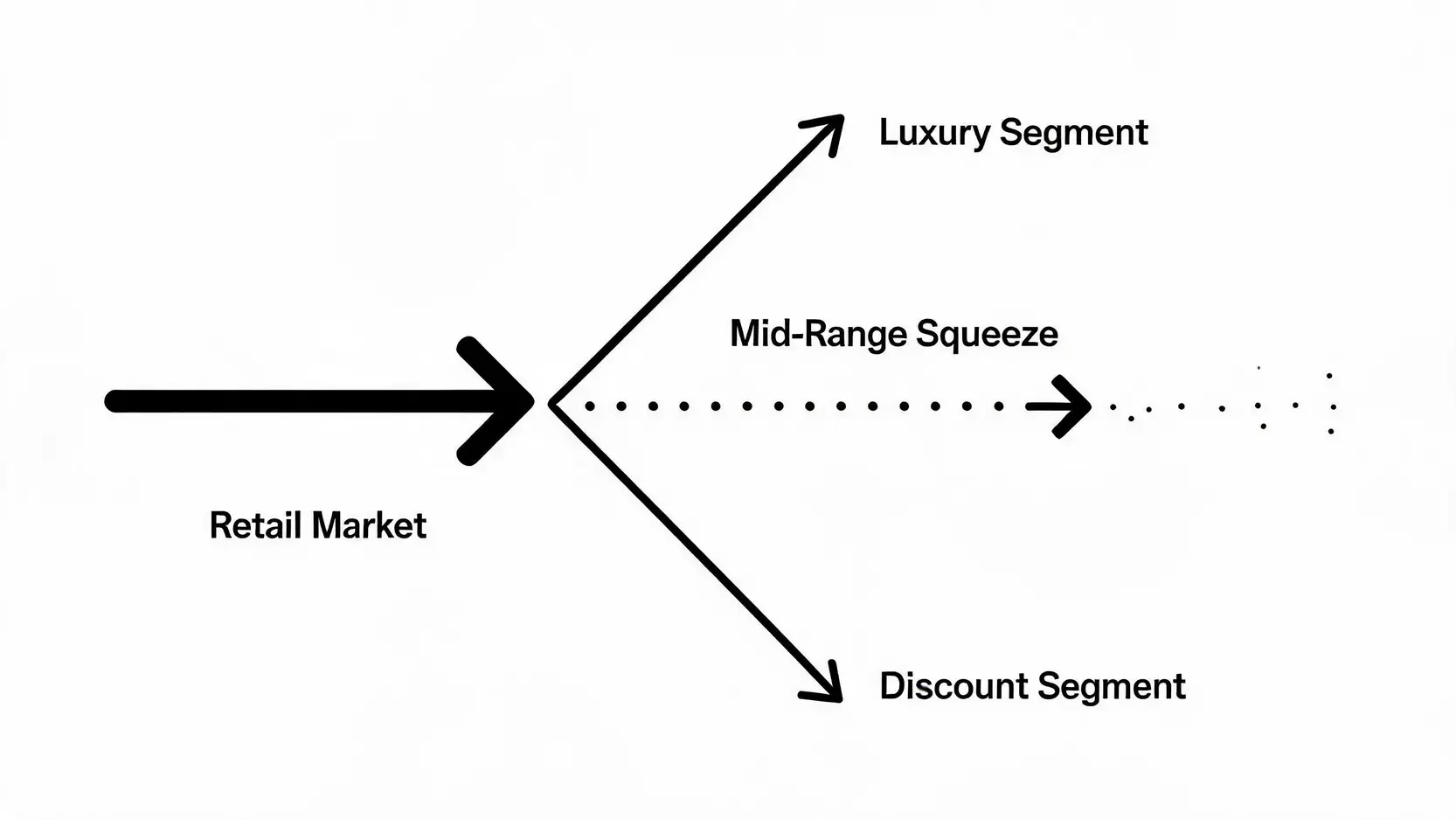
Certain categories are expected to capture a larger share of the consumer’s wallet in 2026. Food services and drinking places continue to show exceptional strength, benefiting from the sustained demand for experiences over goods. The electronics sector is driven by innovation cycles, particularly in AI-enabled devices and smart home technology. The apparel category, however, faces a more challenging environment. While luxury and discount segments are performing well, the mid-range market is being squeezed as consumers polarize their spending.
The Future of Luxury and Discount Retail Segments
A notable trend in consumer spending is the ‘retail bifurcation.’ The luxury segment remains robust, supported by high-income households who are less affected by inflation and rising interest rates. These consumers continue to spend on high-end goods as both a status symbol and an investment. Simultaneously, the discount and off-price retail segment is thriving. A broad base of consumers, feeling the pinch of inflation, is actively seeking value. This has led to strong performance for dollar stores, off-price apparel retailers, and private-label grocery brands. The middle of the market is the most vulnerable and is where retailers will face the greatest pressure on earnings.
Conclusion
The 2026 outlook for retail earnings is one of guarded optimism, fundamentally underpinned by the remarkable resilience of consumer spending. Official forecasts from institutions like the NRF point to continued growth, supported by a solid labor market. However, this positive picture is tempered by significant risks, including persistent inflation, which erodes purchasing power, and shaky consumer sentiment, which could foreshadow a future pullback. Success for retailers and investors will not come from riding a generic wave of growth, but from astutely navigating the evolving economic drivers and the clear divergence in sector-specific performance. Agility, value proposition, and a deep understanding of these complex consumer shifts will be the key determinants of profitability in the year ahead.
Frequently Asked Questions
Q: What is the official retail sales forecast for 2026?
A: The National Retail Federation (NRF) forecasts that U.S. retail sales will grow by 4.4% in 2026, reaching a total of $5.6 trillion. This growth rate is above the historical average and is primarily based on the strength of the U.S. labor market.
Q: How does consumer spending directly impact retail earnings?
A: Consumer spending is the primary source of revenue for retail companies. When consumers spend more, retailers’ sales increase, which generally leads to higher profits or earnings, assuming costs are managed effectively. Therefore, retail earnings are directly and powerfully correlated with consumer spending trends.
Q: What are the biggest challenges facing the retail industry in 2026?
A: The biggest challenges include persistent inflation, which pressures both consumer purchasing power and retail profit margins; elevated interest rates, which can dampen demand for large purchases; and a potential slowdown in the labor market. Additionally, managing the complex omnichannel landscape and intense competition from both online and discount retailers are ongoing operational challenges.
Q: Why is consumer sentiment weak if retail sales are growing?
A: This paradox is a key feature of the 2026 economy. While a strong job market and wage growth are enabling people to continue spending (supporting retail sales), concerns about the high cost of living, future inflation, and economic uncertainty are causing them to feel pessimistic (weakening sentiment). Essentially, people are spending out of necessity and current income, but their confidence in the future is low.