
For astute investors in India, minimizing tax liability is a cornerstone of maximizing returns. As we navigate the financial landscape of 2026, a thorough understanding of the India bond tax exemption 2026 framework is not just beneficial—it’s crucial. This guide provides a comprehensive breakdown of the essential investment tools at your disposal, primarily focusing on tax-free bonds India 2026 and Section 54EC capital gains bonds. We will explore how these instruments can significantly lower your tax outgo, offering a clear, strategic path for both resident investors and Non-Resident Indians (NRIs) to enhance their portfolios with tax-efficient assets.
Table of Contents
Understanding Bond Taxation in India (The 2026 Basics)
Before delving into tax-exempt instruments, it’s essential to grasp the fundamental principles of how bonds are taxed in India. Profits from bond investments are generated in two primary ways: through the regular interest (or coupon) payments and through capital gains upon selling the bond. Each is treated differently under the Income Tax Act.
Tax on Interest Income: How It Works
For most standard government and corporate bonds, the interest income earned is added to your total income for the financial year. This aggregate income is then taxed according to your applicable income tax slab. For individuals in the highest tax bracket (30% plus surcharges), this can significantly erode the net returns from the investment. This is precisely why instruments offering tax-free interest are so highly sought after by high-net-worth individuals.
Tax on Capital Gains: Short-Term (STCG) vs. Long-Term (LTCG)
If you sell a bond on the secondary market before its maturity date, any profit you make is classified as a capital gain. The tax treatment depends on the holding period:
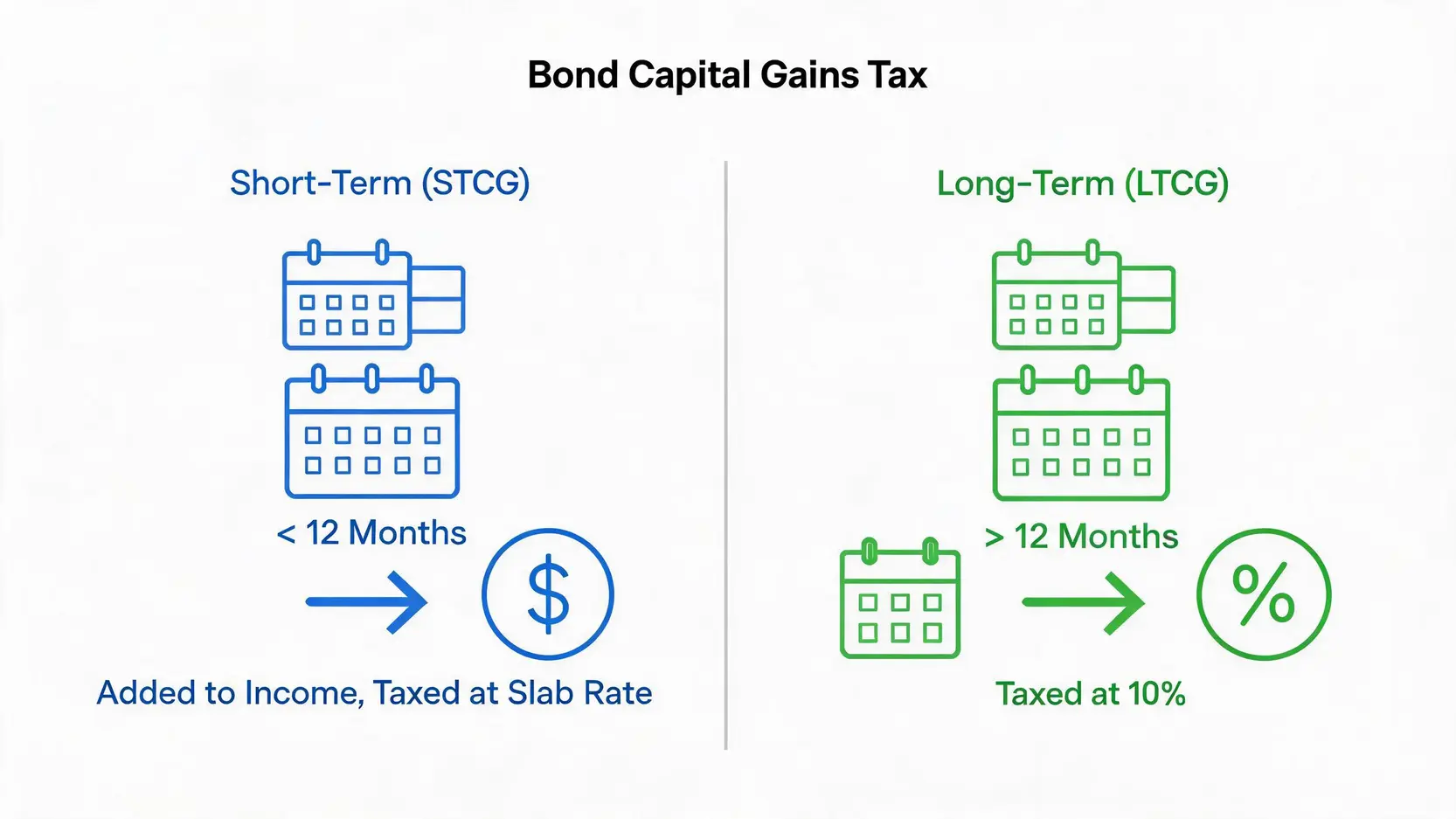
- Short-Term Capital Gains (STCG): If you sell a listed bond within 12 months of purchasing it, the profit is considered an STCG. This gain is added to your total income and taxed at your applicable slab rate, similar to interest income.
- Long-Term Capital Gains (LTCG): If you hold the bond for more than 12 months before selling, the profit is an LTCG. For listed bonds, LTCG is taxed at a preferential rate of 10% without the benefit of indexation.
Tax-Free Bonds: Earning Tax-Exempt Interest
For investors seeking a steady, predictable, and tax-efficient income stream, tax-free bonds are an unparalleled option. These bonds provide a powerful way to generate wealth without increasing your tax burden, making them a key component of the India bond tax exemption 2026 strategy.
What Are Tax-Free Bonds under Section 10?
Tax-free bonds are debt instruments issued by government-backed entities. As per Section 10(15)(iv)(h) of the Income Tax Act, 1961, the interest income earned from these specific bonds is entirely exempt from income tax. This means the coupon payments you receive are not added to your taxable income, and you pay zero tax on them, regardless of your income slab. However, it is critical to note that while the interest is tax-free, any capital gains made from selling these bonds on a stock exchange are taxable as per the LTCG or STCG rules mentioned earlier.
Key Features: Who Issues Them and What are the Terms?
Tax-free bonds are issued by Public Sector Undertakings (PSUs) to raise funds for infrastructure and housing projects. Prominent issuers include:
- National Highways Authority of India (NHAI)
- Rural Electrification Corporation (REC)
- Power Finance Corporation (PFC)
- Indian Railway Finance Corporation (IRFC)
- Housing and Urban Development Corporation (HUDCO)
These bonds typically come with long tenures, usually 10, 15, or 20 years, making them suitable for long-term goals like retirement planning. They also carry high credit ratings (often ‘AAA’), signifying a very low risk of default.
How to Invest: Primary Market vs. Secondary Market
Investing in tax-free bonds can be done in two ways:
- Primary Market: This involves subscribing to the bonds when they are first issued by the PSU through a public issue. However, there have been no new public issues of tax-free bonds since 2016. Investors in 2026 must keep a close watch on government announcements for any potential new offerings.
- Secondary Market: The more common method in 2026 is to purchase existing tax-free bonds from stock exchanges (like the NSE or BSE) through a registered stockbroker. This requires a Demat account. Prices in the secondary market fluctuate based on prevailing interest rates, so the effective yield may differ from the bond’s coupon rate.
Section 54EC Bonds: Saving Long-Term Capital Gains Tax
While tax-free bonds address the taxation of interest income, Section 54EC bonds offer a solution for a different challenge: mitigating the tax liability on long-term capital gains, particularly from the sale of immovable property. These are often referred to as capital gains bonds.
What are Section 54EC ‘Capital Gains’ Bonds?
Section 54EC of the Income Tax Act provides an exemption from LTCG tax if an investor reinvests the gains in specific bonds within a prescribed timeframe. By channeling the profits from an asset sale into these bonds, you can legally defer and effectively save the tax that would otherwise be payable on those gains. This makes them a critical tool for financial planning after a significant asset sale.
Who is Eligible? (Individuals, HUF)
The tax exemption benefit under Section 54EC is available to individuals and Hindu Undivided Families (HUF). It is not available to corporations, LLPs, or other legal entities.
Investment Conditions: 6-Month Window, ₹50 Lakh Limit, and 5-Year Lock-in
To avail the exemption, several strict conditions must be met:
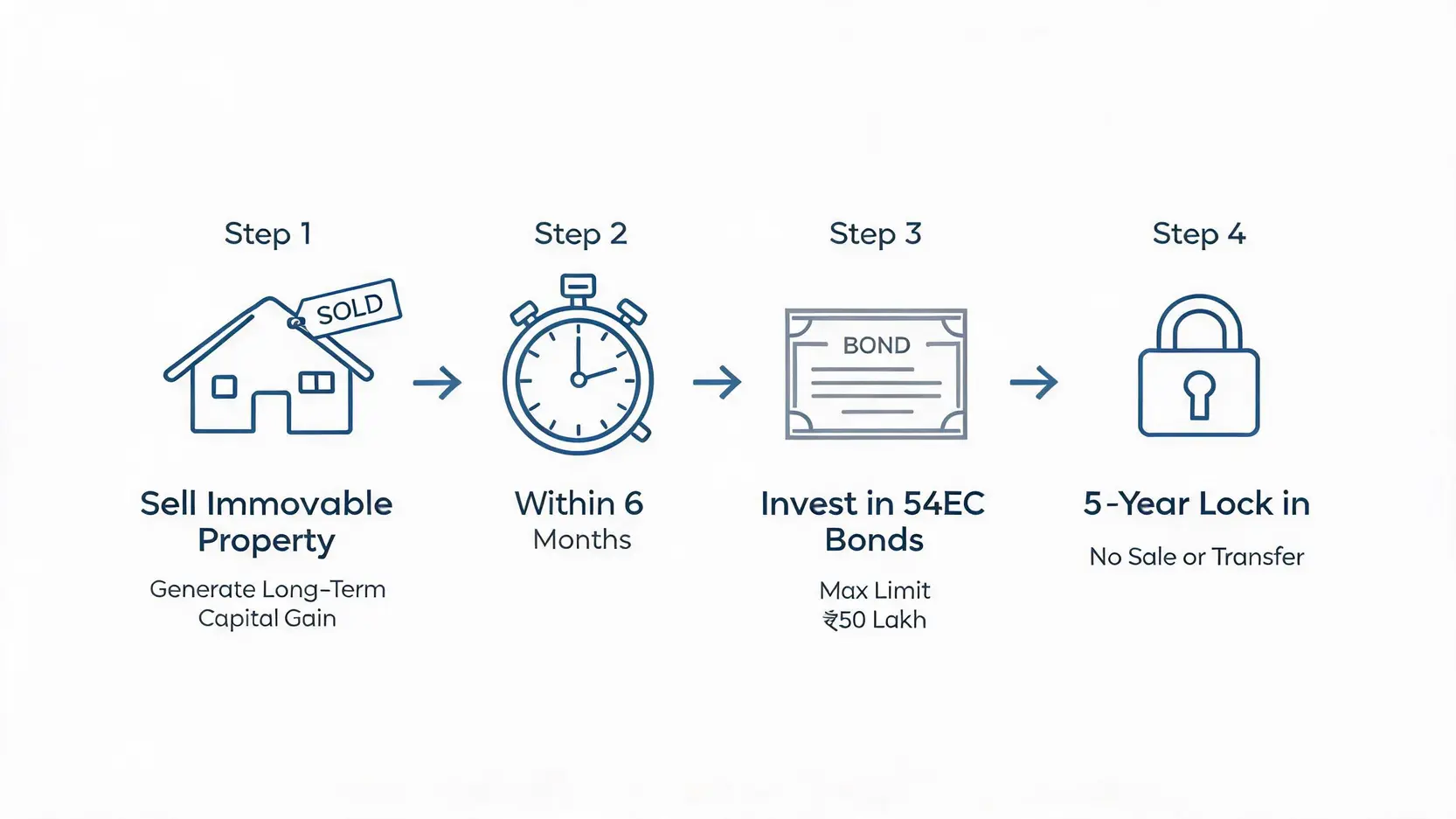
- Investment Window: The investment in 54EC bonds must be made within six months from the date of the transfer of the asset.
- Investment Limit: There is a cap on the investment amount. An investor can invest a maximum of ₹50 lakh in these bonds in a single financial year.
- Lock-in Period: These bonds come with a mandatory lock-in period of 5 years. You cannot sell, transfer, or take a loan against these bonds during this period. If you do, the capital gains exemption will be reversed, and the gains will become taxable in the year of the violation.
List of Authorized 54EC Bond Issuers (REC, PFC, etc.)
As of 2026, the government has authorized a few key public sector financial institutions to issue these bonds. The primary issuers include:
- Rural Electrification Corporation (REC)
- Power Finance Corporation (PFC)
- Indian Railway Finance Corporation (IRFC)
Tax Rules for Non-Resident Indians (NRIs): A Clear Breakdown
India’s tax-saving bonds present an attractive opportunity for NRIs looking to invest in their home country. However, the rules and implications can be different, so a clear understanding of the NRI tax rules in India is essential.
Can NRIs Invest in Tax-Free and 54EC Bonds?
Yes, NRIs are generally eligible to invest in both tax-free bonds (from the secondary market) and Section 54EC bonds. This allows them to benefit from both tax-exempt interest and capital gains tax savings, just like resident Indians. However, the mode of investment and repatriation rules are critical considerations.
The Critical Difference: Investing via NRE vs. NRO Accounts
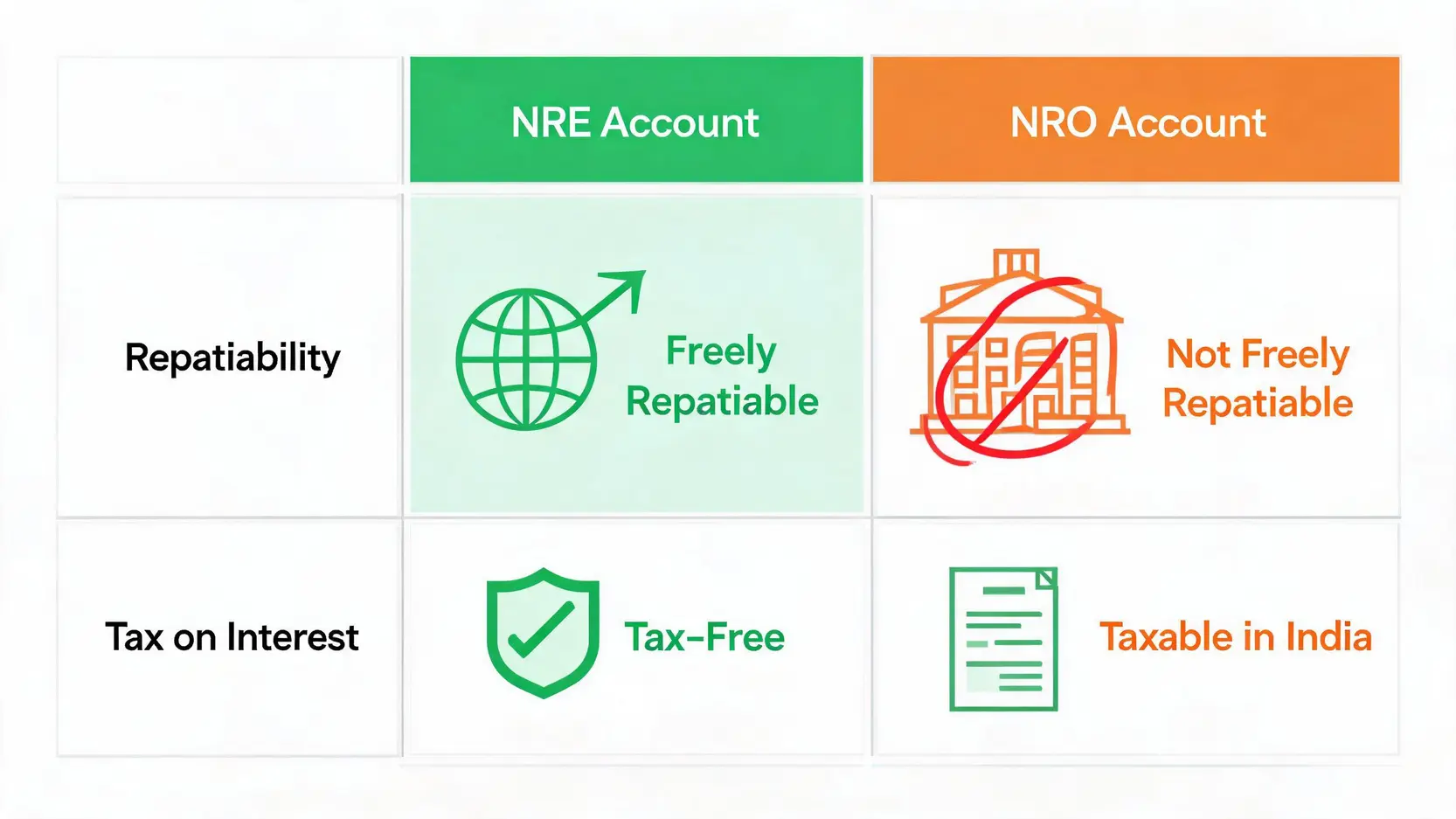
- NRE (Non-Resident External) Account: Funds in an NRE account are freely repatriable (meaning you can transfer both the principal and interest back to your country of residence without restrictions). Investing through an NRE account is often preferred.
- NRO (Non-Resident Ordinary) Account: Funds in an NRO account are not freely repatriable. Interest income earned in an NRO account is taxable in India. While you can invest in these bonds using an NRO account, it may add tax complications.
Understanding TDS (Tax Deducted at Source) on Bond Gains for NRIs
For NRIs, any taxable income earned in India is subject to TDS. While the interest on tax-free bonds is exempt, if an NRI sells any bond (tax-free or otherwise) and realizes a capital gain, that gain is subject to TDS. The applicable rate for LTCG is typically 10% (plus surcharge and cess). For STCG, it can be as high as 30%.
Leveraging DTAA (Double Taxation Avoidance Agreement)
India has signed Double Taxation Avoidance Agreements (DTAA) with numerous countries. This treaty is crucial for NRIs as it prevents their income from being taxed in both their country of residence and in India. An NRI can claim tax relief under the DTAA, ensuring that the tax paid in India can be offset against the tax liability in their country of residence, or they are taxed at a lower rate as specified in the treaty.
How to Invest in Tax-Saving Bonds in 2026: A Step-by-Step Guide
Investing in tax-saving bonds is a straightforward process if you follow a structured approach. Here’s a simple guide to get you started on leveraging the India bond tax exemption 2026.
Step 1: Complete Your KYC
Ensure you have the necessary documents ready. This includes your PAN card, proof of address, and a bank account. For online investments, you will also need a Demat account, which must be KYC-compliant. This is a mandatory first step for any investment in securities.
Step 2: Choose Your Bond and Investment Platform
First, decide which bond suits your needs:
- If you need regular, tax-free income, look for tax-free bonds on the secondary market via your stockbroker’s platform.
- If you need to save tax on long-term capital gains, you must invest in Section 54EC bonds.
You can apply for 54EC bonds directly through the issuer’s website or through authorized distributors and brokerage platforms.
Step 3: Making the Investment and Receiving Allotment
For 54EC bonds, you will fill out an application form (physical or digital) and make the payment via cheque or online transfer. Once the application is processed, the bonds will be credited to your Demat account. For tax-free bonds bought on the exchange, the process is instantaneous, just like buying a stock, and the bonds will reflect in your Demat account within T+1 day.
Conclusion
Navigating the India bond tax exemption 2026 landscape offers significant opportunities to grow your wealth efficiently. By strategically using tax-free bonds for generating tax-exempt interest income and Section 54EC bonds for sheltering long-term capital gains, investors can build a robust, tax-advantaged fixed-income portfolio. It is paramount to assess your personal financial goals, tax liability, and eligibility criteria before investing. For NRIs, understanding the specific regulations concerning NRE/NRO accounts and DTAA is crucial to making informed and compliant investment decisions.
Frequently Asked Questions (FAQ)
Q: What is the current interest rate on Section 54EC bonds?
A: As of June 2026, the interest rate offered by issuers of Section 54EC bonds, such as REC and PFC, is 5.25% per annum. This rate is fixed for the entire 5-year tenure. While this interest is taxable, the primary benefit of these bonds remains the upfront exemption on long-term capital gains.
Q: Are there any new government tax-free bonds issued in 2026?
A: The government has not announced any new public issues of tax-free bonds since 2016. Currently, in 2026, investors can only purchase these bonds from the secondary market (stock exchanges). It is advisable to monitor official announcements from the Ministry of Finance for any updates on new issuances.
Q: What are the penalties for selling 54EC bonds before the 5-year lock-in period?
A: Selling, transferring, or pledging Section 54EC bonds before the completion of the 5-year lock-in period has a significant penalty. The initial capital gains tax exemption you claimed will be revoked. The amount of the exempted gain will be considered as a long-term capital gain in the financial year you breached the condition, and you will be liable to pay tax on it.
Q: Are capital gains from selling tax-free bonds taxable?
A: Yes. This is a common point of confusion. Only the interest (coupon) income from tax-free bonds is exempt from tax under Section 10. If you sell these bonds on a stock exchange and make a profit, that profit is treated as a capital gain and is fully taxable under either STCG or LTCG rules, depending on the holding period.