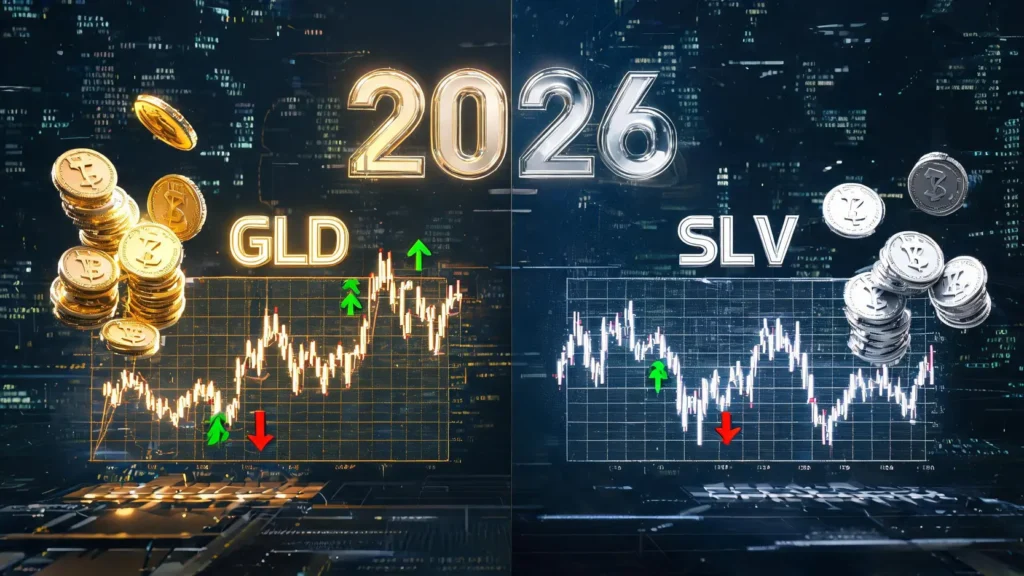
Navigating the complexities of gold and silver ETFs after NFP requires a robust analytical framework and a deep understanding of macroeconomic interdependencies. The Non-Farm Payrolls (NFP) report remains one of the most heavily scrutinized economic indicators in 2026, fundamentally altering the trajectory of safe-haven assets and broad market liquidity within minutes of its release.
Understanding the precise NFP impact on metals is essential for institutional allocators and retail market participants alike. By employing sophisticated precious metals ETFs investing strategies, traders can capitalize on the resultant volatility, optimizing their exposure across major instruments like GLD and SLV.
As the global economy grapples with shifting inflation targets and evolving labor market dynamics, precious metals have solidified their role as critical portfolio stabilizers. However, trading these assets around major data releases is fraught with structural risks. The immediate aftermath of an NFP print triggers aggressive algorithmic repositioning, sovereign yield curve adjustments, and massive currency swings. For investors seeking to harness these moves, utilizing Exchange-Traded Funds (ETFs) offers a highly liquid, regulated, and efficient vehicle.
Table of Contents
Understanding the NFP Impact on Metals: Why Employment Data Drives Gold and Silver
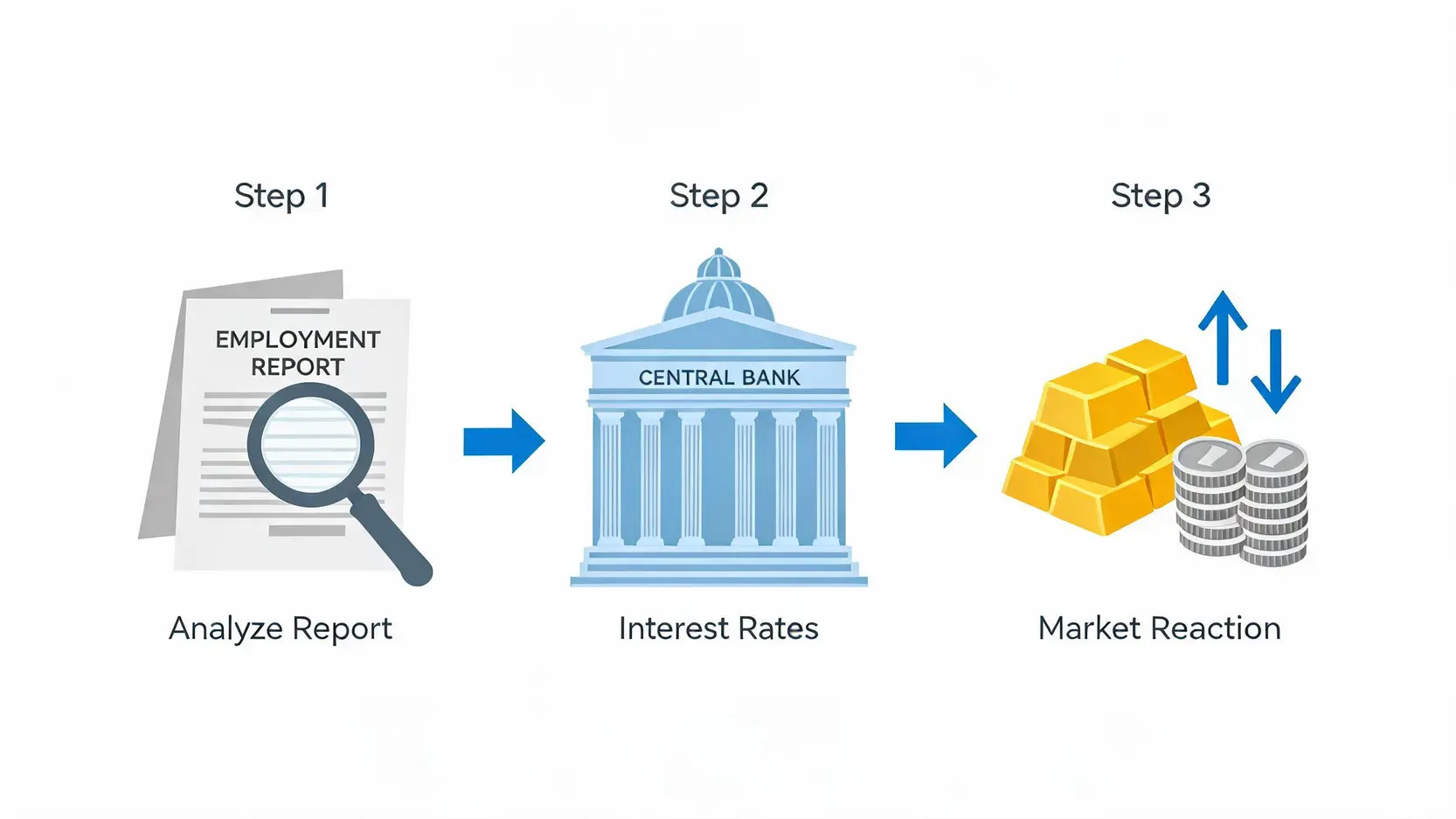
The transmission mechanism between employment data and bullion pricing is anchored in central bank policy expectations. The NFP impact on metals is rarely a direct correlation to job creation itself; rather, it is a derivative reaction to how those job numbers influence the Federal Reserve’s interest rate trajectory. In 2026, the labor market’s resilience directly dictates the pace of potential monetary easing or tightening, which in turn drives the US Dollar Index (DXY) and real Treasury yields.
When the NFP report significantly beats consensus estimates, it signals a robust economy capable of withstanding higher interest rates. This typically leads to a spike in nominal yields. Since precious metals yield no interest, rising real rates increase the opportunity cost of holding them. Consequently, strong payroll data almost universally triggers an immediate sell-off in gold and silver assets. Conversely, a severe miss in employment figures stokes fears of economic contraction, prompting markets to price in rate cuts. This suppression of yields acts as a powerful upside catalyst for non-yielding assets.
However, the dynamic is nuanced when comparing different metals. Gold serves almost exclusively as a monetary hedge and a safe-haven asset. Its reaction to NFP is mathematically tied to the inverse movement of real rates. Silver, on the other hand, possesses a dual identity. It is both a monetary metal and a critical industrial commodity essential for the burgeoning green energy sector and electronics manufacturing in 2026. Therefore, an exceptionally strong NFP report—while initially bearish for silver due to rising rates—can sometimes find a delayed floor as the data implies robust industrial demand and economic expansion.
To deeply comprehend these shifts, one must monitor institutional fund flows. For further insights into how capital migration influences pricing, reviewing How ETF Flows Affect Gold Prices provides an essential baseline for tracking institutional accumulation or distribution phases leading up to payroll Friday.
GLD vs SLV Comparison 2026: Evaluating Precious Metals ETFs for Post-NFP Volatility
For market participants executing strategies around the NFP release, selecting the correct vehicle is paramount. The GLD vs SLV comparison 2026 highlights two fundamentally different trading instruments, despite their categorization under the same commodity umbrella. The SPDR Gold Trust (GLD) and the iShares Silver Trust (SLV) dominate the landscape, but their structural nuances dictate their utility in distinct market environments.

| Metric (2026 Landscape) | SPDR Gold Trust (GLD) | iShares Silver Trust (SLV) |
|---|---|---|
| Primary Price Driver | Real Yields, Safe Haven Demand | Industrial Output, Monetary Hedges |
| Post-NFP Beta (Volatility) | Moderate to High | Extreme (High Beta relative to Gold) |
| Expense Ratio | 0.40% | 0.50% |
| Options Market Liquidity | Exceptional (Deep OTM liquidity) | Very Good (Prone to gamma squeezes) |
| Role in Portfolio | Core Deflation/Inflation Hedge | Tactical Growth/Inflation Multiplier |
GLD remains the undisputed heavyweight for pure monetary exposure. It is the preferred instrument for sovereign wealth managers, macro hedge funds, and conservative allocators looking to buffer equity drawdowns. When the NFP prints significantly off-consensus, GLD options provide incredibly tight bid-ask spreads, allowing for precise execution of complex hedging strategies.
Conversely, SLV operates with a structurally higher beta. Because the silver market is vastly smaller and less liquid than gold, capital flows entering or exiting SLV generate outsized price movements. In the minutes following a shock NFP print, SLV will frequently outpace GLD in terms of percentage deviation. This makes SLV the premier choice for directional momentum traders seeking maximum leverage without utilizing margin or futures contracts.
However, this elevated beta works in both directions. The drawdown profile of SLV during a hawkish NFP surprise (strong jobs, rising rates) can be brutal, often cascading through technical support levels as algorithmic stop-losses are triggered. Understanding the gold-silver ratio (GSR) is critical here; a rising GSR post-NFP typically indicates systemic liquidity contraction, heavily favoring GLD over SLV.
Tactical Positioning in Gold and Silver ETFs After NFP Releases
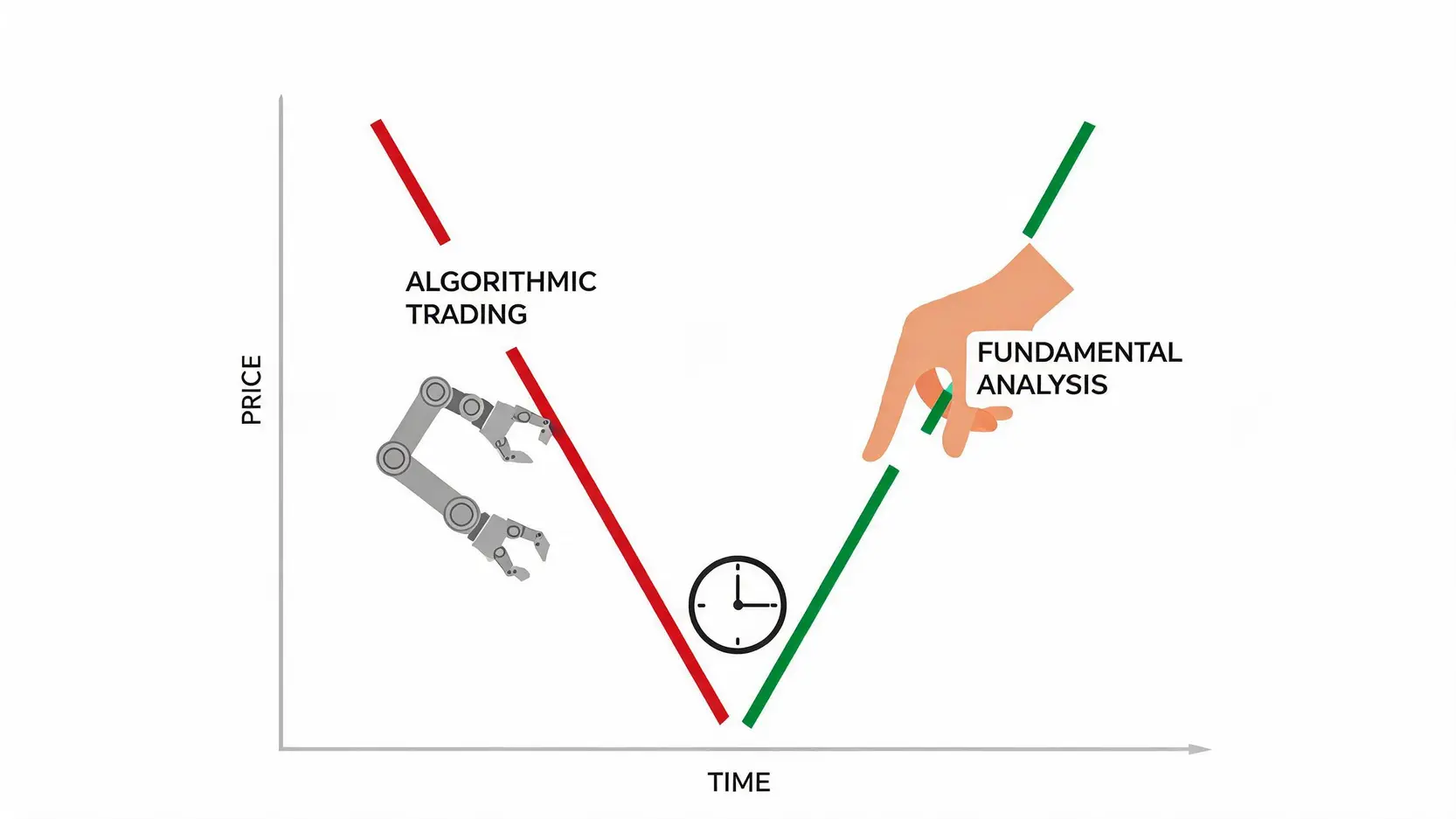
Executing profitable trades in gold and silver ETFs after NFP requires mechanical precision and an abandonment of emotional bias. The first 15 minutes post-release are dominated by high-frequency trading (HFT) algorithms parsing the headline number, previous month revisions, and average hourly earnings. Retail participants attempting to front-run these machines often face severe slippage and immediate drawdown.
A superior methodology involves waiting for the initial algorithmic sweep to conclude, establishing the true directional bias of the broader market. Often, the headline NFP figure will trigger an initial knee-jerk reaction in GLD or SLV, only for the trend to reverse completely once the underlying details (such as wage inflation or labor force participation rates) are digested by institutional macro desks.
For instance, if the headline NFP is exceptionally strong, GLD will gap down. If, however, average hourly earnings demonstrate a sharp deceleration, indicating that inflation pressures are cooling despite job growth, the bond market may bid up Treasuries, causing real yields to fall. In this scenario, GLD will experience a sharp intra-day reversal, forming a classic “V-bottom.” Traders monitoring these internal metrics can deploy capital into GLD or SLV at highly advantageous entry points during the maximum point of algorithmic despair.
Options strategies also play a vital role. Deploying straddles or strangles on GLD leading into the first Friday of the month allows traders to capture the impending volatility expansion regardless of directional outcome. Once the data drops and implied volatility (IV) is crushed, the profitable leg can be managed or rolled to capture sustained momentum.
Navigating Macro Forces: Fed Policy and Precious Metals ETFs Investing Strategies
The overarching architecture governing precious metals ETFs investing strategies is inextricably linked to Federal Reserve policy. The NFP is simply the most volatile data input feeding the Fed’s dual mandate equation. In 2026, as central banks globally navigate the delicate balance between terminal rate management and economic soft landings, understanding this policy transmission is non-negotiable.
According to comprehensive analyses, such as those detailing How Fed Funds Rate Hikes Influence Gold Prices, the intrinsic valuation of bullion is continuously recalibrated against the risk-free rate of return. If an NFP report alters the probability of a rate cut at the next FOMC meeting from 40% to 80%, the repricing across GLD and SLV will be instantaneous and severe. Institutional allocators do not wait for the actual rate cut; they front-run the probability matrices.
Therefore, a sophisticated precious metals strategy demands a multi-timeframe approach. The NFP provides short-term tactical entry and exit points, while the broader Fed dot plot dictates the core strategic allocation. If the macro environment is characterized by prolonged monetary easing and fiscal dominance, accumulating GLD and SLV on any NFP-induced dips becomes a highly asymmetric trade setup. Conversely, in a structurally hawkish regime, strong NFP prints should be utilized to trim exposure or initiate short delta positions against the metals complex.
Furthermore, currency interventions and geopolitical friction points in 2026 add layers of complexity. While the NFP focuses strictly on US domestic labor, the resulting fluctuations in the US Dollar reverberate globally. A surging Dollar post-NFP effectively exports inflation to emerging markets, which can paradoxically trigger localized physical gold buying by foreign central banks, creating a hidden bid beneath GLD that frustrates dollar-centric short sellers.
Advanced Portfolio Hedging with Precious Metals ETFs
Beyond speculative trading, GLD and SLV serve as essential instruments for advanced portfolio hedging. In an era where traditional 60/40 equity-bond correlations frequently break down during inflationary shocks, precious metals offer an uncorrelated return stream. When analyzing the NFP impact on metals, allocators must evaluate how an employment shock will affect their broader equity book.
A catastrophic miss in the NFP data—signaling an abrupt recessionary shift—will likely crater cyclical equities and industrial stocks. While silver (SLV) might experience collateral damage due to its industrial beta, gold (GLD) will typically surge as a definitive safe haven. By holding a strategically weighted allocation of gold ETFs, a portfolio can absorb the equity drawdown. The liquidity of these ETFs ensures that capital can be rapidly deployed or rebalanced without the friction and logistical hurdles associated with physical bullion delivery.
Moreover, the integration of covered call writing on core GLD and SLV positions can generate synthetic yield, mitigating the primary drawback of holding non-yielding assets. By selling out-of-the-money calls ahead of the NFP release, investors can capture the elevated implied volatility premiums. If the market remains range-bound, the premium is retained; if a breakout occurs, the position is capped at a predetermined, acceptable profit margin.
Conclusion: Maximizing Returns in Precious Metals ETFs Post-NFP
In conclusion, mastering the price action of gold and silver ETFs after NFP is an indispensable skill for navigating the financial markets of 2026. The employment report serves as the ultimate litmus test for US economic health, dictating the cost of capital and the strength of the fiat currency. By meticulously evaluating the GLD vs SLV dynamics, traders can align their instrument selection with their specific risk tolerance and directional conviction.
GLD provides a highly liquid, stable reflection of monetary shifts, ideal for substantial capital allocation and macro hedging. SLV offers a high-beta, dual-purpose vehicle that thrives on momentum and industrial growth narratives. Ultimately, success relies on peering beneath the headline data, understanding the intricate reactions of the bond market, and executing predefined precious metals ETFs investing strategies without hesitation. As macroeconomic volatility persists, these investment tools will remain paramount in the pursuit of wealth preservation and alpha generation.
Frequently Asked Questions on NFP and Precious Metals ETFs
What is the typical reaction of gold and silver ETFs after NFP?
Historically, if the NFP report exceeds expectations (more jobs created than forecast), it signals economic strength, leading to higher interest rates and a stronger US Dollar. This typically causes gold and silver ETFs to decline in value. Conversely, a weaker-than-expected NFP usually triggers a rally in precious metals as markets anticipate lower interest rates and a weaker currency.
Why does SLV exhibit more volatility than GLD following employment data?
The silver market is vastly smaller in total capitalization compared to the gold market. Consequently, the same volume of institutional capital flowing in or out creates a much larger percentage price swing in SLV. Additionally, silver’s dual role as both a monetary hedge and an industrial component adds conflicting fundamental drivers that can amplify market reactions.
Can I use GLD and SLV to hedge against inflation shown in NFP wage data?
Yes. The NFP report includes Average Hourly Earnings, a leading indicator of wage-push inflation. If this metric rises sharply, it suggests persistent inflation. While the initial reaction might be a drop in metals due to fears of Fed rate hikes, sustained inflation eventually erodes fiat purchasing power, driving long-term capital into GLD and SLV as proven stores of value.
How quickly should I trade precious metals ETFs after the NFP release?
Immediate market execution within the first few seconds of the release is largely dominated by high-frequency trading algorithms, leading to extreme slippage and erratic price wicks. Prudent strategy dictates waiting 15 to 30 minutes for the initial volatility to settle and for the bond market to establish a definitive trend in real yields before entering a position in GLD or SLV.
Are there significant liquidity risks with holding SLV compared to GLD during major news events?
Both GLD and SLV are highly liquid, multi-billion-dollar ETFs, meaning that execution risk for standard retail and institutional volume is negligible. However, SLV’s options chain may experience slightly wider bid-ask spreads during maximum volatility spikes compared to GLD. Overall, both investment tools provide robust market access even during the chaotic post-NFP trading window.