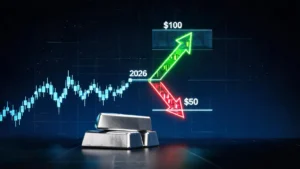
Understanding what a falling dollar means for commodities in 2026 is a critical task for traders, as the intricate relationship between the US dollar and raw materials presents both opportunities and risks. A weakening greenback fundamentally alters global purchasing power, directly influencing the price of dollar-denominated assets.
Historically, this inverse correlation provides a powerful tailwind for commodity markets. However, the outlook for 2026 is more complex, shaped not only by currency dynamics but also by persistent supply chain risks, the global focus on energy security, and significant shifts in capital flows. This analysis unpacks the mechanics of this relationship and outlines the key factors traders must monitor.
The depreciation of the US dollar creates a clear theoretical benefit for commodities. As most raw materials, from crude oil to precious metals, are priced in dollars, a decline in the dollar’s value makes them more affordable for investors and consumers holding other currencies.
This mechanical price adjustment can stimulate demand. For traders, appreciating what a falling dollar means for commodities in 2026 requires moving beyond this basic principle to analyse the unique fundamentals of each asset class and the broader macroeconomic environment.
Table of Contents
A Falling Dollar Usually Supports Commodities Through Global Purchasing Power
The primary transmission mechanism is a direct consequence of the dollar’s role as the world’s reserve currency. When the dollar weakens against other major currencies like the Euro or the Japanese Yen, it takes fewer of those foreign currency units to purchase one dollar’s worth of a commodity.
This effectively creates a discount for international buyers, which can lead to increased demand and, subsequently, higher prices. The exploration of what a falling dollar means for commodities in 2026 must begin with this core concept.
Why Dollar-Priced Commodities Become Cheaper for Non-US Buyers
This effect stems from the currency conversion process. Consider a barrel of WTI crude oil priced at $80. If the EUR/USD exchange rate is 1.05, a European buyer needs approximately €76.19 to purchase it. However, if the dollar weakens and the EUR/USD rate moves to 1.10, the same $80 barrel of oil now costs only €72.73. This 4.5% price reduction for the European buyer occurs without any change in the oil’s dollar price.
It is this mechanical repricing that makes a falling dollar a bullish signal for commodity demand. This principle is a cornerstone for anyone analysing what a falling dollar means for commodities in 2026, as it applies across the entire raw materials spectrum.
How This Mechanism Can Improve Global Demand Conditions
Improved affordability naturally encourages consumption and stockpiling, particularly in large importing nations. For industrial metals like copper and aluminium, lower costs can incentivise manufacturers in Asia and Europe to increase production.
In agriculture, major food importers may decide to build up strategic reserves when commodities like wheat and soybeans become cheaper in their local currency. This demand-side stimulus is a powerful force that underpins the inverse dollar-commodity relationship.
A sustained period of dollar weakness can therefore create a broad-based rally across the commodity complex, a key consideration for the 2026 outlook.
The Broad Market Implications Across the Commodity Sector
The impact of a falling dollar is not uniform. While most commodities benefit, the degree of sensitivity varies. Precious metals, particularly gold, often react most strongly due to their monetary characteristics. Energy products also show a high correlation, although they are subject to powerful supply-side factors.
Industrial metals and agricultural goods follow, with their price action also heavily influenced by the global economic cycle and specific supply situations like weather patterns or labour disputes. Therefore, understanding what a falling dollar means for commodities in 2026 necessitates a granular, asset-by-asset approach rather than a one-size-fits-all assumption.
Gold Usually Feels the Dollar Effect Faster Than Other Commodities
The precious metal’s rapid response is due to its unique position in the financial system. Unlike industrial or energy commodities, gold’s primary role is not for consumption but as a store of value and a monetary asset.
It is often viewed as a direct alternative to the US dollar, causing its price to react almost instantaneously to shifts in currency markets. This high sensitivity makes gold a critical barometer for traders assessing the broader impact of a falling dollar.
The High Sensitivity of Gold to Foreign Exchange Shifts
Gold carries no yield, making it highly sensitive to changes in both currency values and interest rates. When the dollar falls, gold’s appeal as a non-national store of wealth increases for investors globally.
This is not just about purchasing power; it is about capital preservation. A declining dollar erodes the value of dollar-denominated assets, prompting a flight to assets that are perceived to be more stable.
Gold, with its millennia-long history as a monetary metal, is often the primary beneficiary of this rotation. Consequently, what a falling dollar means for commodities in 2026 is often first reflected in the gold price.
Why Investors Treat Gold as the Cleanest Weaker-Dollar Trade
Traders often favour gold as the most direct expression of a bearish view on the dollar because its price is less complicated by industrial supply and demand fundamentals. While oil prices are swayed by inventory reports and copper by manufacturing data, gold’s price is predominantly driven by investment flows, inflation expectations, and currency movements.
This makes the correlation between gold and the dollar exceptionally strong. An investor who anticipates a sustained decline in the US Dollar Index (DXY) can use gold as a straightforward proxy to position for that outcome. This clarity is central to what a falling dollar means for commodities in 2026 from a strategic trading perspective.
| Scenario | Gold Price (USD/oz) | GBP/USD Exchange Rate | Cost in GBP (£/oz) |
| Initial State (Strong Dollar) | $2,300 | 1.25 | £1,840 |
| After Dollar Falls (Weak Dollar) | $2,300 | 1.30 | £1,769 |
How Gold Acts as a Key Signal Asset for Currency Trends
A strong, sustained rally in the price of gold can often precede or confirm a major downturn in the US dollar. Experienced traders watch the gold market closely for clues about sentiment towards the greenback.
If gold begins to break out to new highs while the dollar is still range-bound, it can be an early warning that institutional capital is beginning to hedge against a future dollar decline.
This predictive quality makes gold more than just a beneficiary of a falling dollar; it is an integral part of the currency market’s ecosystem and a vital indicator for formulating a 2026 trading strategy.
Oil Responds to the Dollar, but Physical Supply Still Matters More
While the oil market is certainly influenced by dollar fluctuations, its price is ultimately determined by the real-world balance of supply and demand. A falling dollar provides a supportive backdrop for oil prices, but it can be easily overshadowed by more powerful market forces.
Geopolitical events, production decisions by major oil-producing consortia, and changes in global consumption patterns are far more dominant drivers. Therefore, a trader focusing solely on the dollar to predict oil prices in 2026 would be operating with an incomplete picture.
Why Oil’s Price Is Not Solely Driven by the Dollar’s Value
Oil is a physical commodity essential for global economic activity. Its price is subject to a host of factors that have little to do with financial markets. These include:
- Production Levels: Decisions by cartels and major producers on output quotas can add or remove millions of barrels from the market daily.
- Inventory Data: Weekly reports on crude oil stockpiles provide a real-time snapshot of the supply-demand balance. A surprise build in inventories can push prices down even if the dollar is weak.
- Economic Growth: The health of major economies directly dictates demand for energy. A global slowdown will reduce oil consumption, weighing on prices regardless of the dollar’s direction.
This complexity means that what a falling dollar means for commodities in 2026, especially oil, is conditional on these other variables.
How Geopolitical Events, Supply Disruptions, and Inventories Can Dominate
The oil market is notoriously susceptible to geopolitical shocks. A conflict in a major oil-producing region can instantly introduce a risk premium to the price, sending it soaring irrespective of currency movements. Similarly, a hurricane disrupting production in the Gulf of Mexico or a pipeline failure can create immediate supply shortages.
On the other side, an unexpected release of strategic petroleum reserves or a breakthrough in diplomatic negotiations can cause prices to plummet. These event-driven catalysts are often far more volatile and impactful than the gradual influence of a falling dollar.
The Importance of Separating FX Support from Physical-Market Fundamentals
For a trader, the key is to view the falling dollar as a contributing factor, not a definitive one. It can amplify an existing bullish trend in oil or provide a floor under prices during a downturn. However, a trading decision should never be based on the dollar alone. A robust analysis requires a thorough assessment of the physical market.
Is the market in a supply surplus or deficit? Are inventories rising or falling? What is the outlook for demand from key consumers? Answering these questions provides the necessary context to correctly interpret what a falling dollar means for commodities in 2026 and avoid being caught on the wrong side of a trade driven by fundamentals.
A Falling Dollar Can Also Help Commodity-Linked Currencies and Sentiment
The ripple effects of a falling dollar extend beyond commodity prices themselves, influencing the foreign exchange market and overall risk sentiment. This creates a feedback loop where currency and commodity markets can mutually reinforce each other’s movements. This dynamic is especially pronounced in the currencies of nations whose economies are heavily dependent on the export of raw materials.
How a Weaker Dollar Can Support Broader Commodity Optimism
A period of sustained dollar weakness is often associated with a ‘risk-on’ environment, where investors are more willing to allocate capital to assets perceived as riskier, such as equities and commodities. As a falling dollar boosts commodity prices, it improves the profitability of resource companies and the economic outlook for exporting nations.
This can generate a wave of optimism that encourages further investment into the commodity sector, creating a self-sustaining rally. The full scope of what a falling dollar means for commodities in 2026 must include this psychological and sentiment-driven component.
The Connection to the Australian Dollar, Canadian Dollar, and Norwegian Krone
These currencies, often called ‘commodity currencies’, have a strong positive correlation with raw material prices.
- Australian Dollar (AUD): Tightly linked to the price of iron ore, coal, and other industrial metals.
- Canadian Dollar (CAD): Heavily influenced by the price of crude oil, as Canada is a major oil exporter to the US.
- Norwegian Krone (NOK): Closely follows the price of Brent crude oil due to Norway’s significant North Sea oil production.
When a falling dollar pushes commodity prices higher, the terms of trade for these countries improve, strengthening their currencies.
The Reinforcing Cycle Between Foreign Exchange and Commodity Markets
This relationship can create a powerful feedback loop. A falling US dollar boosts commodity prices. This, in turn, strengthens the AUD, CAD, and NOK. As these currencies make up a portion of the indices that measure the dollar’s strength, their appreciation puts further downward pressure on the US dollar.
This cycle can sustain trends in both currency and commodity markets for extended periods. For traders, monitoring the performance of commodity currencies can serve as a vital confirming indicator for a thesis based on dollar weakness.
What Traders Should Watch When the Dollar Keeps Falling
To effectively navigate this environment in 2026, traders must monitor a specific set of indicators to gauge the health and nature of the dollar’s decline. A falling dollar driven by positive global growth is a very different scenario from one driven by a loss of confidence in the US economy. The following checklist provides a framework for analysis.
- DXY Trend: The US Dollar Index (DXY) is the first port of call. Is its decline orderly or disorderly? A steady, gradual decline is often constructive for risk assets. In contrast, a sharp, panicked fall could signal a broader crisis that might harm all assets. Watch for breaks of key long-term technical levels.
- Gold and Oil Reaction: Observe the correlation. If gold is rising much faster than oil, it may suggest the dollar’s fall is driven by safe-haven demand and concerns about stability. If oil and industrial metals are leading the rally, it points to a pro-growth, risk-on environment, which is generally more sustainable.
- Inflation Expectations: A falling dollar can be inflationary as it raises the cost of imported goods. Monitor metrics like breakeven inflation rates. Rising inflation expectations typically support hard assets like gold and other commodities, reinforcing the trend.
- Commodity Currency Performance: As discussed, the AUD, CAD, and NOK should be strengthening if the commodity-dollar link is robust. If these currencies fail to rally despite higher commodity prices, it could be a red flag, suggesting the trend is weak or that other factors are at play.
Conclusion: Practical Decision-Making Suggestions for 2026
In summary, what a falling dollar means for commodities in 2026 is a broadly bullish signal, but its real-world impact is nuanced and asset-specific. A comprehensive trading strategy cannot rely on this single correlation. For traders, the most prudent approach is multi-faceted.
Gold stands out as the most direct beneficiary, reacting quickly to currency shifts due to its monetary nature. Oil, while supported by a weaker dollar, remains beholden to the more powerful forces of its physical supply-demand balance and geopolitical factors.
Practical steps for traders include:
- Confirm the Trend: Use the checklist of indicators—DXY trends, inter-commodity analysis, inflation expectations, and commodity currencies—to validate the nature of the dollar’s decline.
- Asset-Specific Analysis: Always supplement the currency analysis with deep fundamental research into the specific commodity being traded. For oil, this means tracking inventory data. For copper, it means monitoring manufacturing PMIs.
- Manage Risk: The relationship between the dollar and commodities can break down, especially during times of market stress. A falling dollar does not guarantee rising commodity prices. Employ sound risk management principles to protect capital from unexpected volatility.
Ultimately, a falling dollar in 2026 should be viewed as a powerful tailwind, not an autopilot for profitable commodity trading. Success will depend on combining this macroeconomic insight with rigorous, asset-specific analysis.
Frequently Asked Questions (FAQ)
What does a falling dollar mean for commodities?
It usually supports commodity prices by making dollar-denominated assets, such as oil and gold, cheaper for buyers holding other currencies. This can stimulate global demand and lead to higher prices. The analysis of what a falling dollar means for commodities in 2026 is centered on this inverse relationship.
Does a weaker dollar always push oil higher?
No. While a weaker dollar is supportive, oil prices are more heavily influenced by physical market fundamentals. Factors like supply from major producers, inventory levels, geopolitical developments, and global economic demand can easily override the currency effect.
Why does gold react faster to dollar weakness?
Gold reacts quickly because it is treated primarily as a monetary asset and a direct alternative to the dollar. It has minimal industrial use, so its price is highly sensitive to investment flows, currency moves, and safe-haven positioning, making it the cleanest trade against the dollar.
What else should traders watch?
Traders should monitor commodity currencies like the AUD and CAD for confirmation, track real yields (interest rates minus inflation), and stay updated on the specific supply and demand conditions for each commodity they are trading. These factors provide crucial context to the dollar’s influence.