Table of Contents
💡 The Core Issue: Does Coinstar Truly Refuse Foreign Coins? The Official Verdict and Its Rationale
The Final Adjudication from Coinstar
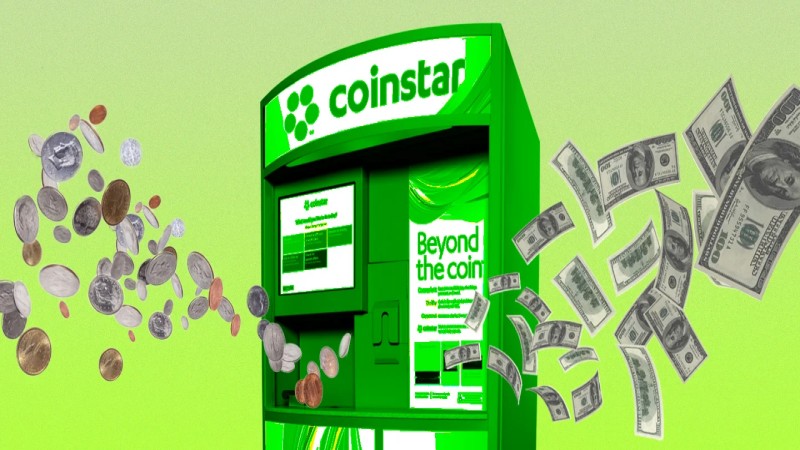
Let us be unequivocally clear: coinstar foreign coins policy is that kiosks do not accept foreign currency, be it coins or banknotes. Their infrastructure is calibrated exclusively for domestic currency—pounds sterling (£) or US dollars ($). If
you are searching for where to exchange leftover currency, you must realize that coinstar foreign coins rejection is a stated operational policy, not conjecture. Attempting to deposit euros or yen into a UK-based machine will result in rejection. This fact is the starting point of our exchange foreign coins 2026 analysis.
Technical Constraints: Why Sorters Cannot Recognise Foreign Coinage
The limitation of coinstar foreign coins processing is a matter of mechanics. Validation technology relies on precise measurements of weight and metallic composition. To accommodate global coinage for an exchange foreign coins 2026 service would require immense complexity. For those comparing fourex vs Coinstar, the technical focus of each machine is the primary differentiator in where to exchange leftover currency effectively.
🧭 The 2026 Definitive Guide to Foreign Coin Exchange: A Comparative Review of 5 Primary Channels
With the coinstar foreign coins option off the table, the intelligent investor must ask: where to exchange leftover currency with the best foreign currency exchange rates 2026? Here, we dissect the five principal channels available.
1. Professional Mail-in Services (e.g., Cash4Coins) – Convenience and Risk in Tandem
These platforms specialize in an exchange foreign coins 2026 model: you mail coins, they process them, and transfer funds. While convenient for those who don’t know where to exchange leftover currency, risks like postal loss exist. However, they often offer competitive foreign currency exchange rates 2026 for bulk collections. 📈 Expert Tip: Always use tracked postal services when seeking an exchange foreign coins 2026 solution via mail.
2. High Street Bank Branches – The Traditional, Secure Bastion?
For many, a bank is the default for where to exchange leftover currency. However, most UK banks ceased an exchange foreign coins 2026 service post-2020. They handle banknotes, but your coinstar foreign coins alternatives here are limited. Their foreign currency exchange rates 2026 for coins are practically non-existent as they politely decline shrapnel.
3. Modern Currency Exchange Kiosks – The High-Tech Contender
In the debate of fourex vs Coinstar, automated kiosks like Fourex are the winners for international travelers. Unlike coinstar foreign coins kiosks, Fourex is designed to validate coins from 150 countries. When deciding where to exchange leftover currency instantly, these are the top exchange foreign coins 2026 choice, even if their foreign currency exchange rates 2026 are less than mid-market.
4. Airport Exchange Counters – The High-Cost Option of Last Resort
Airport bureaus provide an immediate exchange foreign coins 2026 service, but at a high price. Their foreign currency exchange rates 2026 represent the poorest financial value. While they are a place where to exchange leftover currency, they prey on captive audiences. 💰
5. Charitable Donation – Maximising Utility Through Philanthropy
If you cannot find where to exchange leftover currency profitably, charities like Oxfam offer an alternative to an exchange foreign coins 2026 transaction. While you get no monetary return, the full value of your coinstar foreign coins rejects is utilized for a good cause.
📊 Data-Driven Decisions: A Comparative Analysis of Exchange Channels
To move from theory to practical application, we compare the foreign currency exchange rates 2026 across platforms. The objective is to assess the ‘Net Payout’.
| Parameter | Mail-in Service (e.g., Cash4Coins) | Exchange Kiosk (e.g., Fourex) | Airport Counter | Charity Donation |
|---|---|---|---|---|
| Commission Fee | 10% – 25% (Variable) | 0% (Fee is in the spread) | Often ‘0%’, but high spread | N/A |
| Exchange Rate Spread (vs. Mid-Market) | Moderate (5-10%) | High (8-15%) | Very High (12-20%+) | N/A |
| Minimum Amount | None, but postage costs apply | None | None in practice | None |
| Processing Time | 5-15 business days | Instant | Instant | Instant (Donation) |
| Supported Currencies | Wide Range | ~150 major currencies | Major currencies only | All accepted |
| Security Rating | Moderate (Postal Risk) | High | Very High | Very High |
Analysis: For an exchange foreign coins 2026 of mixed-currency valued at £100, mail-in often yields the highest payout. For smaller amounts, the fourex vs Coinstar comparison favors Fourex for its ability to accept multiple currencies that Coinstar rejects.
⚠️ Financial Risk Advisory: 3 Traps to Avoid in Currency Exchange
Navigating the foreign exchange market, even for residual coins, requires vigilance. Below are three common pitfalls that erode value.
Trap 1: The ‘Zero Commission’ Fallacy and the Exchange Rate Spread
Many providers advertise ‘0% commission’ or ‘no fees’. This is a marketing tactic, not a reflection of a free service. The profit is generated from the exchange rate spread—the difference between the wholesale mid-market rate at which banks trade, and the less favourable ‘tourist’ or ‘counter’ rate offered to you.
A 15% spread on a £200 exchange is a £30 effective fee. Always evaluate the final figure you will receive, not the advertised commission rate. This is the cornerstone of understanding your true costs.
Trap 2: Postal Service Risk and Value Adjudication
When using mail-in services, the primary risk lies in transit. A standard postal service offers minimal to no compensation for lost currency. Furthermore, a potential for dispute exists regarding the value of the coins received.
Consider this scenario: A client dispatched a parcel containing coins they valued at £75. The receiving company claimed the contents were worth only £50 due to damaged or unidentifiable items. Without insured delivery and prior photographic evidence, the client has no recourse and must accept the lower valuation. Effective Foreign Exchange risk management begins before you even seal the envelope.
Trap 3: Minimum Exchange Thresholds and Stranded Capital
While less common for coins, some services impose minimum transaction values. This is more prevalent when dealing with banknotes of exotic currencies. This can lead to a situation of ‘stranded capital’, where your holding is too small to be exchanged economically.
This again highlights the utility of the donation channel for sub-scale amounts, transforming a stranded, illiquid asset into a productive contribution.
Conclusion and Investment Outlook
The notion of exchanging a pocketful of foreign coins may seem trivial, but it serves as a microcosm for broader principles of financial management. It underscores the critical importance of looking beyond headline claims (‘0% commission’) to understand the true cost of any transaction through factors like spreads and processing times.
For the holder of leftover travel money, the optimal strategy is contingent on volume. Substantial holdings warrant the diligence required for a mail-in service, coupled with stringent risk mitigation. Moderate, time-sensitive needs are best served by modern kiosks. Finally, nominal amounts find their highest and best use as charitable contributions.
Understanding these nuances is key to preserving capital, a discipline that applies whether one is managing a handful of coins or a multi-asset portfolio. For a deeper understanding of currency dynamics, our guide on Foreign Exchange provides a foundational overview.
FAQ
Here we address the most common queries with the precision required for financial decisions.
Q1: Which countries’ coins are accepted by banks?
As of 2026, virtually no high street banks in the UK accept foreign coins for exchange from the general public. They may make exceptions for high-net-worth clients or business accounts, but for retail customers, the policy is overwhelmingly to refuse them. They will, however, typically exchange banknotes from major G20 economies.
Q2: What is the typical duration of the exchange process?
The timeline varies significantly by channel. Kiosks and airport counters provide instant exchange. Mail-in services are the most protracted; you must account for 1-3 days for postage, 3-10 business days for processing and validation, and a further 1-2 days for the bank transfer. The entire process can take up to three weeks.
Q3: Do obsolete currencies (e.g., German Marks, French Francs) retain value?
Yes, many pre-Euro currencies can still be exchanged. National central banks in countries like Germany (Bundesbank) and France (Banque de France) still honour their legacy notes and sometimes coins. Specialist mail-in services are often the only practical channel for exchanging these, as they have established processes for repatriation. Do not assume they are worthless.
Q4: How do the best exchange options differ between the UK and the US?
The core principles are identical, but the market players differ. In the US, some larger commercial banks may still offer limited coin exchange services for major currencies like the Canadian Dollar or Mexican Peso, particularly near the borders. Mail-in services are prevalent in both markets. The key is to apply the same analytical framework—assess the net payout after accounting for all implicit and explicit costs.